Concrete Restoration in South Florida
Salt air, humidity, and decades of coastal exposure attack reinforced concrete from the inside out. By the time spalling shows on a balcony edge, the rebar underneath has usually been corroding for years. We stop the deterioration, restore structural integrity, and protect the repair so it holds.
How concrete fails on a coastal building
Concrete does not crumble on its own. It is pushed apart from the inside.
Chlorides carried in salt air migrate through the concrete and reach the reinforcing steel. Once they do, the steel begins to corrode, and corroded steel occupies several times the volume of sound steel. That expansion has to go somewhere, so it pushes the surrounding concrete outward until it cracks, delaminates, and falls away.
What you see on a balcony soffit — the flaking, the rust staining, the patch that sounds hollow when you tap it — is the last stage of a process that has been running for years. That is spalling. The visible area is almost never the full extent, which is why a sounding survey is done before any scope is written, and why the true quantity is not known until the surface is opened.
What we do
- Structural concrete repairs to beams, columns, slabs and balcony edges
- Crack, spall and delamination repair
- Reinforcing steel cleaning, treatment and replacement where section loss requires it
- Stucco patching and facade restoration
- Surface preparation and resurfacing
- Waterproofing and protective coating application over the completed repair
The order of operations
Sequence is most of what separates a repair that lasts fifteen years from one that lasts five. The steps are not interchangeable.
| Stage | What happens | Why it matters |
|---|---|---|
| Survey | Sounding and mapping of delaminated areas with your engineer | Establishes estimated quantities before anyone prices the work |
| Removal | Unsound concrete is removed back to solid material | Repairing over compromised concrete traps the problem underneath |
| Steel | Exposed reinforcing is cleaned, treated, and replaced where section loss requires it | Corroded steel left in place keeps expanding and pushes the new repair off |
| Rebuild | The section is rebuilt with a repair mortar compatible with the existing concrete | An incompatible mortar shrinks or moves differently and debonds |
| Protect | Waterproofing, then coatings, over a sound substrate | Without the protective layer, chlorides reach the steel again and the cycle restarts |
That last row is the one boards most often cut under budget pressure. Paint is the finish; waterproofing is the protection underneath. Concrete repaired and left unprotected in salt air begins corroding again, and the association pays for the same repair twice inside a decade.
Why it can't wait
Deferred concrete repair doesn't stay the same size — it compounds. Scoped early, it's a fraction of the cost of the same repair after two more years of water reaching the steel. Every season you wait, the scope grows and so does the assessment.
The growth is not only in area. As deterioration advances it reaches deeper into the section, takes more reinforcing steel with it, and pulls more engineering involvement into the repair. A contained, budgetable line item becomes a structural project.
Work that happens around residents
Nearly all of our restoration work happens on occupied buildings. Nobody moves out.
We phase by elevation and stack, so the work moves through the building in vertical bands rather than floor by floor. A given resident loses the use of a balcony for a defined window instead of living beside an active project for the whole job. Walkways and entries are protected overhead, and access is coordinated with management so residents know which days matter to them.
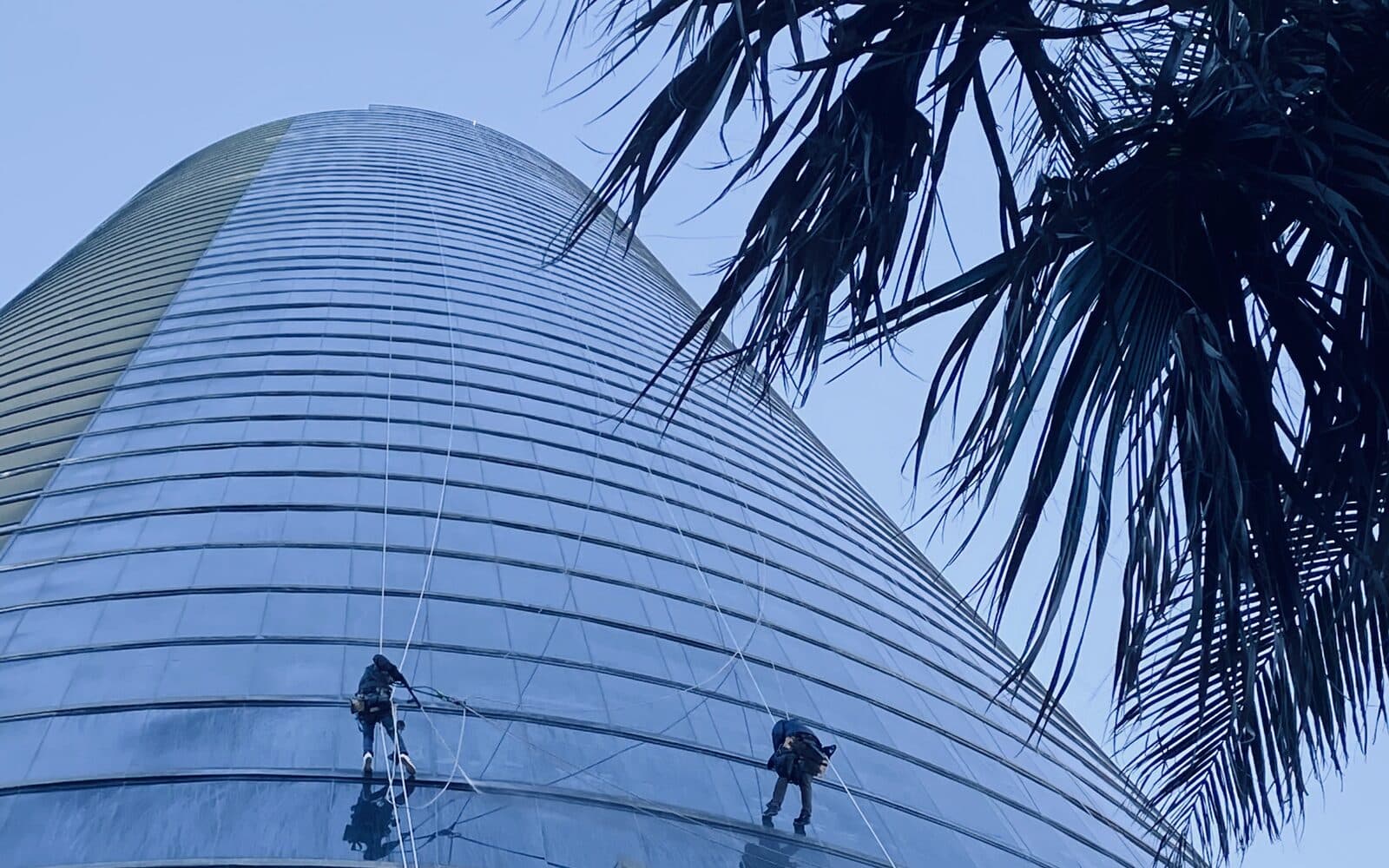
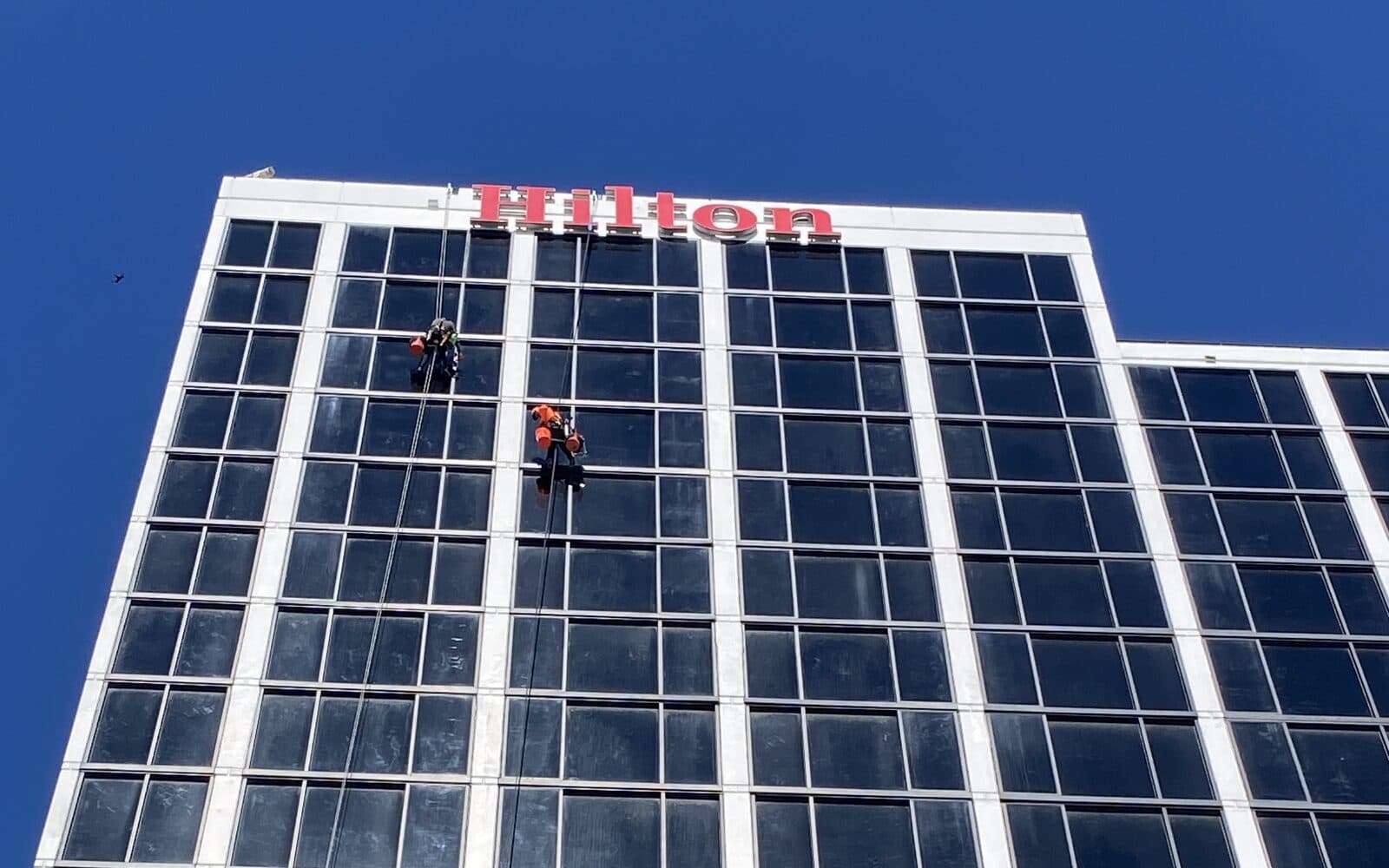
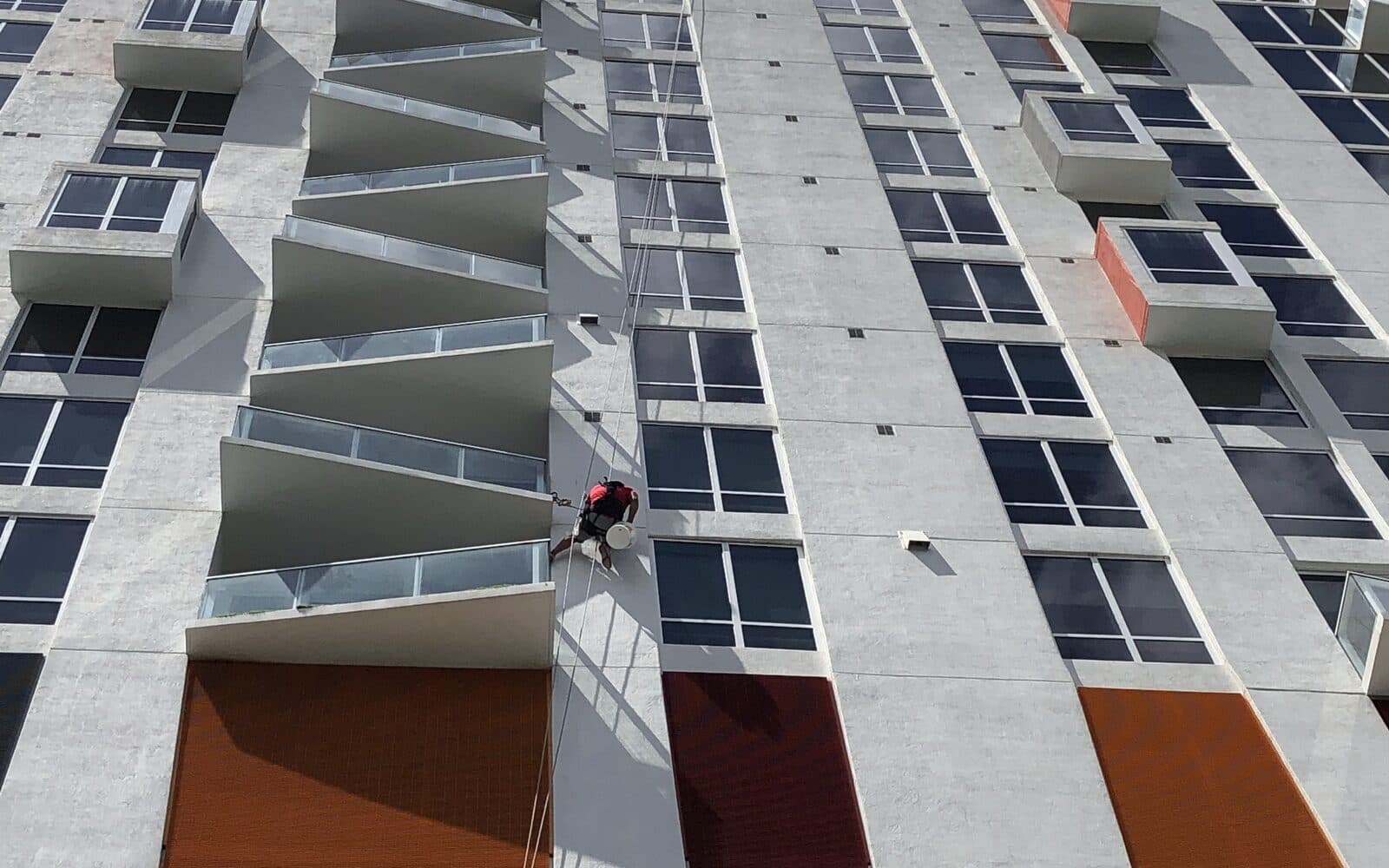
Rope access and swing stage crews reach every floor without standing scaffolding across your entrances for months. Scaffolding is cheaper to rig and considerably more expensive to live with.
How we price it for a board
Because the true repair quantity is unknown until the surface is opened, we price line-item rather than lump sum, with an agreed unit rate for additional repair area approved before anything is opened.
The board approves that rate once, in advance, rather than negotiating change orders mid-project with access equipment already hanging off the building. A line-item scope is also what lets a board defend the assessment to owners: it shows what is being bought, not just what it costs.
Throughout the work, the board receives photo documentation and progress reporting that the property manager can forward straight into the board packet.
Milestone and recertification repairs
Much of the concrete restoration we perform comes out of a milestone inspection or a county recertification report. If you are holding either, the deficiencies in it are the starting point for the scope — and where a building owes both, the repairs can usually be satisfied in a single project rather than two.
Basile Contractors does not perform those inspections. They belong to a licensed engineer or architect. We perform the repairs the report calls for, and we coordinate with your engineer of record through sign-off.
For more on what to expect, see concrete spalling repair in Florida, structural concrete repair methods and cost factors, and what happens after a Phase 2 inspection.
Tell us about your building. We'll come look at it, and tell you honestly what it needs.
Not sure which repair your building needs?
Walk the building with a licensed restoration contractor before you write a scope.
Frequently asked questions
Updated: October 6, 2026