Exterior Painting & Protective Coatings
A coating system on a South Florida high-rise isn't cosmetic. It's the building's first line of defense against UV, wind-driven rain, and chloride intrusion. Specified correctly, it buys the structure years.
Paint is the finish; waterproofing is the protection
This is the single most common confusion we are asked to clear up, and it is worth stating plainly. Paint is what you see. Waterproofing is what keeps water out. They are different products doing different jobs, and a building needs both, applied in the right order.
Most exterior projects are not a choice between them. A repaint over a failed sealant joint or a worn balcony membrane looks finished and solves nothing — the water is still getting in behind it, and now it is harder to see.
What we do
- Exterior building painting
- Elastomeric and protective coatings
- Concrete and masonry coatings
- Balcony and walkway coatings
- Surface preparation and restoration
- Repainting and maintenance programmes
Preparation is most of the job
Anyone can put a coating on a wall. It lasts because of what happens first.
| Stage | What it involves | What goes wrong when it is skipped |
|---|---|---|
| Cleaning | Pressure washing to remove chalking, salt deposits, biological growth | Coating bonds to contamination rather than substrate, and peels in sheets |
| Repair | Patching cracks, spalls and stucco defects before any coating | The defect telegraphs through and reopens within a season |
| Sealant renewal | Cutting out and replacing failed joints | A new coating over an open joint hides the entry point it should have closed |
| Priming | Manufacturer-specified primer for the substrate and system | Adhesion failure, especially on dense or previously coated surfaces |
| Moisture check | Confirming substrate moisture is within the system's limits | Trapped moisture blisters the coating from underneath |
Manufacturer-certified systems
We install manufacturer-certified systems from the manufacturers that set the standard in coastal protection, which qualifies the completed work for material-and-labour warranties.
Certification also constrains us usefully. These systems carry written requirements for preparation, film thickness, and recoat windows, and the manufacturer's inspector can decline to warrant work that skipped them. A coating is only as good as the preparation beneath it and the warranty behind it.
Elastomeric coatings, and when they are the right answer
Elastomeric coatings are thicker and more flexible than conventional exterior paint, which lets them bridge hairline cracking and keep bridging it as the building moves and the temperature swings.
That flexibility is why they are common on South Florida concrete and stucco. It is not a universal answer — the right system depends on the substrate, its condition, and what was on it before, which is one of the things a site visit establishes rather than a catalogue.
Colour, scheduling and the people who live there
Repainting is the most visible thing that will happen to your building, and it is decided by a board that has to live with the result and defend it.
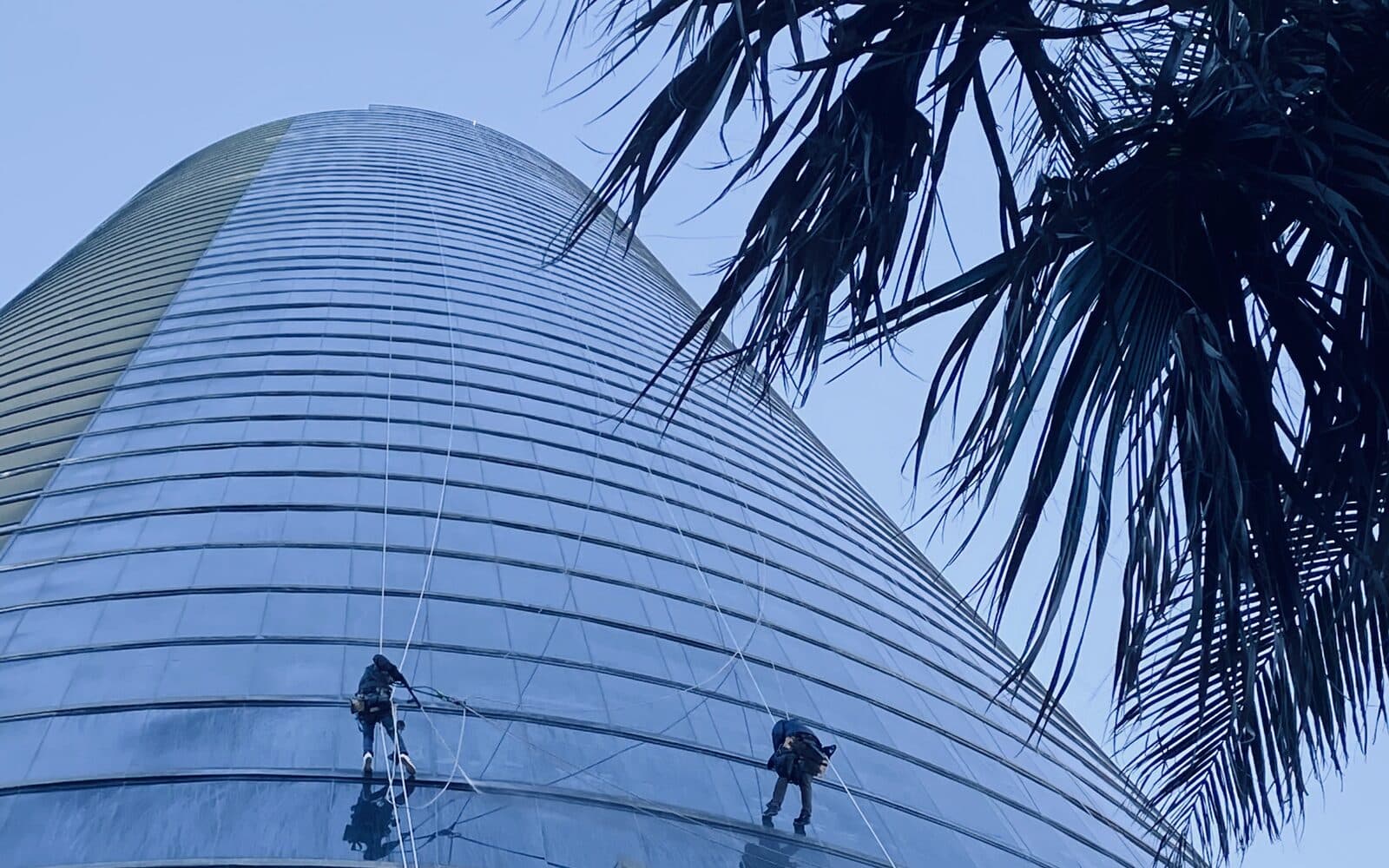
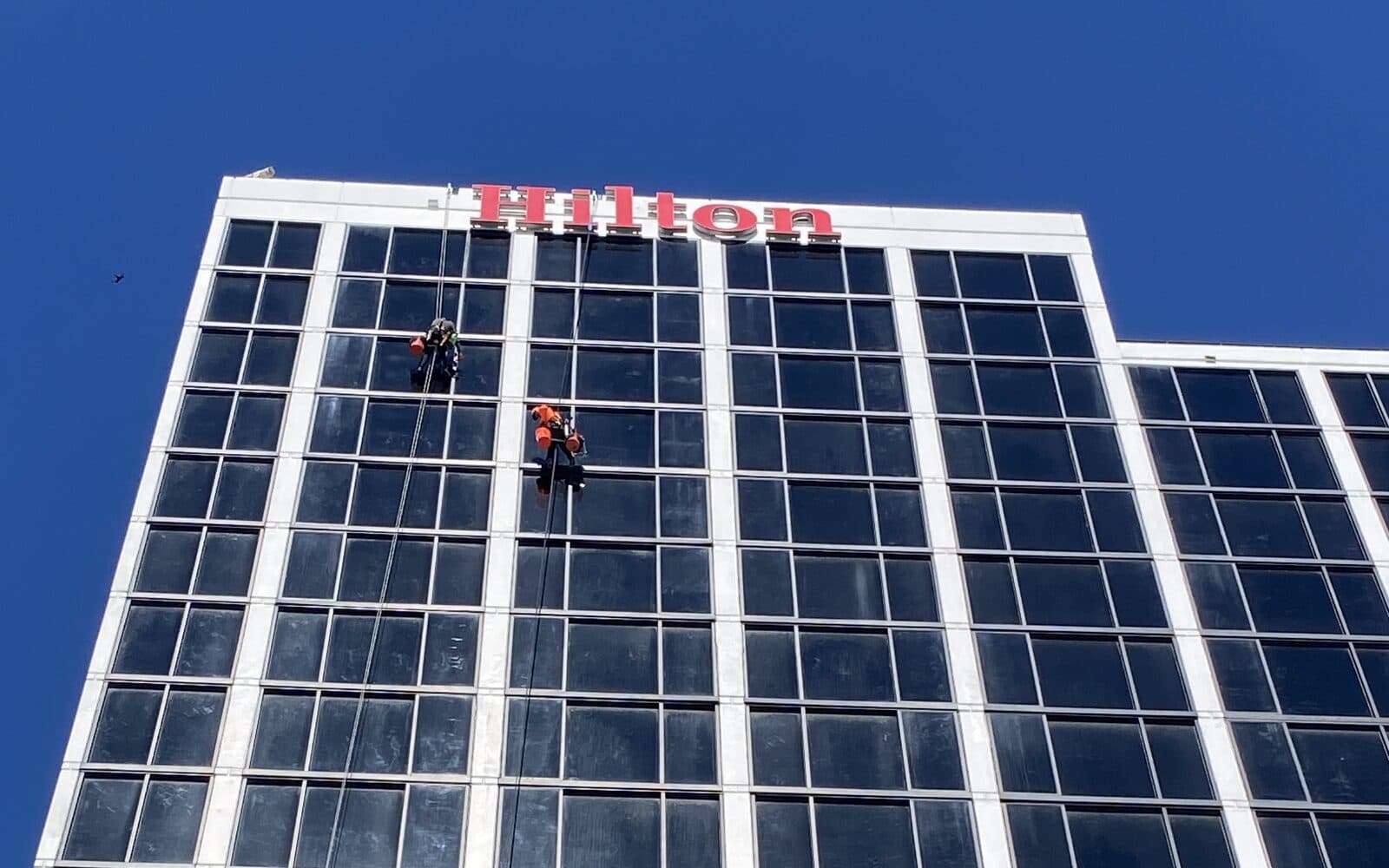
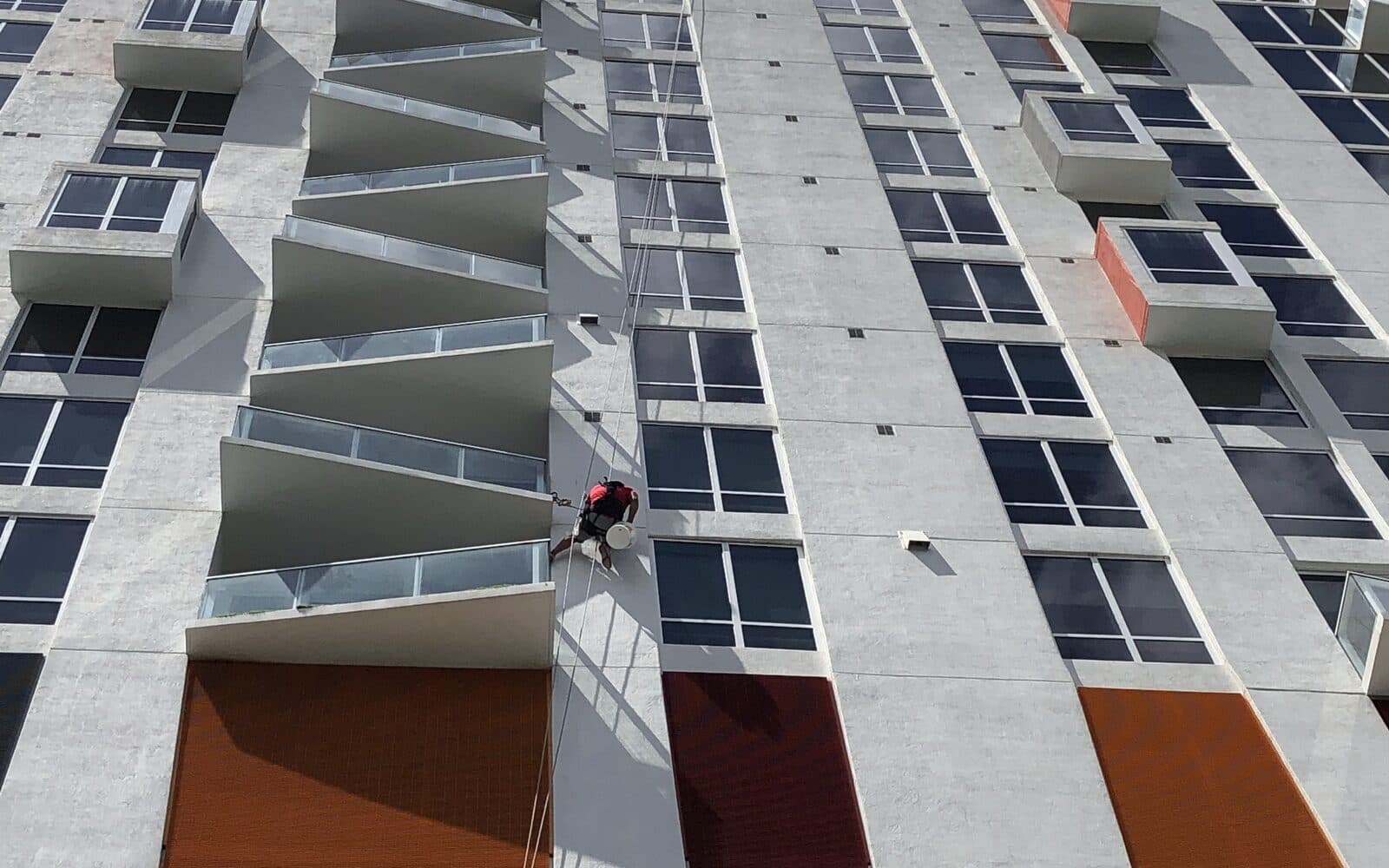
Nearly all of our work happens on occupied buildings. We phase by elevation and stack, protect walkways and entries, and coordinate access with management so residents know which days affect their stack. Rope access and swing stage crews reach every floor without standing scaffolding across your entrances for months.
Throughout, the board receives photo documentation and progress reporting the property manager can forward straight into the board packet.
Where coatings sit in a restoration project
Coatings go on last. Concrete repair first, then waterproofing, then the coating system over a sound and protected substrate. Reversing that order produces a building that looks finished and is not.
Where a project comes out of a milestone inspection or a county recertification report, the coating scope is usually the final line on the same job rather than a separate project a year later — which also means one mobilisation instead of two.
Tell us about your building. We'll come look at it, and tell you honestly what it needs.
Not sure which repair your building needs?
Walk the building with a licensed restoration contractor before you write a scope.
Frequently asked questions
Updated: September 27, 2026