Structural Concrete Repair in South Florida: Methods, Costs & What Building Owners Should Know
How structural concrete repair works in South Florida: what makes damage structural, the main repair methods, polymer-modified materials and what drives cost.
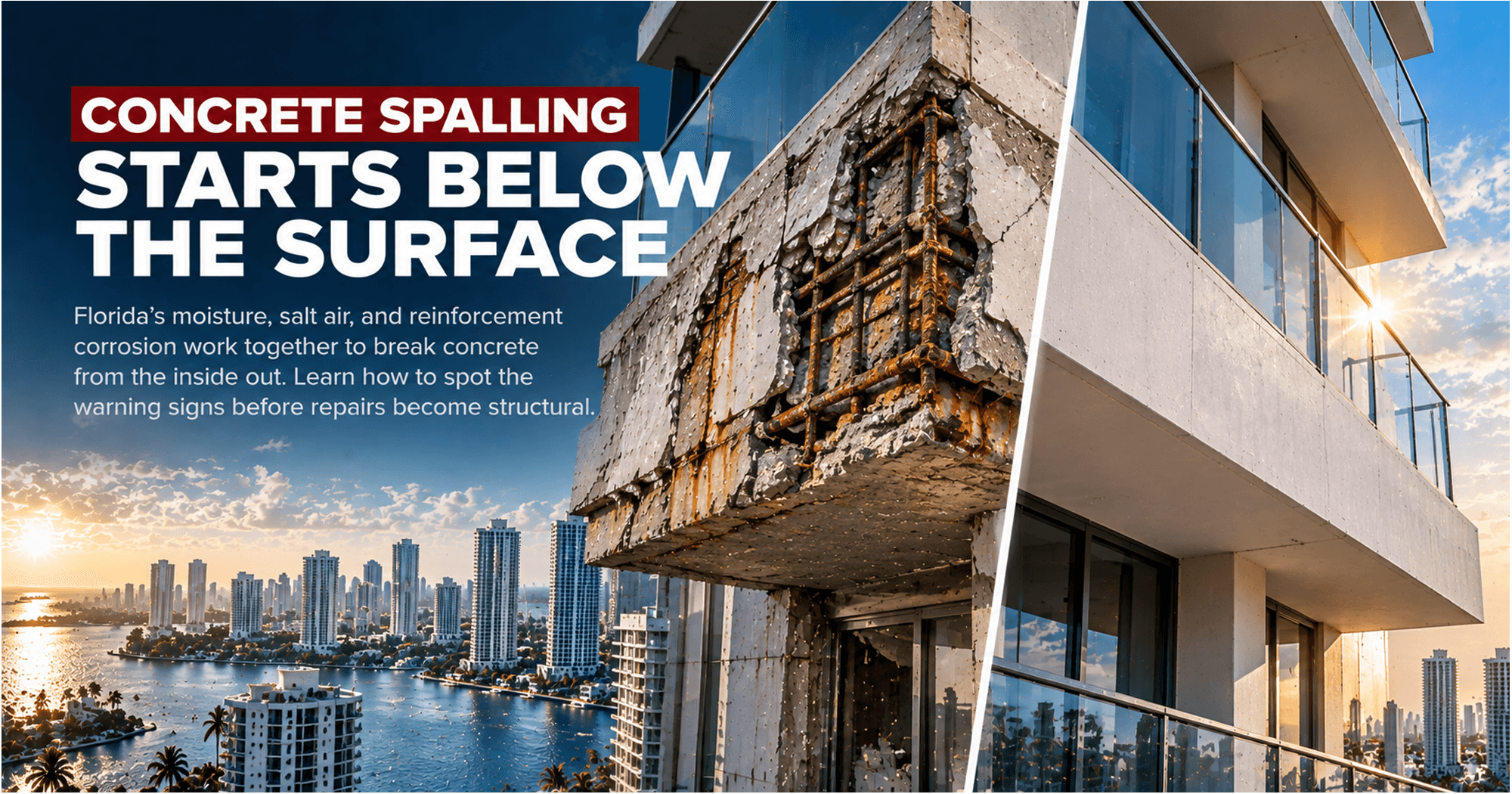
Concrete damage becomes structural when it affects how a building carries load. Cracks in a column, spalling on a slab edge or exposed steel in a beam are not cosmetic, and they do not improve with time. In South Florida’s climate, they get worse faster.
This guide explains what structural concrete repair is, what causes the damage, the main repair methods including polymer-modified materials, and what building owners should know about cost and contractor selection.
What Is Structural Concrete Repair?
Structural concrete repair restores the strength, durability and protection of load-bearing concrete elements such as columns, beams, slabs, decks and structural balconies.
Structural vs. Cosmetic Repair
Cosmetic repair changes appearance: patching a surface blemish, smoothing a spall that does not affect steel or capacity. Structural repair restores the part of the element that carries load, and usually involves treating the reinforcing steel.
What Makes Concrete Damage Structural?
- Cracks in load-bearing elements, especially those that widen, stain with rust or show offset.
- Spalling that exposes reinforcing steel.
- Delamination of large areas.
- Section loss from corroded steel.
- Sagging or movement of structural components.
When Professional Evaluation Is Necessary
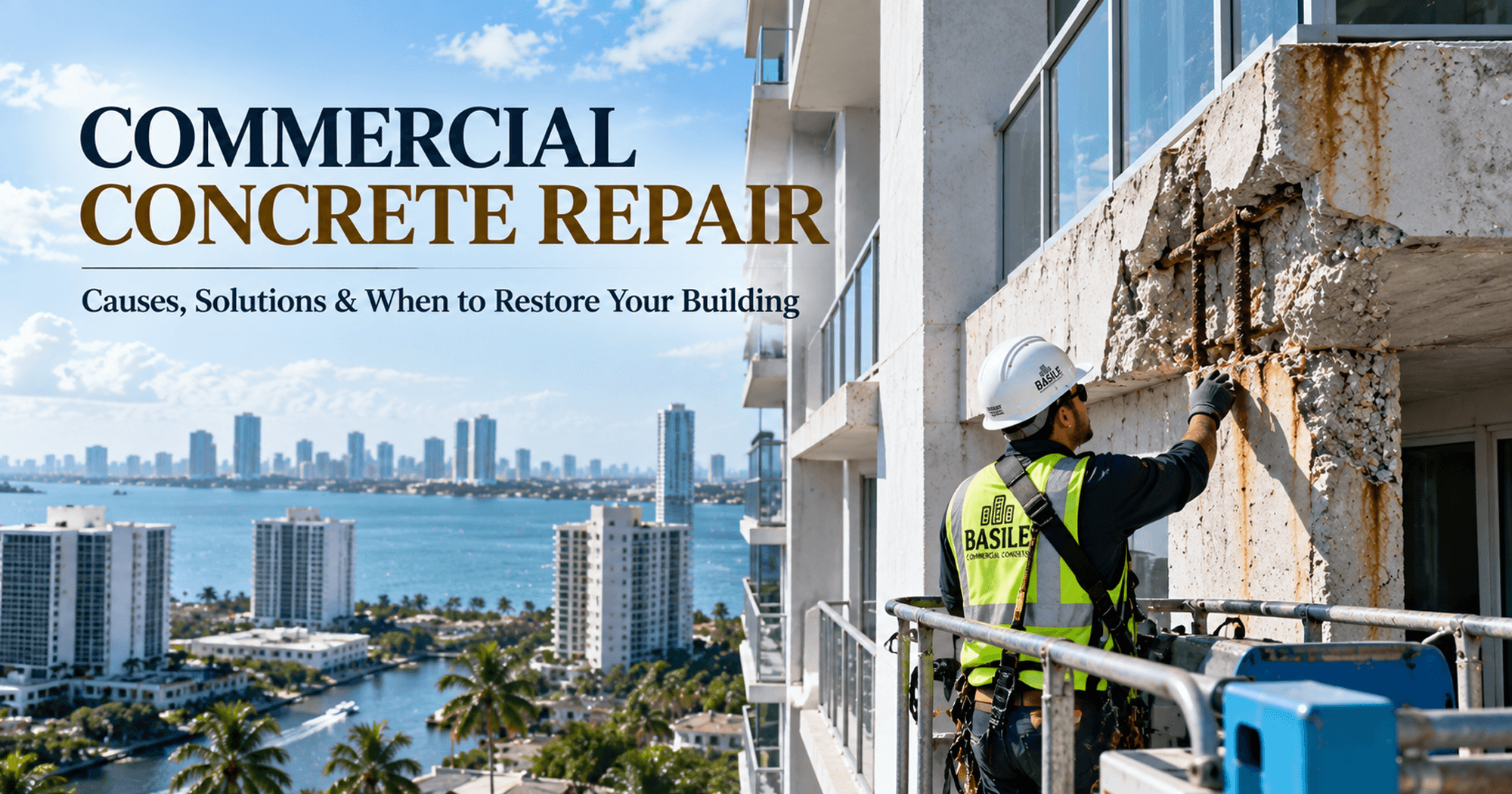
Whenever damage affects a structural element, a licensed engineer should evaluate it and define the repair scope. Basile Contractors carries out structural concrete repair to the engineer’s scope and does not substitute for engineering judgment.
Why Structural Concrete Deteriorates in South Florida
- High humidity and moisture exposure.
- Coastal salt and chlorides that penetrate concrete.
- Reinforcing steel corrosion. Rust expands and breaks the concrete away.
- Heavy rainfall and water intrusion.
- Hurricanes and severe storms.
- Aging structures with thinner cover or older materials.
- Poor drainage and waterproofing.
- Original construction or material deficiencies.
Common Signs That Structural Concrete Needs Repair
- Structural cracks.
- Spalling.
- Delamination.
- Exposed reinforcing steel.
- Rust staining.
- Surface deterioration.
- Water intrusion.
- Sagging or damaged structural components.
- Repeated repairs in the same place.
Structural Concrete Crack Repair
Hairline vs. Structural Cracks
Hairline shrinkage cracks are common and often cosmetic. Structural cracks are wider, may be displaced, follow the line of reinforcement or occur in load-bearing elements. Width alone does not tell the whole story, so location and cause matter.
What Causes Cracks
- Moisture: water entering and cycling through wet and dry.
- Corrosion: expanding rust cracking the cover concrete.
- Structural movement: settlement, overload or thermal movement.
Crack orientation, horizontal, vertical or diagonal, helps show the cause. Diagonal cracks near supports, for example, can indicate shear and should be reviewed by an engineer.
Injection and Repair Materials
Cracks can be repaired by injection with epoxy or other materials, or by routing and sealing, depending on whether the crack is active and whether structural continuity must be restored. The cause of the crack must be addressed or it will return.
Structural Concrete Repair Methods
| Method | What it does | Typical use |
|---|---|---|
| Concrete removal and replacement | Removes unsound concrete and rebuilds the section | Spalls, delamination, extensive damage |
| Patching | Fills localized damage with repair material | Small spalls and defects |
| Crack injection and sealing | Fills cracks to restore continuity or block water | Active or stable cracks |
| Reinforcement repair | Cleans, treats, supplements or replaces steel | Corroded or lost steel |
| Polymer-modified repair mortars | Improves bond, durability and resistance to water | Patching and resurfacing |
| Protective coatings and waterproofing | Keeps water and chlorides out | Applied after repairs |
| Resurfacing | Restores a uniform surface | Slabs, decks, facades |
| Strengthening | Adds capacity where needed, to an engineer’s design | Elements with reduced capacity |
Rebar Cleaning and Corrosion Treatment
When corroded steel is exposed, rust is removed to a standard that allows bonding. Where section loss is significant, steel is supplemented or replaced as specified. Protective treatments may be applied to the steel and surrounding concrete to slow future corrosion.
Polymer-Modified Structural Concrete Repair
What Is Polymer-Modified Repair Material?
Polymer-modified repair material is cement-based mortar or concrete with added polymers. The polymers improve bond to the existing concrete, reduce permeability and increase flexibility compared with plain cementitious mixes.
Benefits
- Better adhesion to existing concrete.
- Lower permeability, which slows chloride and moisture entry.
- Improved durability.
- Suitable for thin and vertical or overhead applications.
Where It Is Used
Polymer-modified materials are commonly used for patching spalls, resurfacing and repairing facades, balconies and slab edges. They are one option among several, and selection depends on the element, the exposure, the thickness required and the manufacturer’s requirements. The engineer’s specification governs.
Repair for Different Building Components
- Columns: repair of cracks and spalls, steel treatment, sometimes jacketing.
- Beams: similar, with attention to bearing areas and bottoms.
- Structural slabs: repair of undersides, edges and top surfaces.
- Parking garages: deck cracking, joints and chloride-driven corrosion.
- Balconies: spalling at edges and soffits, drainage and waterproofing.
- Concrete decks.
- Exterior facades.
- Concrete stairways.
- Retaining structures.
- Foundations and other structural components.
The Structural Concrete Repair Process
- Initial building inspection.
- Identify the source of damage, often water.
- Assess deterioration by sounding, visual survey and testing as needed.
- Evaluate reinforcing steel.
- Determine the repair scope, with an engineer where structure is involved.
- Select repair materials.
- Prepare the damaged concrete by removing unsound material.
- Treat reinforcement.
- Install repair material.
- Apply protective systems such as waterproofing and coatings.
- Final inspection and documentation.
Structural Concrete Repair Cost: What Affects Pricing?
There is no universal price for structural concrete repair. Each project has to be evaluated on site. The main drivers are:
- Size of the repair area and number of locations.
- Severity of damage.
- Type of structural element.
- Amount of concrete removal.
- Reinforcement corrosion and how much steel must be treated or replaced.
- Repair material selection, including polymer-modified materials.
- Building height and accessibility.
- Specialized equipment.
- Engineering and inspection requirements.
- Waterproofing and protective coatings.
- Project complexity and duration.
Because the extent of damage under the surface is often confirmed during removal, proposals commonly use unit pricing for concrete repair items, which keeps the owner paying for what is actually found.
Structural Concrete Repair vs. Replacement
- Repair is appropriate when damage is localized and the element retains its capacity.
- Partial replacement may be needed when sections are severely deteriorated.
- Extensive replacement is necessary when capacity is significantly compromised.
- Remaining structural capacity is evaluated by an engineer.
- Long-term maintenance needs differ between options.
A professional assessment should come first.
How to Choose a Structural Concrete Repair Contractor
- Experience with structural concrete and with commercial buildings.
- Knowledge of reinforced concrete and how it deteriorates.
- Appropriate repair methods and materials.
- Safety procedures and OSHA compliance.
- Insurance and credentials. Basile holds Florida license CCC1511747, a roofing contractor class, is insured and bonded, and is ICRI certified.
- A detailed inspection and scope of work.
- Previous structural concrete projects you can verify.
- Clear pricing basis and timeline.
Structural Concrete Repair in South Florida
In Broward, Miami-Dade and Palm Beach counties, structural concrete is exposed to salt, humidity, heavy rain and storms. High-rise buildings, balconies and parking structures are common sites of damage. Aging coastal buildings are especially prone to reinforcement corrosion, so repair almost always includes waterproofing or coatings to protect the work.
Repair vs. Preventive Maintenance
- Early detection keeps repairs small.
- Routine inspections catch changes.
- Monitor structural cracks over time.
- Maintain waterproofing.
- Protect reinforcing steel with intact concrete cover and coatings.
- Maintain coatings.
- Prevent recurring deterioration by fixing causes.
- Extend service life.
Common Structural Concrete Repair Mistakes
- Treating structural damage as cosmetic.
- Repairing cracks without identifying their cause.
- Ignoring reinforcement corrosion.
- Covering spalled concrete without proper preparation.
- Using incompatible repair materials.
- Ignoring water intrusion.
- Delaying necessary repairs.
- Choosing a contractor on price alone.
Structural Concrete Repair Checklist for Building Owners
- Inspect concrete surfaces.
- Document visible cracks.
- Check for spalling.
- Look for exposed reinforcement.
- Check for rust staining.
- Identify water intrusion.
- Inspect balconies and elevated structures.
- Inspect parking garages.
- Review previous repair history.
- Schedule a professional assessment.
When Should Building Owners Schedule Structural Concrete Repair?
- Visible structural cracking.
- Spalling.
- Exposed or corroded reinforcement.
- Repeated water intrusion.
- Deteriorating balconies.
- Damaged columns or beams.
- Parking garage deterioration.
- Post-hurricane structural concerns.
- Recurring concrete failure.
Schedule a Structural Concrete Assessment
Early repair limits further deterioration. Proper methods depend on the type and cause of damage, and a professional evaluation determines the right approach.
Protect structural concrete in South Florida. Basile offers a free written scope for commercial and high-rise buildings in Broward, Miami-Dade and Palm Beach counties.
Not sure which repair your building needs?
Walk the building with a licensed restoration contractor before you write a scope.