Building Restoration in Miami-Dade County
Miami-Dade has more high-rise residential stock sitting in salt air than anywhere else in Florida, and it has been inspecting that stock for longer than any other county in the state. If you sit on a board here, the paperwork is not new. What has changed is how much of it arrives at once.
What Miami-Dade actually requires
Miami-Dade runs its own building recertification programme, and has done since 1975. It is not the state milestone inspection, though the two now overlap: the county amended its programme in June 2022 to fold the state requirement in rather than run a second process alongside it.
Two features of the county programme catch owners out.
It reaches commercial buildings. The state milestone inspection applies to condominiums and cooperatives. Miami-Dade recertification applies to residential and commercial alike. Owners who correctly concluded the milestone law did not apply to them still receive county notices.
The clock is 90 days, not a year. Once the county issues a Notice of Required Recertification, the report is due within 90 days, with up to 60 more available on written request. That is enough time to engage an engineer and produce a report only if you start immediately.
Non-compliance begins at a $510 citation and can accumulate toward $10,000 per violation, with liens available to the county.
Which threshold applies to your building
| Building | First recertification |
|---|---|
| Built 1983-1997, within 3 miles of the coast | Was due by 31 December 2024, then every 10 years |
| Built 1983-1992, further inland | Was due by 31 December 2024, then every 10 years |
| Built 1998 or later, coastal condo or co-op of 3+ stories | At 25 years, then every 10 years |
| Built 1993 or later, everything else | At 30 years, then every 10 years |
Exempt: single-family homes, duplexes, and buildings with an occupant load of 10 or fewer that are also under 2,000 square feet.
What fails on Miami-Dade buildings
The mechanism is the same across the county and it is not mysterious. Chlorides carried in salt air migrate through concrete and reach the reinforcing steel. Corroded steel occupies several times the volume of sound steel, so it expands and pushes the concrete off from the inside.
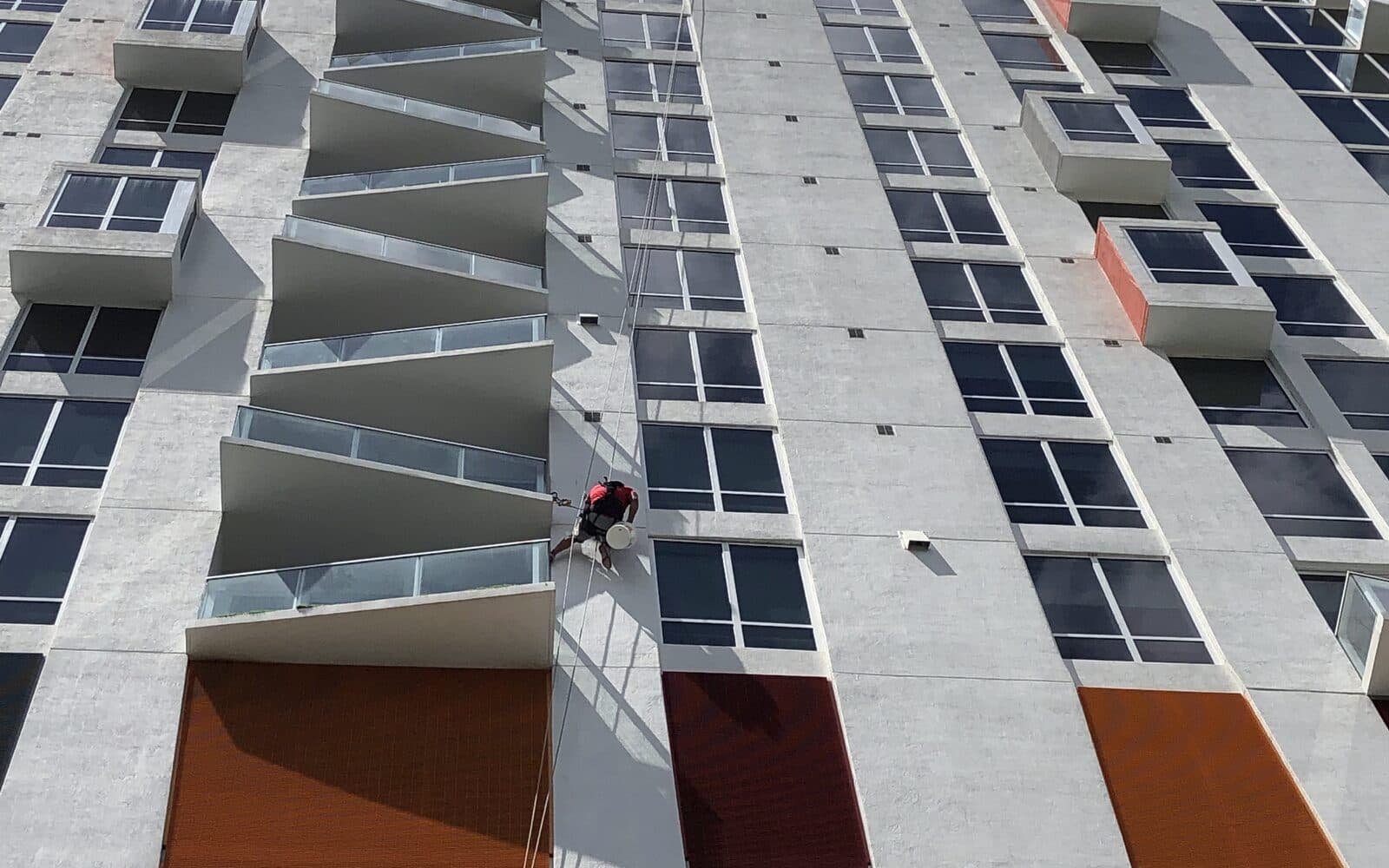
What that looks like on a report is spalled balcony edges and soffits, cracked columns and beams, delaminated walkway slabs, failed sealant joints, and stucco separating from the substrate. Balconies are usually the largest line item, because they are the most exposed element on the building and they carry people.
Proximity to the water changes the rate, not the process. A tower on Collins Avenue and a building four miles inland fail the same way on different schedules.
Where we work in Miami-Dade
Miami, Miami Beach, Aventura, Sunny Isles Beach, Coral Gables, Hialeah, Doral, Key Biscayne and Homestead, and the rest of the county from the Broward line south.
Work that happens around residents
Nobody moves out. We phase by elevation and stack, so work travels through the building in vertical bands and a resident loses the use of a balcony for a defined window rather than for the length of the project.
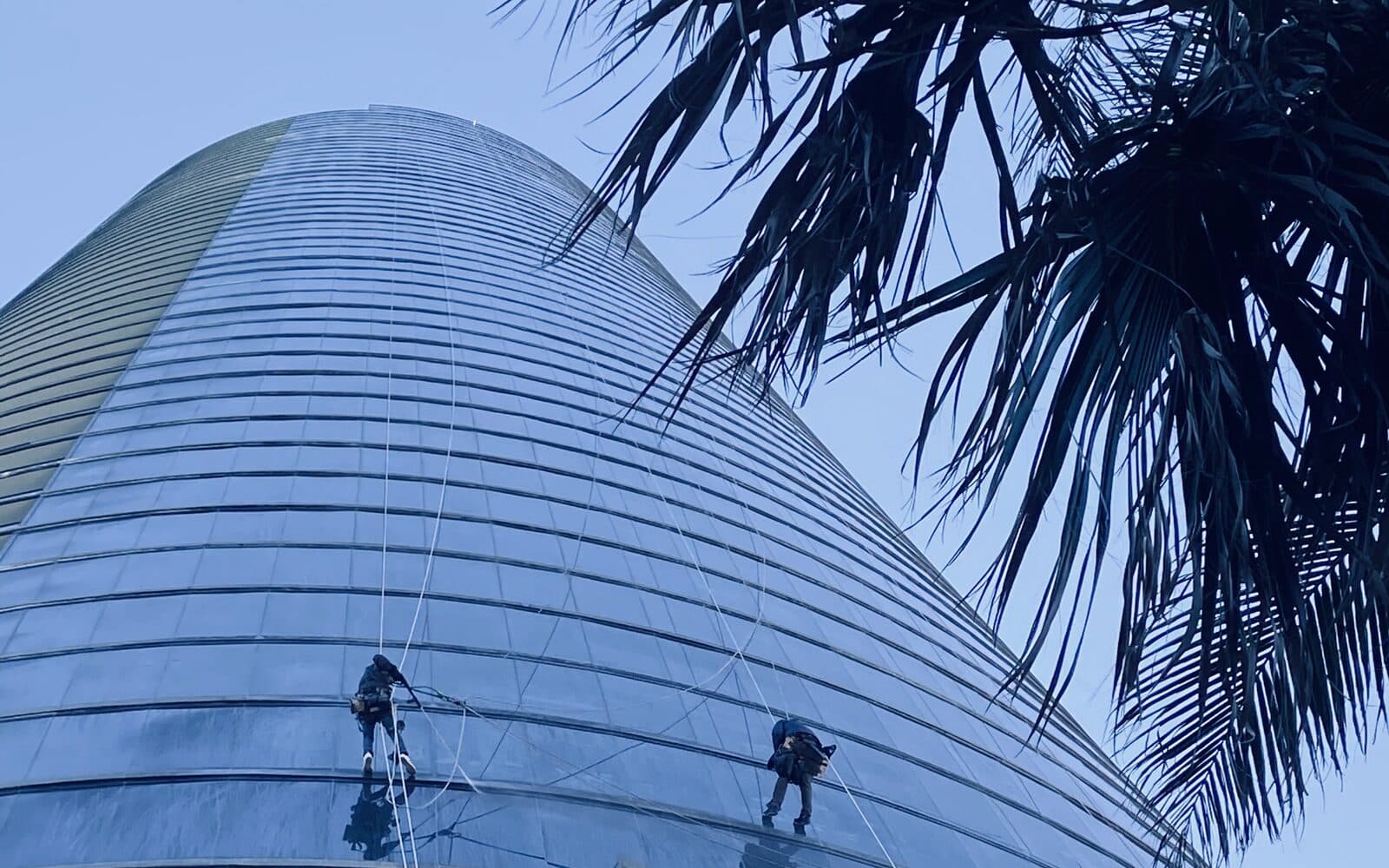
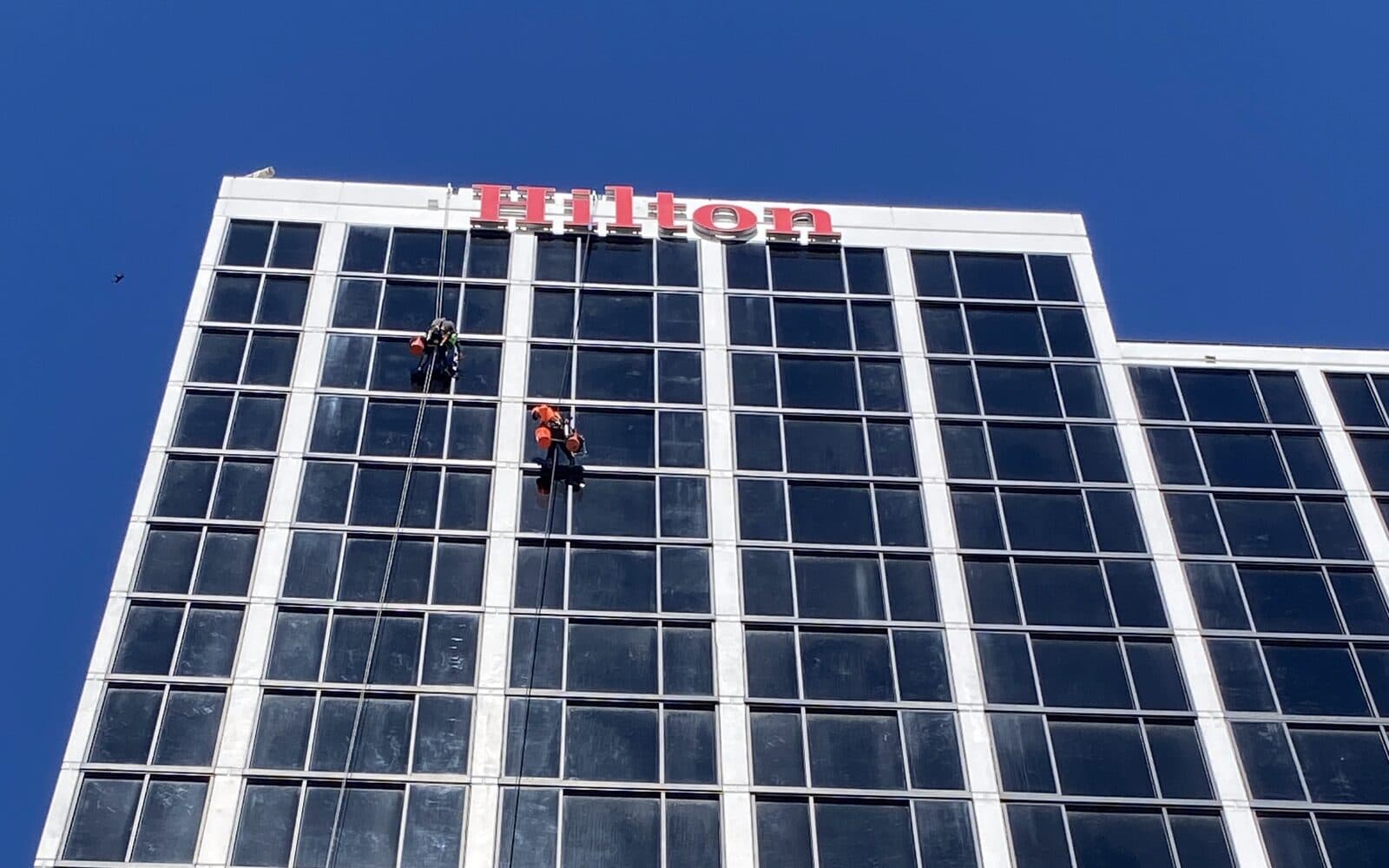
Walkways and entries are protected overhead, access is coordinated with management, and rope access and swing stage crews reach every floor without standing scaffolding across your entrances for months. The board receives photo documentation and progress reporting the property manager can forward straight into the board packet.
If a notice has arrived
Read the date on the notice itself and count 90 days from it. Engage the engineer before you approach contractors, because the report is what defines the scope. And ask whether a second clock is running — where a building owes both county recertification and a state milestone inspection, the deficiencies overlap, and the repairs can usually be satisfied in one project rather than two.
On a high-rise, getting crews and equipment to the upper floors often costs more than the repair itself. Doing that once instead of twice is the largest saving available on this kind of work.
Tell us about your building. We'll come look at it, and tell you honestly what it needs.
For more detail, see what a 40-year recertification involves, what happens after a Phase 2 inspection, what a condo board’s scope of work should include and how the structural integrity reserve study affects repairs.
Not sure which repair your building needs?
Walk the building with a licensed restoration contractor before you write a scope.
Frequently asked questions
Updated: October 6, 2026
Areas we cover
We work throughout Miami-Dade County, including:
- Miami
- Miami Beach
- Aventura
- Sunny Isles Beach
- Coral Gables
- Hialeah
- Doral
- Key Biscayne
- Homestead