Waterproofing for Coastal Buildings
Water is the root cause of nearly every structural problem we're called in to fix. Waterproofing is the least expensive work you will ever do on your building — and the most expensive to skip.
Which waterproofing system does a leaking high-rise need?
There is no single best product. The right system depends on where the water is getting in, and on a South Florida high-rise it only lasts if the concrete behind it is repaired first. So the work runs in a fixed order: find the source, repair the substrate, then install the system that suits that location.
| Where it leaks | System usually specified | What has to happen first |
|---|---|---|
| Balconies, terraces and walkways | A fluid-applied, traffic-rated membrane, reinforced at cracks, drains, edges and door thresholds | Spall and rebar repair, and slope and drains corrected so water does not pond |
| Stucco and concrete walls | Crack repair and an elastomeric wall coating | Loose stucco removed, and cracks routed and sealed |
| Window and door perimeters | New perimeter sealant over backer rod, and wet glazing where water passes between the glass and the frame | Water testing to confirm whether the frame or the wall is the source |
| Expansion joints | A preformed or silicone expansion-joint system sized for the building's movement | Joint edges repaired |
| Plaza decks and garage levels | A pedestrian or vehicular traffic coating, or membrane replacement where the slab is covered | Concrete repairs, and drainage checked |
Where water actually gets in
Almost never through the middle of a wall. Water finds the joints, the transitions, and the penetrations — the places where two materials meet and something flexible was asked to bridge them.
| Element | What it does | How it fails |
|---|---|---|
| Sealant joints | Bridges movement between panels, frames and slabs | Dries, loses adhesion, and splits at the bond line |
| Balcony and deck membranes | Keeps standing water off the structural slab | Wears at traffic points, debonds at edges and drains |
| Expansion joints | Absorbs building movement across a gap | Tears where movement exceeds what the detail allows |
| Coping and parapets | Sheds water away from the top of the wall | Open joints let water in behind the wall face |
| Window perimeters | Seals the gap between frame and structure | Perimeter sealant hardens under UV and pulls away |
Every one of these is a small detail with structural consequences, because the concrete behind it is reinforced with steel and the steel is what water is looking for.
What we do
- Balcony, terrace and walkway waterproofing
- Deck and plaza waterproofing
- Expansion joint waterproofing
- Building envelope protection
- Leak investigation and repair
- Preventive waterproofing maintenance
The case for prevention
A leak is never just a leak. Water that gets past the envelope finds the reinforcing steel, and what starts as a stain on a ceiling ends as a structural repair. Preventive waterproofing is the difference between a maintenance line item and a special assessment.
The arithmetic is unsentimental. Recoating a balcony deck on schedule is a planned expense. The same balcony after chlorides reach the rebar is concrete removal, steel replacement, structural rebuild, and only then the waterproofing you were going to do anyway.
Chasing leaks versus fixing systems
Chasing single leaks with caulk is how buildings spend twice.
A leak reported on the ninth floor is rarely coming from the ninth floor. Water travels laterally along slabs and down through penetrations, so the visible stain and the actual breach are often several floors and many feet apart. Sealing where the water appears buys a few months and moves the problem.
So we inspect the full envelope, not just the wet spot, and where the source is not obvious we use targeted water testing to find it before anyone specifies a repair.
Manufacturer-certified systems
We install manufacturer-certified systems, which qualifies the completed work for material-and-labour warranties rather than a handshake.
That certification also constrains us in a useful way. These systems come with written requirements for surface preparation, moisture content and cure times, and the manufacturer's inspector can decline to warrant work that skipped them. Anyone can put a coating on a wall. It lasts because of what happens first.
Where waterproofing sits in a restoration project
If concrete repair is part of the same project, the order is fixed: unsound concrete comes off, reinforcing steel is cleaned or replaced, the section is rebuilt, and only then does waterproofing go on, with coatings last.
Boards under budget pressure sometimes repair the concrete and defer the waterproofing to a later year. It is the most expensive saving available — concrete repaired and left unprotected in salt air begins the same corrosion cycle again. If the budget genuinely will not stretch, phase the building and do fewer elevations completely rather than the whole building incompletely.
Work that happens around residents
Nearly all of our work happens on occupied buildings. We phase by elevation and stack so a resident loses the use of a balcony for a defined window rather than for the length of the project, protect walkways and entries, and coordinate access with management.
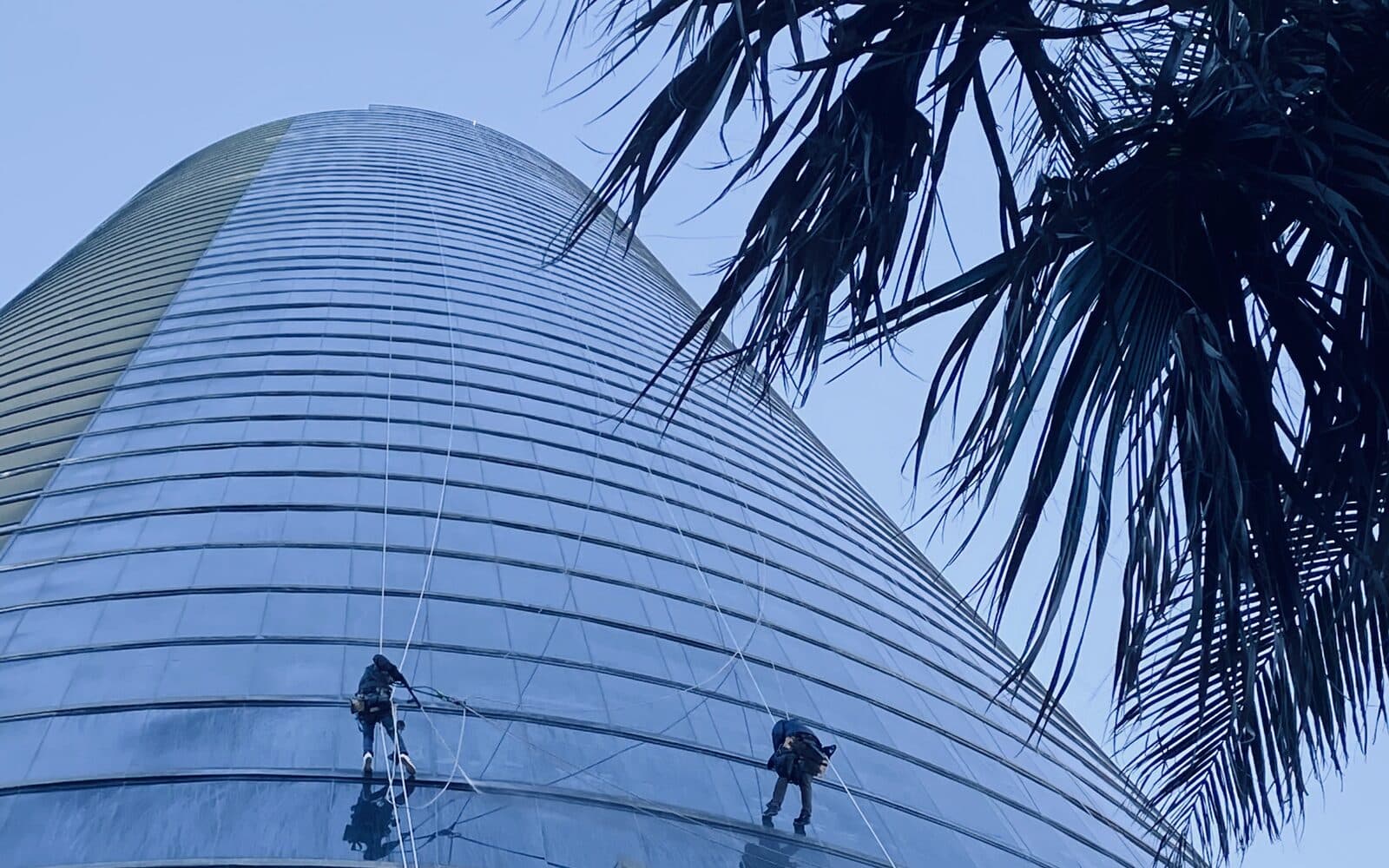
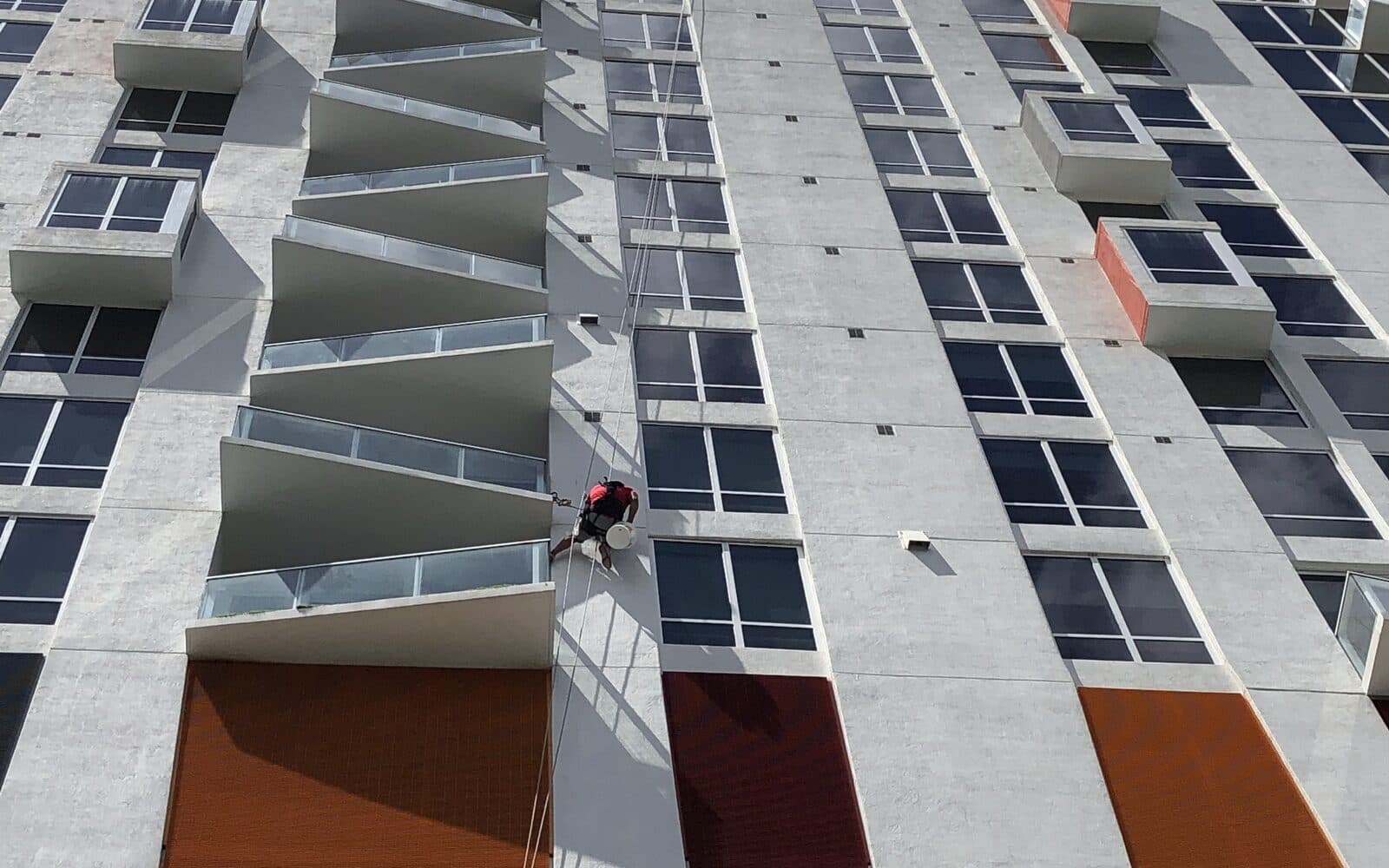
Rope access and swing stage crews reach every floor without standing scaffolding across your entrances for months. Throughout, the board receives photo documentation and progress reporting the property manager can forward straight into the board packet.
Tell us about your building. We'll come look at it, and tell you honestly what it needs.
To see how this plays out in practice, read about balcony waterproofing for commercial buildings, ten warning signs of waterproofing problems and building envelope restoration after water damage.
Not sure which repair your building needs?
Walk the building with a licensed restoration contractor before you write a scope.
Frequently asked questions
Updated: October 8, 2026