Milestone Inspection Repairs
A milestone inspection tells your board what is wrong. It does not repair anything. What follows the report — defining the scope, funding it, permitting it, and getting crews onto an occupied building — is the part that has to happen inside a statutory deadline, and it is the part we do.
Basile Contractors does not perform milestone inspections. Those belong to a licensed engineer or architect, and they should: the firm that identifies the damage should not be the firm that profits from repairing it. We are the restoration contractor that carries out the work the report calls for.
The repairs a Phase 2 report usually calls for
- Structural concrete repair — removing unsound concrete, cleaning or replacing corroded reinforcing steel, rebuilding the section
- Balcony, walkway and terrace repair — normally the largest line item, because balconies are the most exposed element on the building
- Facade and masonry repair — cracked stucco, failed control and expansion joints, deteriorated units
- Waterproofing — the protective layer that decides whether the repair lasts fifteen years or five
- Protective coatings — applied last, over a sound and waterproofed substrate
The order matters more than boards expect. Concrete repaired and left unprotected in salt air begins the same corrosion cycle again, and the association pays for the same repair twice inside a decade.
Built around the deadline, not around us
Where Phase 2 finds substantial structural deterioration, repairs must begin within 365 days. A year sounds generous until the scope, the bids, the funding vote, the permits and the mobilisation are laid end to end — most boards find they had about four months of genuine slack.
We would rather be involved before the scope goes out to bid than after. Walking the building alongside your engineer lets the repair sequence, access method and phasing be written into the scope, which is what makes competing bids comparable in the first place.
How we price it for a board
Concrete repair quantities are unknowable until the surface is opened. A sounding survey estimates the delaminated area; the real figure appears during demolition and is routinely larger.
So we price line-item, not lump sum, with an agreed unit rate for additional repair area approved before anything is opened. The board approves the rate once, in advance, rather than negotiating change orders mid-project with a swing stage already hanging off the building. A line-item scope is also what lets a board defend the assessment to owners.
Work that happens around residents
Nearly all of our restoration work happens on occupied buildings. We phase by elevation and stack so a resident loses the use of a balcony for a defined window rather than living beside an active project for the whole job. Walkways and entries are protected, and access is coordinated with management.
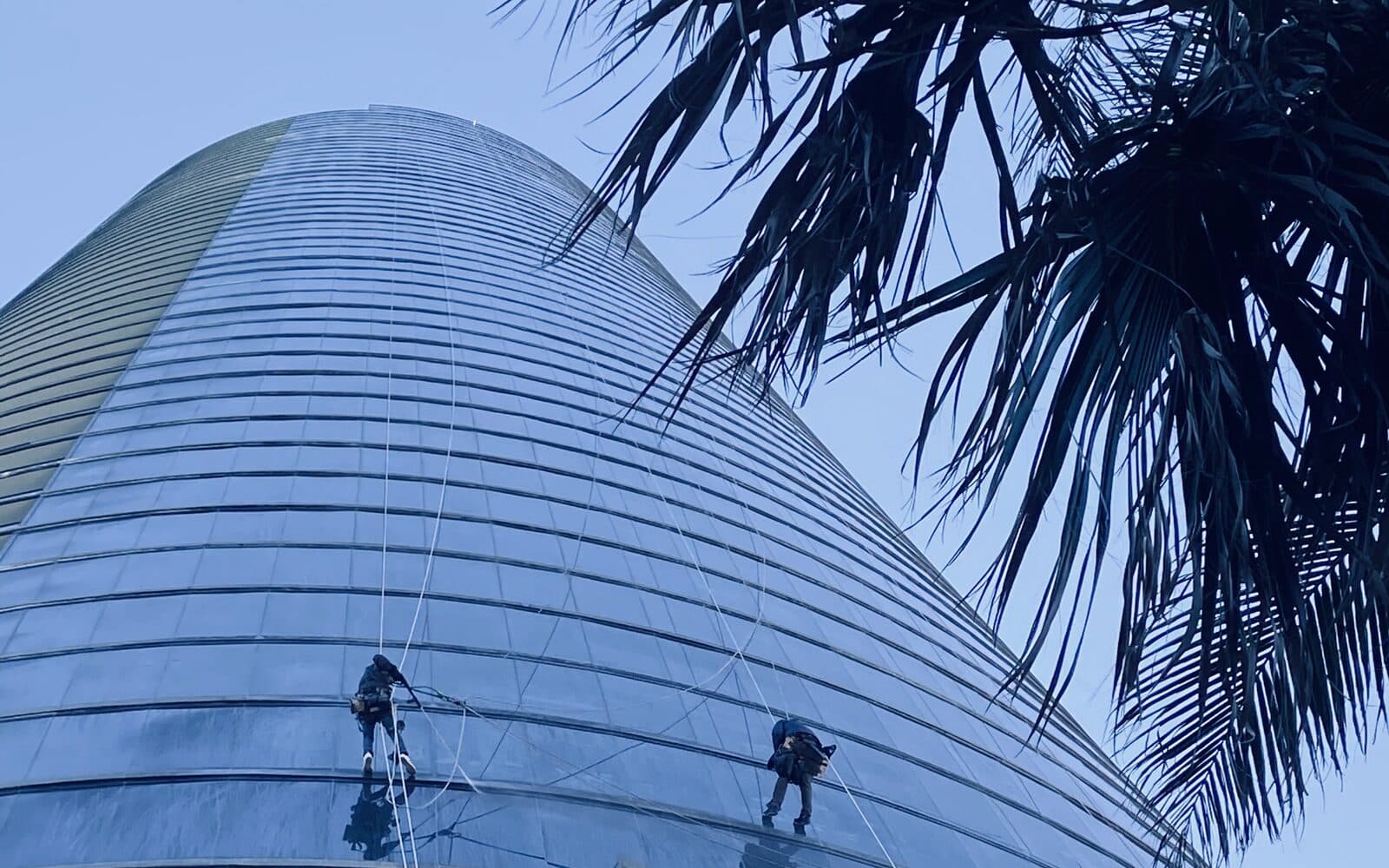
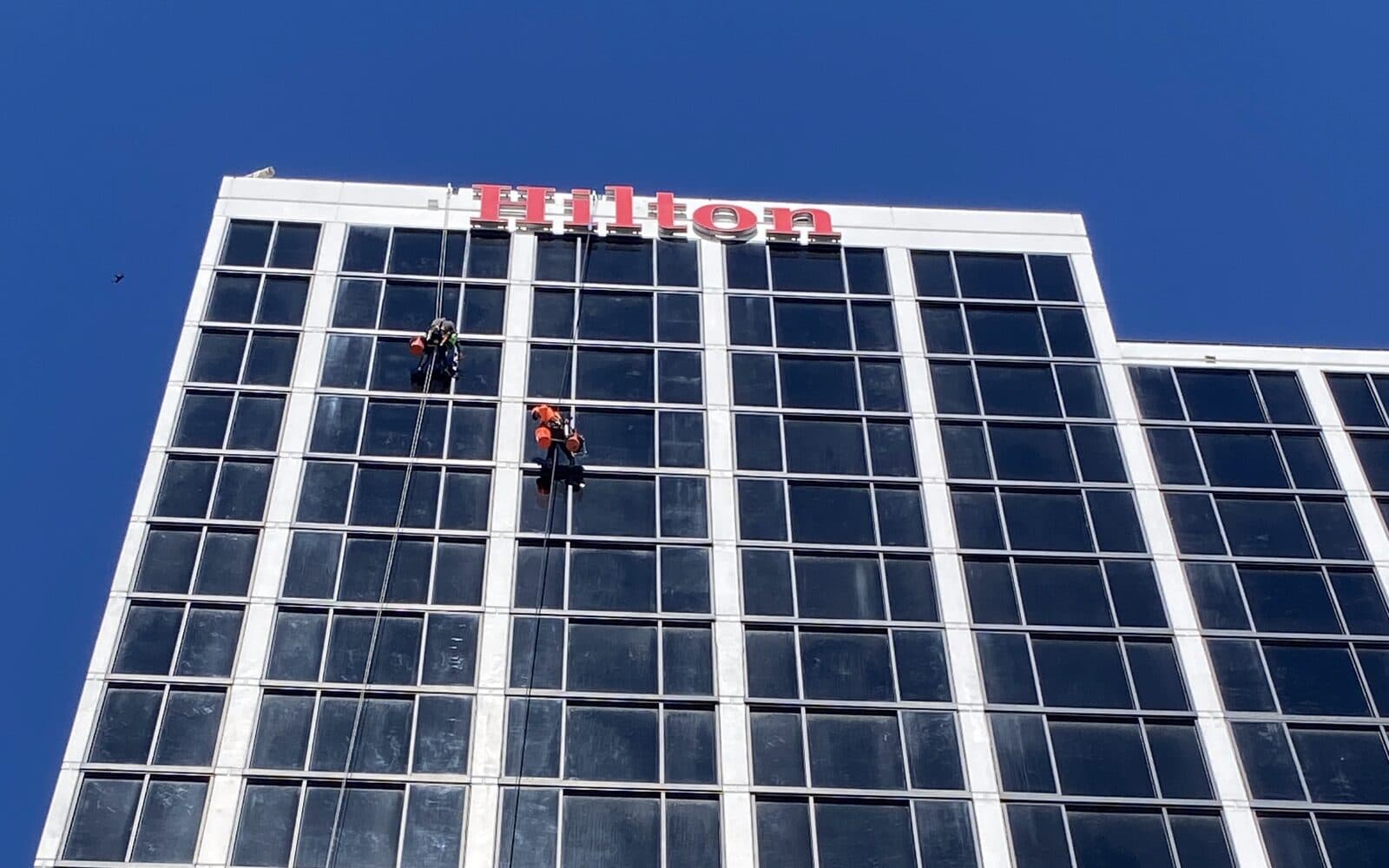
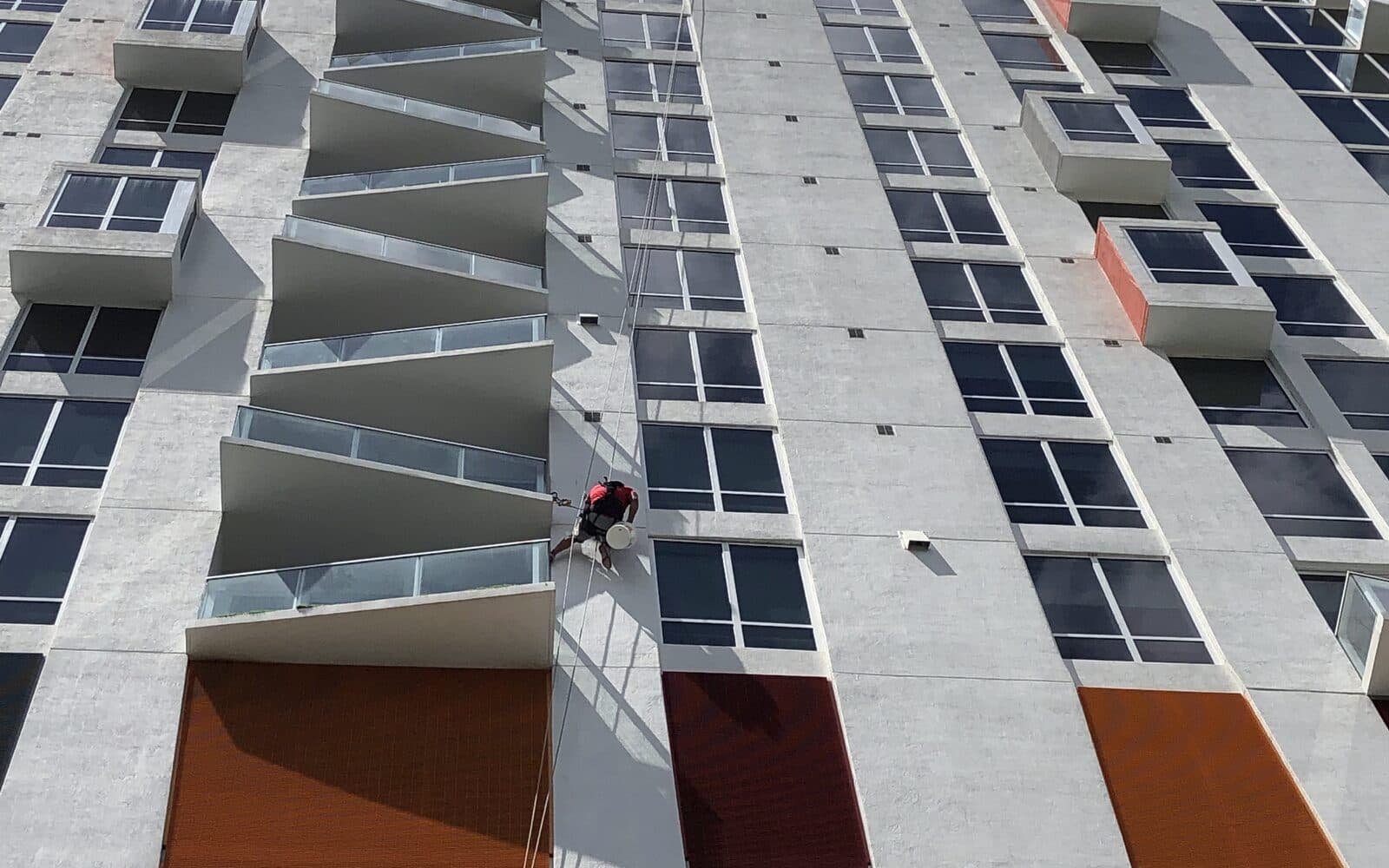
Rope access and swing stage crews reach every floor without standing scaffolding across your entrances for months. Throughout, the board gets photo documentation and progress reporting the property manager can forward straight into the board packet.
Recertification and SIRS repairs, in the same project
A building can owe a county recertification and a state milestone inspection at the same time, on different clocks. It is still one building — the spalled balcony in one report is the same balcony in the other.
Raised at the scoping stage, both can usually be satisfied by a single project. On a high-rise, getting crews and equipment to the upper floors is often a larger cost than the repair itself, so doing it once instead of twice is the largest saving available on this kind of work.
Tell us about your building. We'll come look at it, and tell you honestly what it needs.
Not sure which repair your building needs?
Walk the building with a licensed restoration contractor before you write a scope.
Frequently asked questions
Updated: October 1, 2026