High-Rise Painting & Coatings in South Florida: A Complete Guide
A complete guide to high-rise painting and coatings in South Florida: the process, coating options, how the climate affects paint, costs, access methods, and choosing a contractor.
By Luigi Basile
President
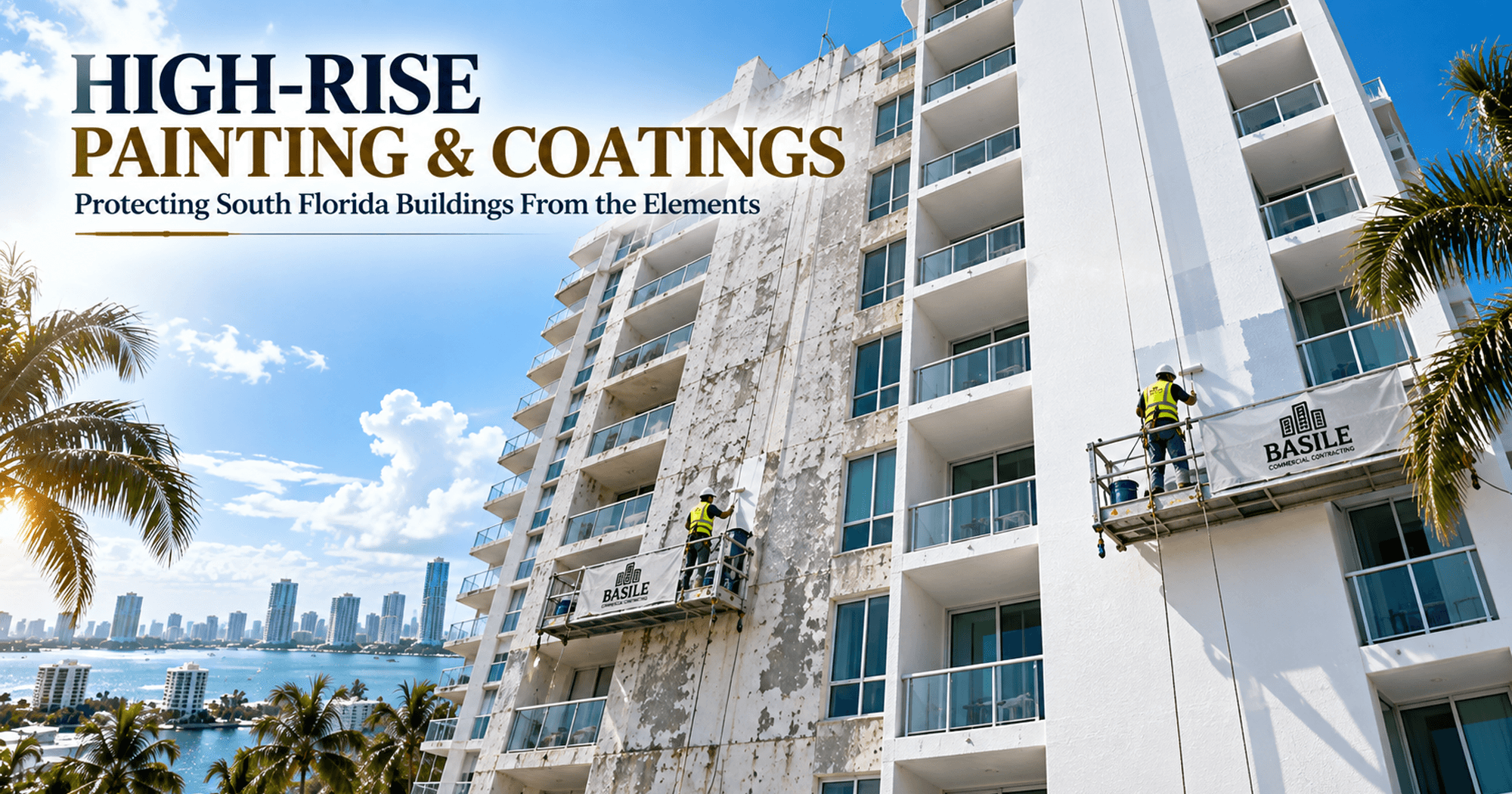
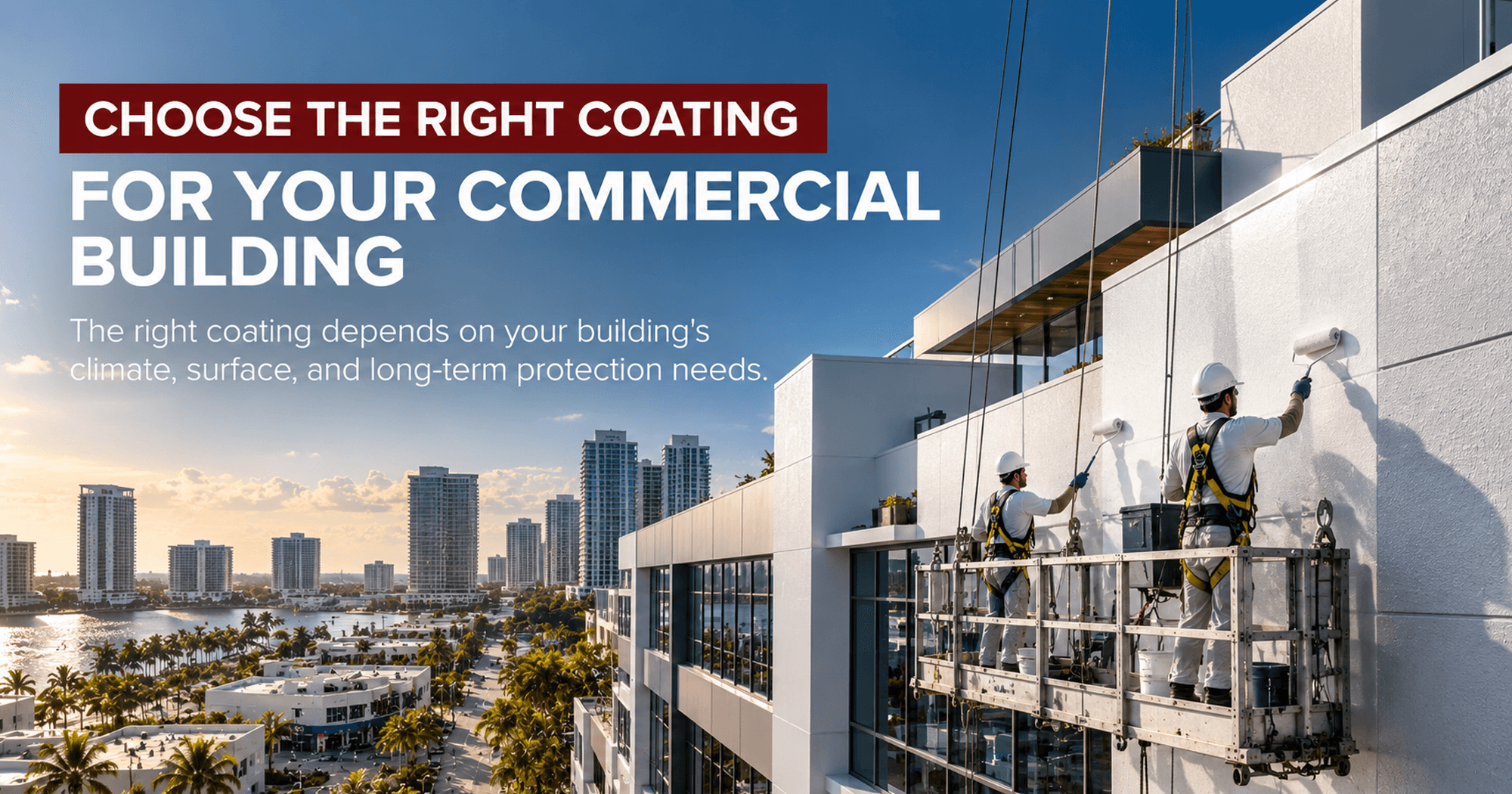
Painting a high-rise building in South Florida is a different job from painting almost anything else. It combines commercial building painting with the demands of height, specialized access, strict safety requirements, and one of the harshest coating environments in the country. Sun, salt, humidity, and storms all work against the finish from the day it goes on. This guide covers how high-rise painting works, why exterior coatings matter for tall buildings, how the South Florida climate shapes every coating decision, what the work costs, and how to choose a high-rise painting contractor that will get it right.
Done well, a high-rise painting and coatings project does more than refresh a building's appearance — it protects the concrete and masonry underneath, extends maintenance cycles, and preserves property value. Done poorly, it fails early and takes the building's envelope down with it. The difference comes down to preparation, the right coating for the conditions, and the experience to apply it safely at height.
What Is High-Rise Building Painting?
High-rise building painting is the application of paint and protective coatings to tall commercial and residential structures, using specialized equipment and access methods that ground-level painting never requires. It differs from standard residential painting in almost every dimension: scale, safety, access, coating performance, and the way weather loads the surface.
The distinction between interior and exterior high-rise painting matters too. Interior work focuses on finish and appearance in occupied spaces, while exterior high-rise painting is as much about protection as looks — the coating is the building's first defense against the elements. The building types that most often need high-rise painting include condominiums, apartment buildings, hotels, office buildings, commercial properties, and mixed-use buildings. What they share is height and exposure, which is precisely why high-rise painting demands specialized equipment, trained crews, and coating systems built to last on a tall, weather-beaten facade.
Why Exterior Painting Matters for High-Rise Buildings
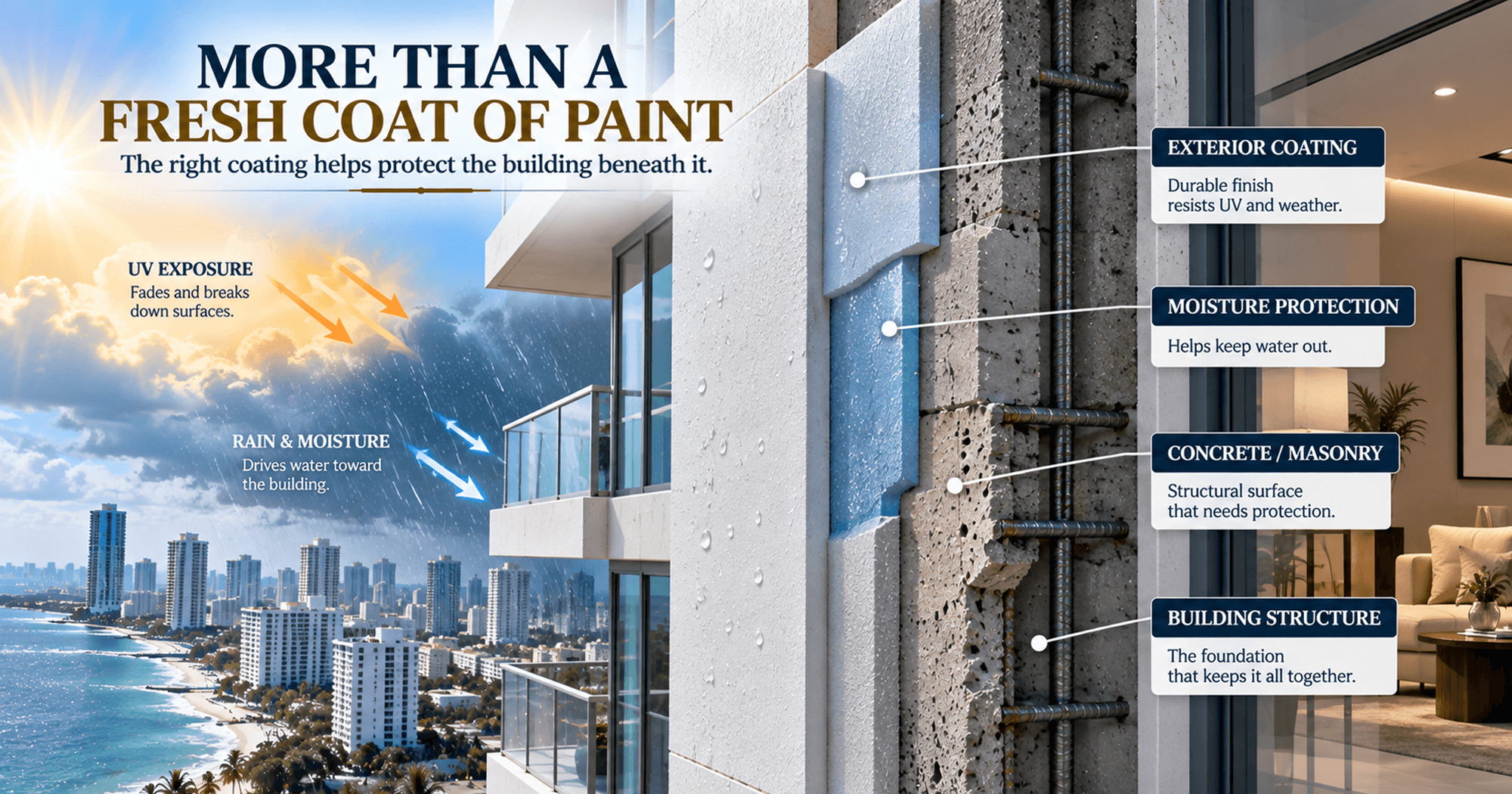
Exterior painting on a high-rise is a protective investment, not just a cosmetic one. A quality commercial exterior painting system improves the building's appearance and creates a consistent, well-maintained finish, but its more important job is protecting the exterior surfaces beneath it. The coating shields concrete and masonry from weather, reduces weather-related deterioration, and slows the moisture intrusion that drives structural damage.
That protection supports long-term building maintenance and directly affects value: a clean, well-protected exterior signals a well-run building and commands a premium, while a fading, peeling facade suggests deferred maintenance that scares off buyers and tenants. For condo and HOA boards especially, exterior painting is one of the most visible and cost-effective ways to protect both the structure and the property's worth.
How South Florida Weather Affects Building Paint and Coatings
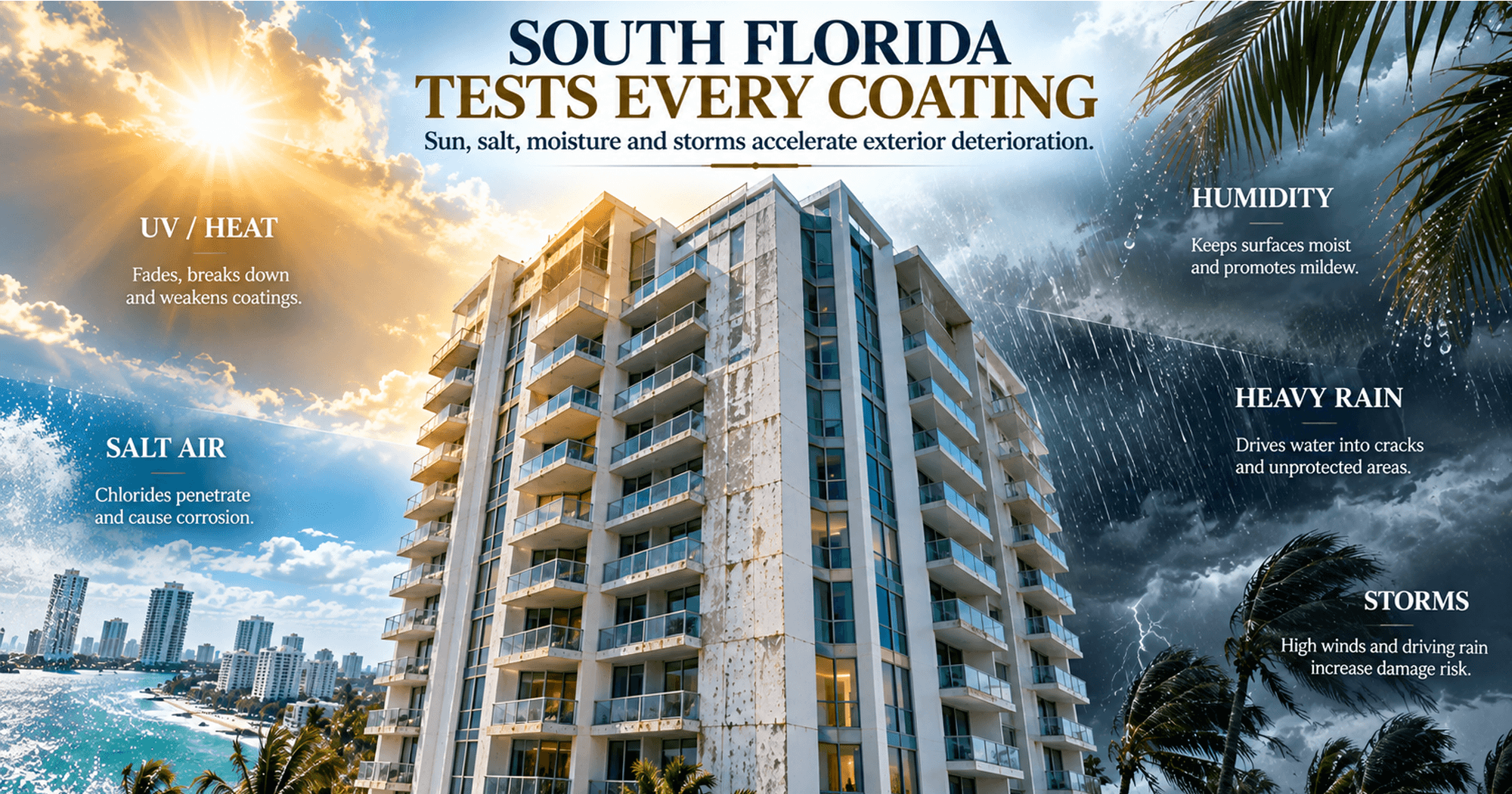
No region tests exterior coatings like South Florida. Four forces in particular determine how long a paint job lasts.
Intense UV Exposure
The Florida sun is relentless, and strong ultraviolet radiation is hard on any coating. Over time UV causes fading, chalking, surface deterioration, and, eventually, premature coating failure. UV-resistant coating systems are essential to holding color and protection over the years.
High Humidity
South Florida's constant humidity keeps surfaces damp and creates ideal conditions for mildew and staining, both of which degrade paint. High moisture also contributes to paint deterioration and adhesion problems, which is why breathable coating systems — ones that let trapped moisture escape rather than blistering the finish — perform so much better here.
Salt Air and Coastal Conditions
For the many buildings near the coast, salt air is a constant threat. Salt exposure accelerates surface deterioration, drives corrosion of metal components, and contributes to coating breakdown. Coastal buildings need coatings formulated to withstand that chloride-laden environment.
Heavy Rain and Storms
Frequent heavy rain and seasonal storms subject facades to repeated moisture exposure and water intrusion risk. A protective exterior coating is a key part of keeping wind-driven rain from reaching the structure, which makes the coating system's water resistance as important as its appearance. In this climate, high-rise painting in Florida and specifically high-rise painting in South Florida call for systems and expertise matched to the local conditions.
Commercial Building Painting vs. High-Rise Painting
High-rise painting is a specialized category of commercial building painting. The comparison below shows where the two diverge.
| Factor | Commercial Building Painting | High-Rise Painting |
|---|---|---|
| Building type | Offices, retail, warehouses, etc. | Condos, hotels, towers, apartments |
| Building height | Low to mid-rise | Tall / high-rise |
| Access requirements | Usually simpler | Specialized access often required |
| Equipment | Lifts, scaffolding, etc. | Swing stages, rope access, lifts |
| Surface exposure | Varies | Often significant |
| Project complexity | Moderate to high | Generally higher |
| Safety requirements | Strict | Highly specialized |
| Coating requirements | Depends on building | Often requires high-performance systems |
In short, high-rise painting is commercial building painting taken to a higher level of difficulty, where height, access, safety, weather exposure, and building-envelope conditions all have to be managed at once. That added complexity is exactly why it calls for contractors who specialize in it.
Types of Exterior Building Coatings
The coating is the heart of any exterior project, and the right choice depends on the building and its exposure.
Elastomeric Coatings
Elastomeric coatings are thick, flexible, and able to bridge hairline cracks while moving with the building. Their flexibility and moisture resistance make them a common, high-performing choice for exterior high-rise walls that expand, contract, and develop small cracks over time.
Acrylic Coatings
Acrylic coatings offer durability, good UV resistance, and a clean, attractive finish, making them a widely used option for commercial applications where appearance and weather resistance both matter.
Waterproofing Coatings
Waterproofing coatings add moisture protection at the building-envelope level, and on a high-rise the line between painting and waterproofing often blurs — the right exterior coating both finishes and protects the surface against water.
Protective Concrete Coatings
Protective concrete coatings are formulated to shield concrete from weather exposure and surface deterioration, supporting long-term maintenance on the concrete structures that dominate South Florida's skyline.
Which coating is appropriate depends on the substrate, the building's condition, the exposure, the local climate, and the manufacturer's specifications — there is no single best coating for every building.
The High-Rise Painting Process
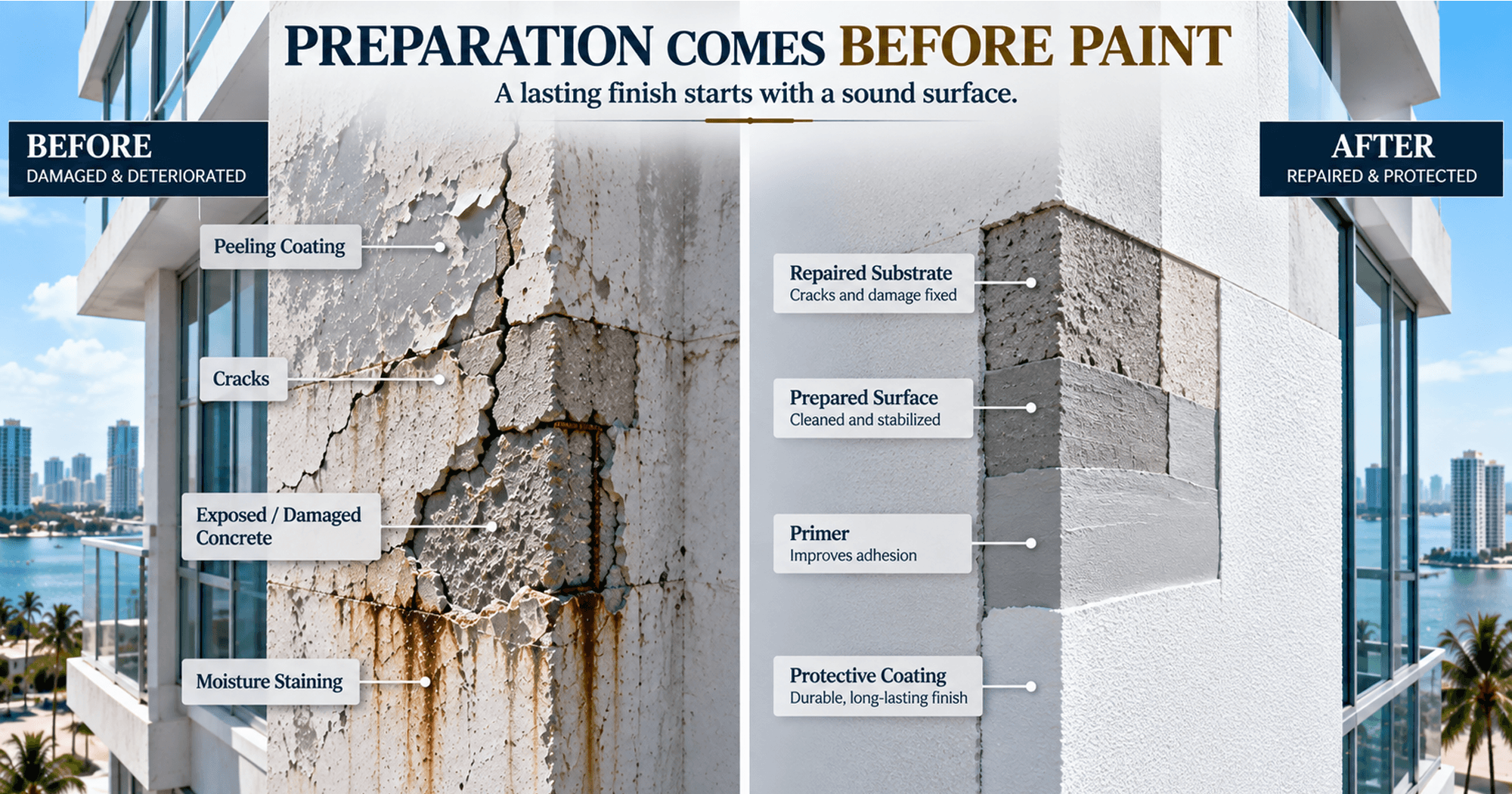
A professional high-rise painting project follows a disciplined sequence, because the quality of the result depends far more on preparation than on the paint itself.
1. Building Inspection
The project starts with an inspection of the existing paint condition, cracks, concrete deterioration, moisture problems, and any previous coatings — establishing what the building actually needs.
2. Surface Preparation
Preparation is where longevity is won or lost. Crews clean and pressure-wash the surface, remove loose and failing paint, repair damaged areas, and treat cracks so the new system bonds to sound substrate.
3. Repairs and Priming
Necessary concrete and crack repairs are completed, primer is applied to promote adhesion, and corrosion is treated where reinforcement or metal is exposed — closing the underlying problems before any finish coat.
4. Coating Selection
The contractor selects the coating system based on the substrate, weather exposure, existing coating, desired durability, and the building's specific requirements, matching product to conditions.
5. Paint and Coating Application
The coating is applied using appropriate methods and the correct number of coats, following manufacturer specifications and quality control throughout to ensure proper thickness and coverage.
6. Final Inspection
A final inspection checks finish consistency, coverage, and defects, completes any touch-ups, and confirms the work meets the standard before the project closes.
How High-Rise Painting Contractors Access Tall Buildings
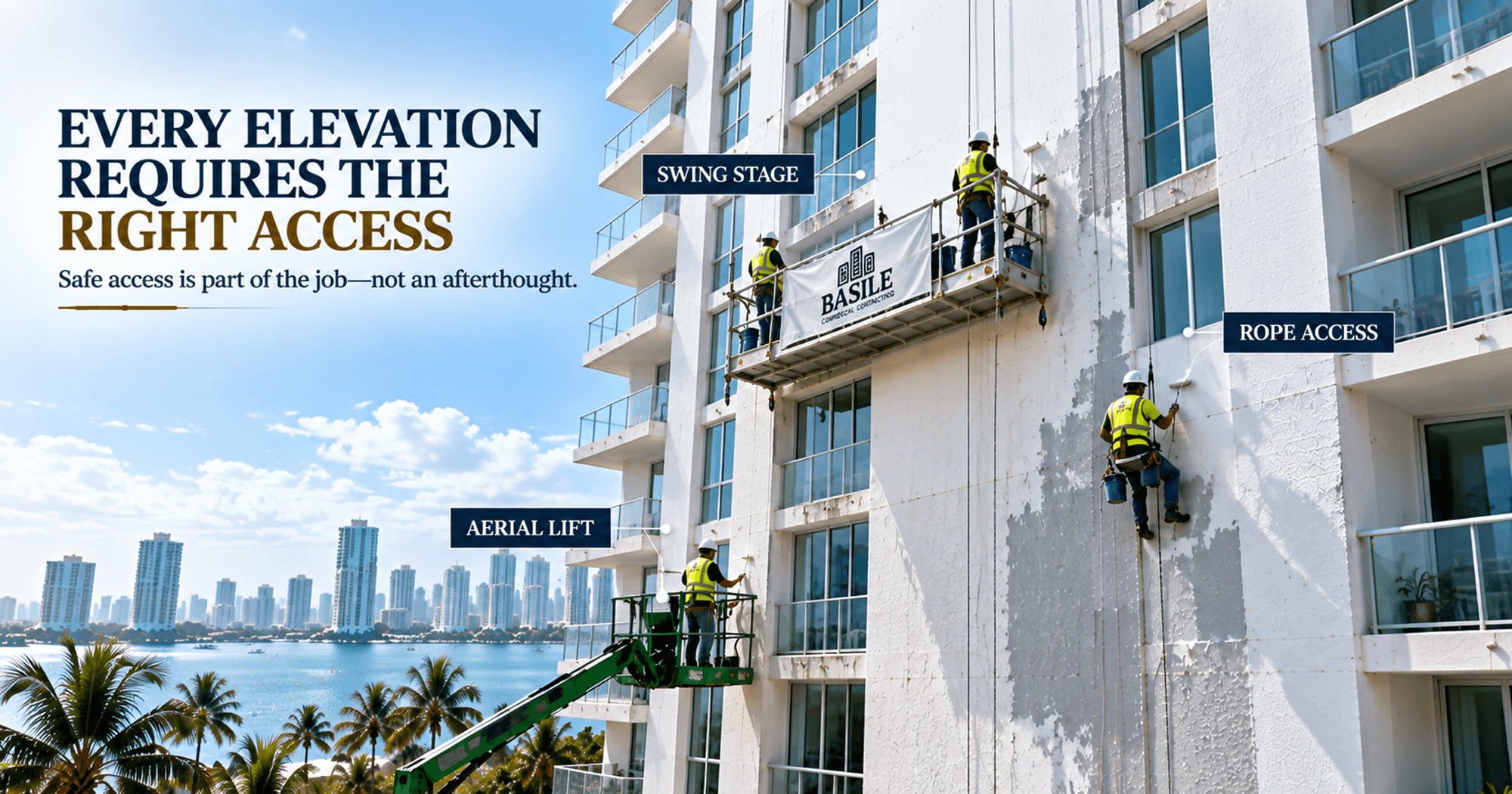
Reaching every square foot of a tall facade safely is one of the defining challenges of high-rise painting, and contractors use several access methods depending on the building.
Swing Stage Systems
Suspended swing stages (motorized platforms) lower crews down the face of a building, providing a stable working surface for large elevations.
Rope Access
Rope access lets trained technicians reach tight, complex, or otherwise difficult elevations efficiently and safely — a specialized capability that many high-rise projects rely on.
Scaffolding
Scaffolding provides a fixed, stable platform where sustained access to a section of the building is needed.
Aerial Lifts
Aerial lifts reach lower elevations and accessible areas quickly and safely.
The right access method depends on the building's height, architecture, location, surface conditions, and safety requirements — and choosing and operating it correctly is a core part of what makes a high-rise painting contractor qualified.
How Often Should a High-Rise Building Be Painted?
There is no universal repainting schedule for high-rise buildings. How often a building needs recoating depends on the climate, UV exposure, salt air, and humidity it faces; the quality of the previous coating system; the building's location and surface condition; and its maintenance practices, including how well the last preparation and application were done. A building on the coast in full sun will need attention sooner than a sheltered one inland. Regular inspections, rather than a fixed calendar, are the best way to determine when recoating is actually needed.
Signs Your High-Rise Building Needs Exterior Painting
Buildings signal the need for repainting well before the coating fully fails. Watch for fading, peeling paint, cracking, and chalking; staining and exposed concrete; flaking coatings; water-related deterioration; and an uneven, patchy exterior appearance. For property managers and HOA or condo boards, addressing these signs of needed high-rise exterior painting early — while they are still coating issues — prevents them from developing into far more expensive concrete restoration and building-envelope repairs.
How Much Does High-Rise Painting Cost?
High-rise painting pricing varies widely because every building and project is different. The factors below drive the cost.
| Factor | Impact on Cost |
|---|---|
| Building size | More surface area increases labor and materials |
| Building height | Greater height can require specialized access |
| Surface condition | Repairs increase project requirements |
| Surface preparation | Extensive preparation increases labor |
| Coating system | Specialized coatings may cost more |
| Accessibility | Difficult areas increase complexity |
| Number of coats | More coats require additional labor and material |
| Building location | Environmental conditions can affect requirements |
| Repairs | Concrete and substrate repairs add project costs |
Because these variables interact, an on-site inspection is generally required for an accurate estimate. A reputable contractor evaluates the building in person rather than quoting a blanket per-square-foot rate.
Common Problems With High-Rise Painting Projects
Poor Surface Preparation
Skipping thorough cleaning, repair, and priming is the single biggest cause of premature coating failure — the finish only lasts if the surface underneath is sound.
Choosing the Wrong Coating
A coating that does not match the substrate, exposure, and climate will not perform, no matter how well it is applied.
Painting Over Existing Damage
Coating over cracks, spalling, or deterioration hides the problem temporarily while it keeps advancing underneath.
Ignoring Moisture Problems
Unaddressed moisture leads to blistering, peeling, and adhesion failure of the new coating.
Using Inappropriate Access Equipment
The wrong access method compromises both safety and the quality and consistency of the application.
Failing to Follow Manufacturer Specifications
Ignoring specified preparation, coat thickness, and cure times voids warranties and shortens coating life.
Prioritizing Price Over Quality
The cheapest bid often means lighter preparation and materials, leading to a finish that fails years early and costs more to redo.
How to Choose the Right High-Rise Painting Contractor
Choosing the right high-rise painting services provider comes down to a clear checklist. Look for genuine experience with high-rise buildings and commercial painting; proper licensing and insurance; and documented safety compliance. Confirm experience with specialized access systems and knowledge of South Florida conditions, along with strong surface preparation capabilities and coating system expertise. Ask for references and previous projects, a detailed project scope, and warranty and maintenance options. A qualified high-rise painting contractor should be able to speak to all of these without hesitation.
Why Professional High-Rise Painting Services Matter
The stakes on a high-rise are too high for guesswork. Professional high-rise painting services bring a proper building inspection, specialized surface preparation, and correct coating selection. They deliver professional application, genuine high-rise access expertise, and rigorous safety procedures on every elevation. They apply real quality control and factor in long-term maintenance so the coating keeps protecting the building. Each of those elements protects both the people doing the work and the building itself — and any one of them done poorly can undermine the whole project.
Not sure which repair your building needs?
Walk the building with a licensed restoration contractor before you write a scope.
Painting & Coatings for South Florida High-Rise Buildings
South Florida's environment makes local expertise essential when selecting exterior paints and coatings. Basile Contractors serves high-rise and commercial buildings across Miami, Fort Lauderdale, Broward County, Miami-Dade County, and Palm Beach County, including coastal properties, condo and HOA communities, and commercial buildings. Choosing a coating for a beachfront condo tower is a different decision than for an inland office building, and knowing how salt air, humidity, UV, and storms behave in each location is exactly what separates a coating that lasts from one that fails. That local knowledge is central to how Basile approaches every high-rise painting project in South Florida.
Need to Repaint or Recoat Your High-Rise Building?
If your building is showing fading, peeling, staining, or exposed concrete, the time to plan a project is before those coating issues become structural ones. Basile Contractors helps property owners, property managers, HOA boards, condo associations, facility managers, and commercial property managers assess their buildings and plan the right painting and coatings solution. Call (352) 657-8653 for an assessment and project consultation.
Standards and further reading
Official standards and public sources on this topic:
- Master Painters Institute, publisher of the coating system specifications and approved product lists used in architectural painting specifications.
- ICRI technical publications, the International Concrete Repair Institute's guidelines on surface preparation, corrosion repair and repair materials.
- SWR Institute, the Sealant, Waterproofing and Restoration Institute, the trade body for sealant and waterproofing contractors.
Frequently asked questions
Updated: October 8, 2026