Balcony & Walkway Waterproofing: How Protective Systems Prevent Concrete Deterioration
How balcony and walkway waterproofing keeps water out of concrete, what membranes do, and why repairs come first. A guide for South Florida commercial properties.
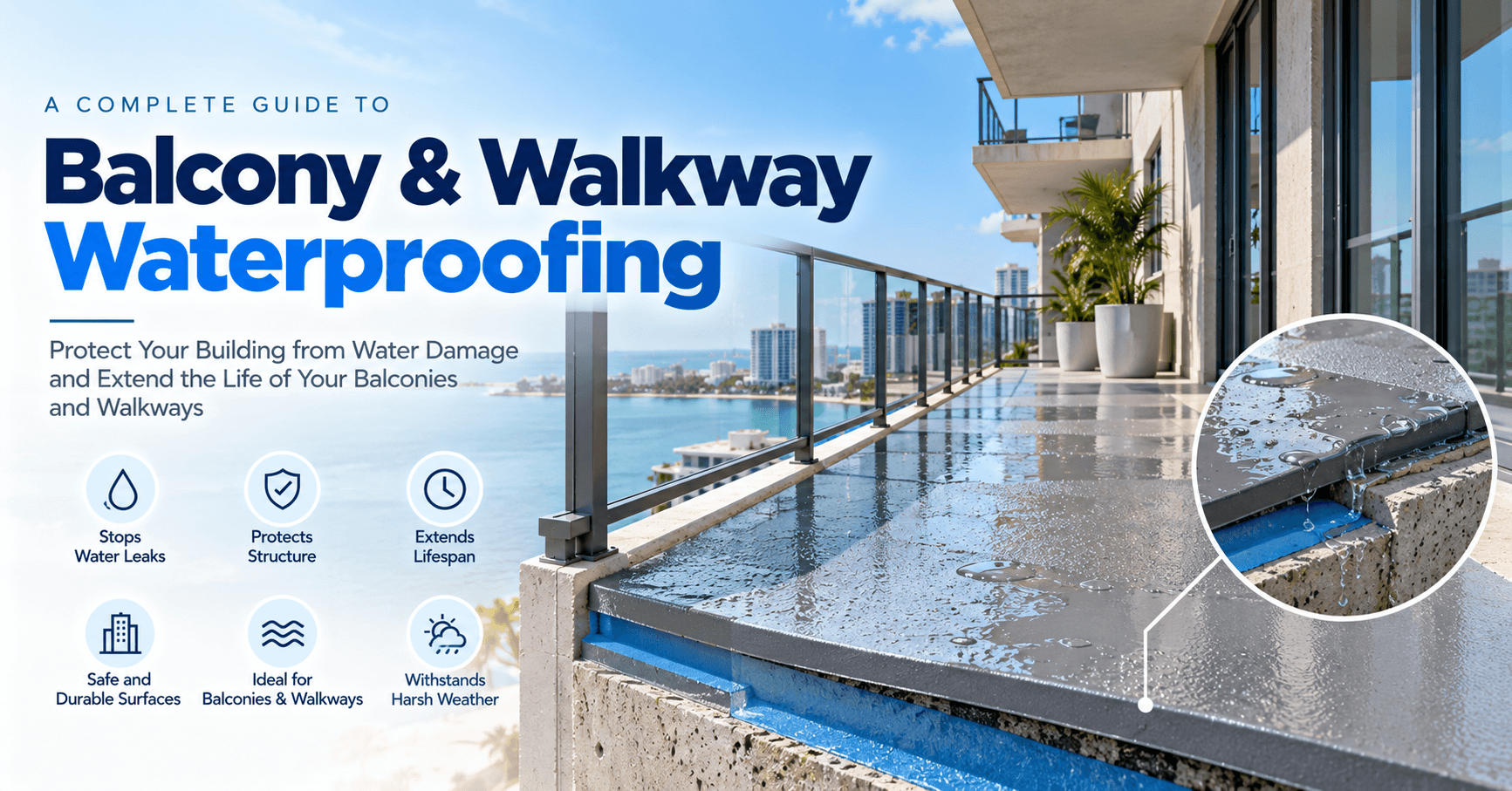
Concrete balconies and exterior walkways are the parts of a building that get rained on every week and walked on every day. When the waterproofing under or over them fails, water gets into the slab, reaches the steel, and starts the chain that ends in cracks, rust stains and spalled edges. This guide covers how balcony and walkway waterproofing protects concrete, what membranes do, how a waterproofing job is sequenced, and why repairs have to come before the membrane.
What Is Balcony Waterproofing?
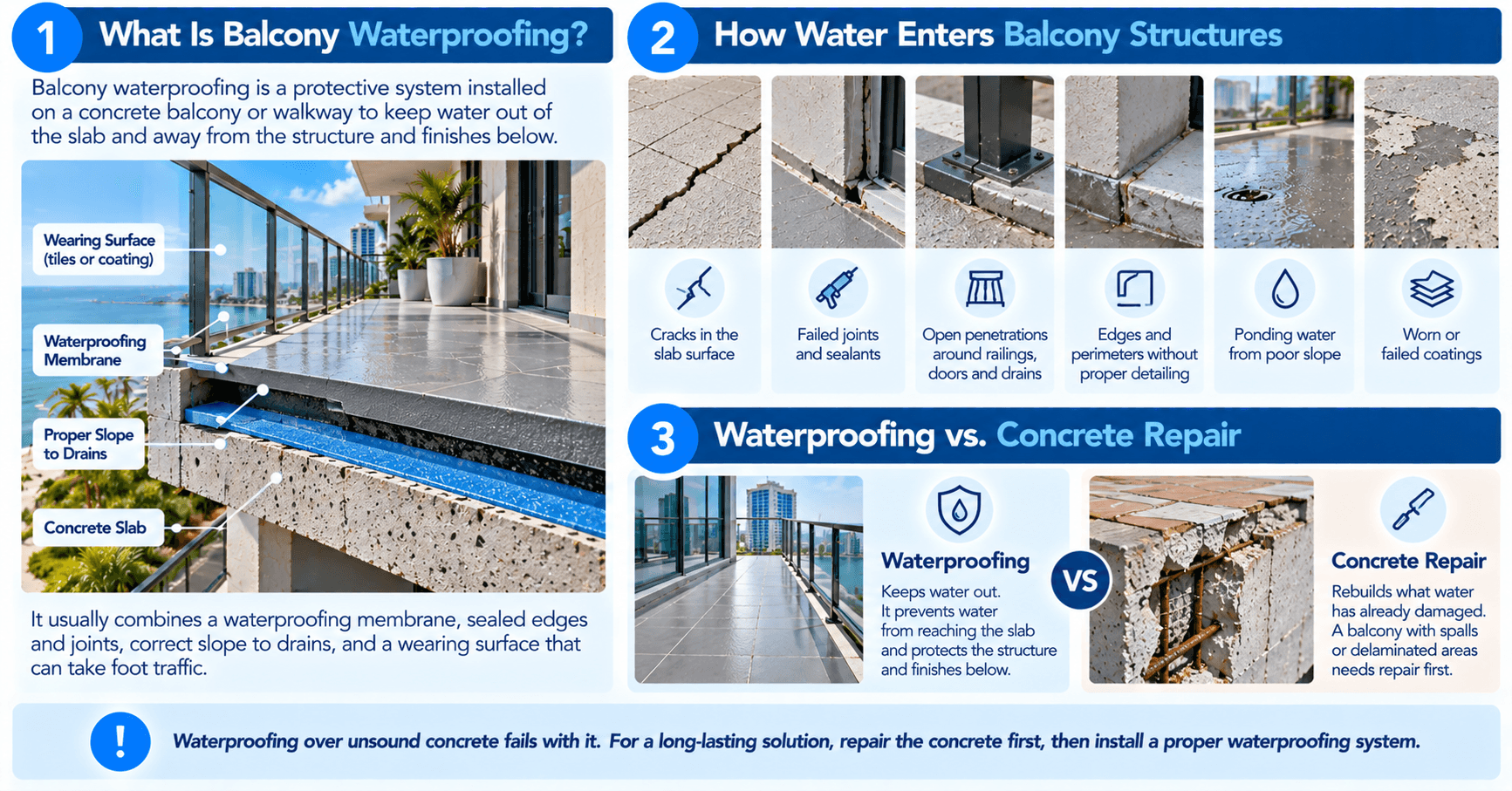
Balcony waterproofing is a protective system installed on a concrete balcony or walkway to keep water out of the slab and away from the structure and finishes below. It usually combines a waterproofing membrane, sealed edges and joints, correct slope to drains and a wearing surface that can take foot traffic.
How Water Enters Balcony Structures
- Cracks in the slab surface
- Failed joints and sealants
- Open penetrations around railings, doors and drains
- Edges and perimeters without proper detailing
- Ponding water from poor slope
- Worn or failed coatings
Waterproofing vs. Concrete Repair
Waterproofing keeps water out. Concrete repair rebuilds what water has already damaged. A balcony that has spalls or delaminated areas needs repair first. Waterproofing over unsound concrete fails with it.
Why Do Concrete Balconies and Walkways Need Waterproofing?
- Water intrusion through cracks and joints
- Repeated wetting and drying, which stresses the surface
- Cracking from movement and shrinkage
- Corrosion of reinforcing steel
- Spalling of the concrete cover
- Surface wear and deterioration
- Damage to materials and finishes below the slab
In cold climates, freeze-thaw cycles add to this list. In South Florida the drivers are heavy rain, humidity, salt and heat.
What Happens When Water Gets Into Concrete?
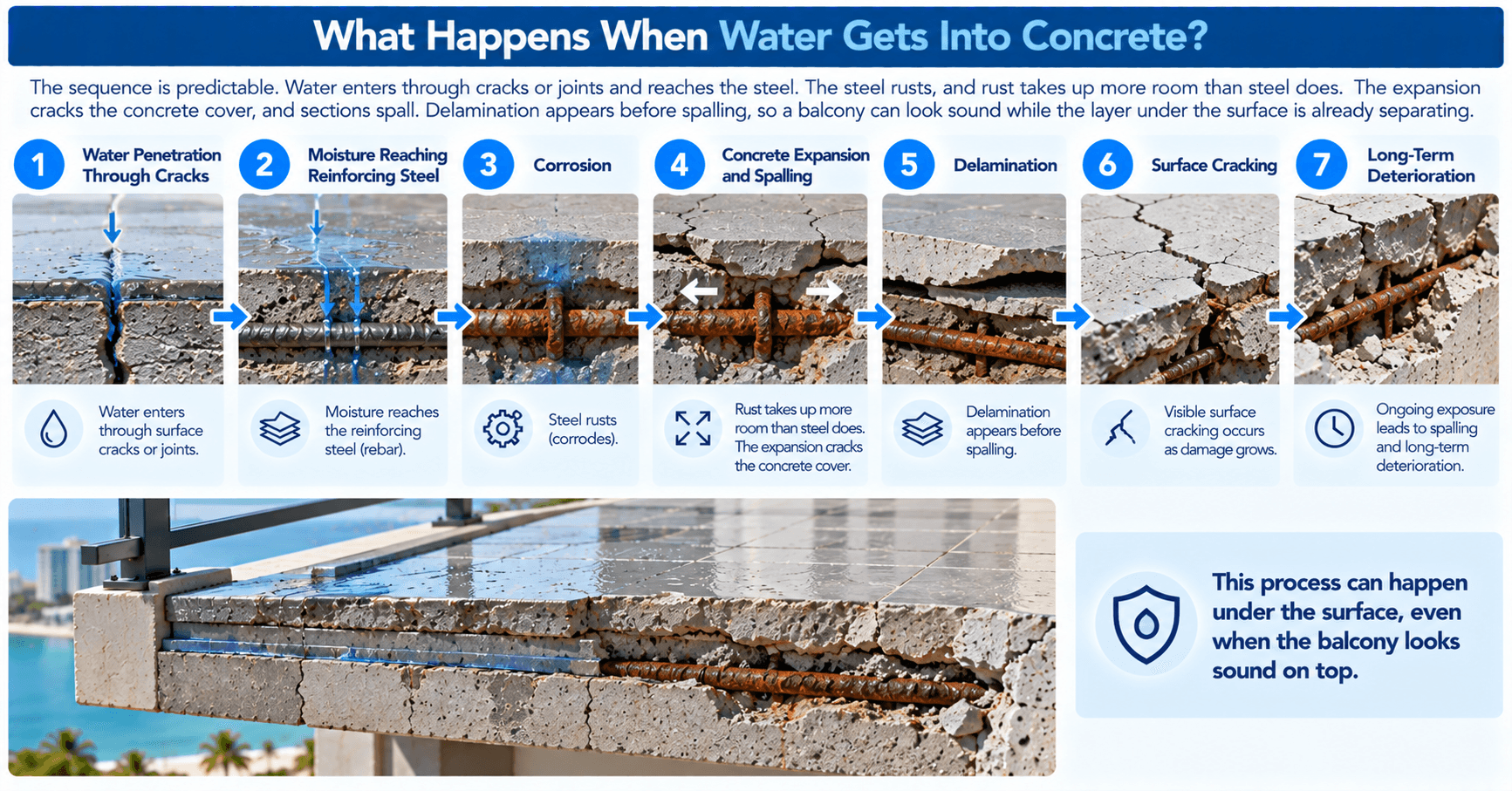
The sequence is predictable. Water enters through cracks or joints and reaches the steel. The steel rusts, and rust takes up more room than steel does. The expansion cracks the concrete cover, and sections spall. Delamination appears before spalling, so a balcony can look sound while the layer under the surface is already separating.
- Water penetration through cracks
- Moisture reaching reinforcing steel
- Corrosion
- Concrete expansion and spalling
- Delamination
- Surface cracking
- Long-term deterioration
Common Signs a Balcony Needs Waterproofing
- Visible cracks
- Water staining
- Efflorescence, the white salt deposits left when water evaporates
- Peeling or failed coatings
- Spalling
- Rust staining
- Ponding water after rain
- Leaks or stains on the ceiling below
- Cracked or missing joint sealant
- Moisture damage around edges and penetrations
What Is a Balcony Waterproofing Membrane?
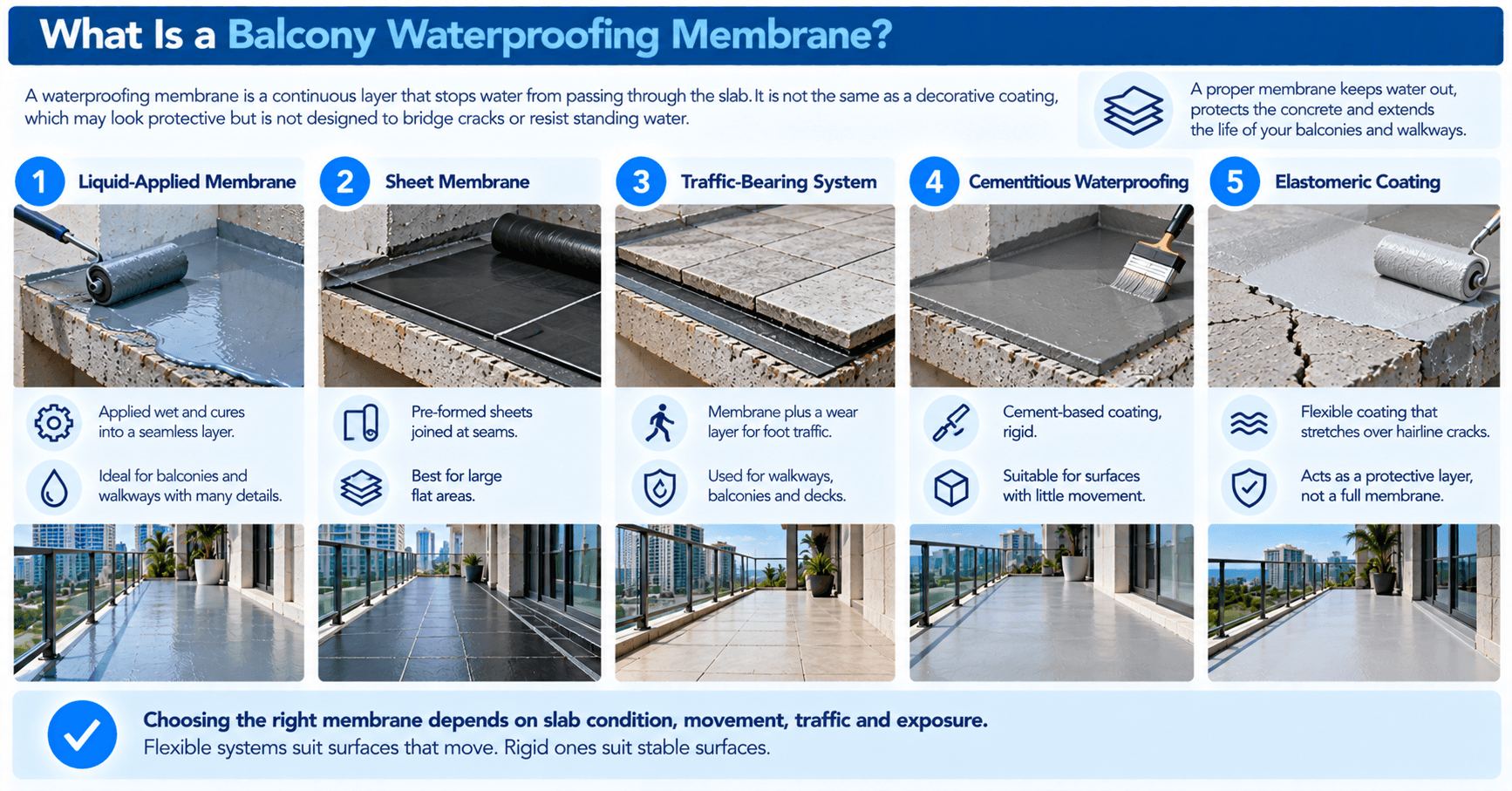
A waterproofing membrane is a continuous layer that stops water from passing through the slab. It is not the same as a decorative coating, which may look protective but is not designed to bridge cracks or resist standing water.
| Type | How it works | Typical use |
|---|---|---|
| Liquid-applied membrane | Applied wet and cures into a seamless layer | Balconies and walkways with many details |
| Sheet membrane | Pre-formed sheets joined at seams | Large flat areas |
| Traffic-bearing system | Membrane plus a wear layer for foot traffic | Walkways, balconies and decks |
| Cementitious waterproofing | Cement-based coating, rigid | Surfaces with little movement |
| Elastomeric coating | Flexible coating that stretches over hairline cracks | Protective layer, not a full membrane |
Choosing among them depends on slab condition, movement, traffic and exposure. Flexible systems suit surfaces that move. Rigid ones suit stable surfaces.
How to Waterproof a Balcony
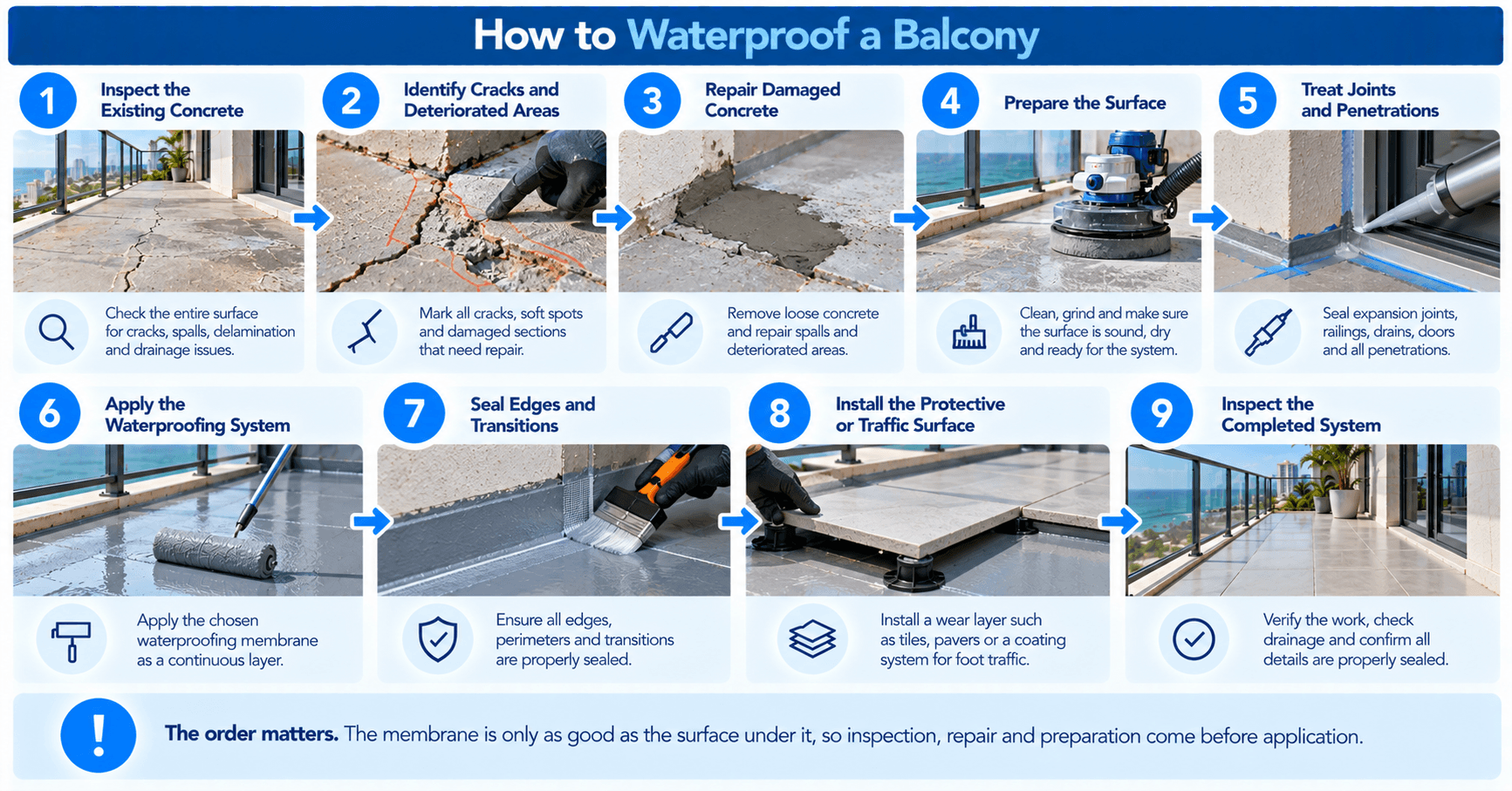
- Inspect the existing concrete
- Identify cracks and deteriorated areas
- Repair damaged concrete
- Prepare the surface
- Treat joints and penetrations
- Apply the waterproofing system
- Seal edges and transitions
- Install the protective or traffic surface
- Inspect the completed system
The order matters. The membrane is only as good as the surface under it, so inspection, repair and preparation come before application.
Balcony Floor Waterproofing
Balcony floors are vulnerable because they face the sky, hold water if the slope is wrong and are cut by door thresholds and drains. A durable job handles drainage and slope, treats cracks, installs the membrane, details the edges, drains and penetrations, and adds a wearing surface that protects the membrane from foot traffic. Preventing ponding is as important as the membrane itself.
Walkway Waterproofing for Concrete Surfaces
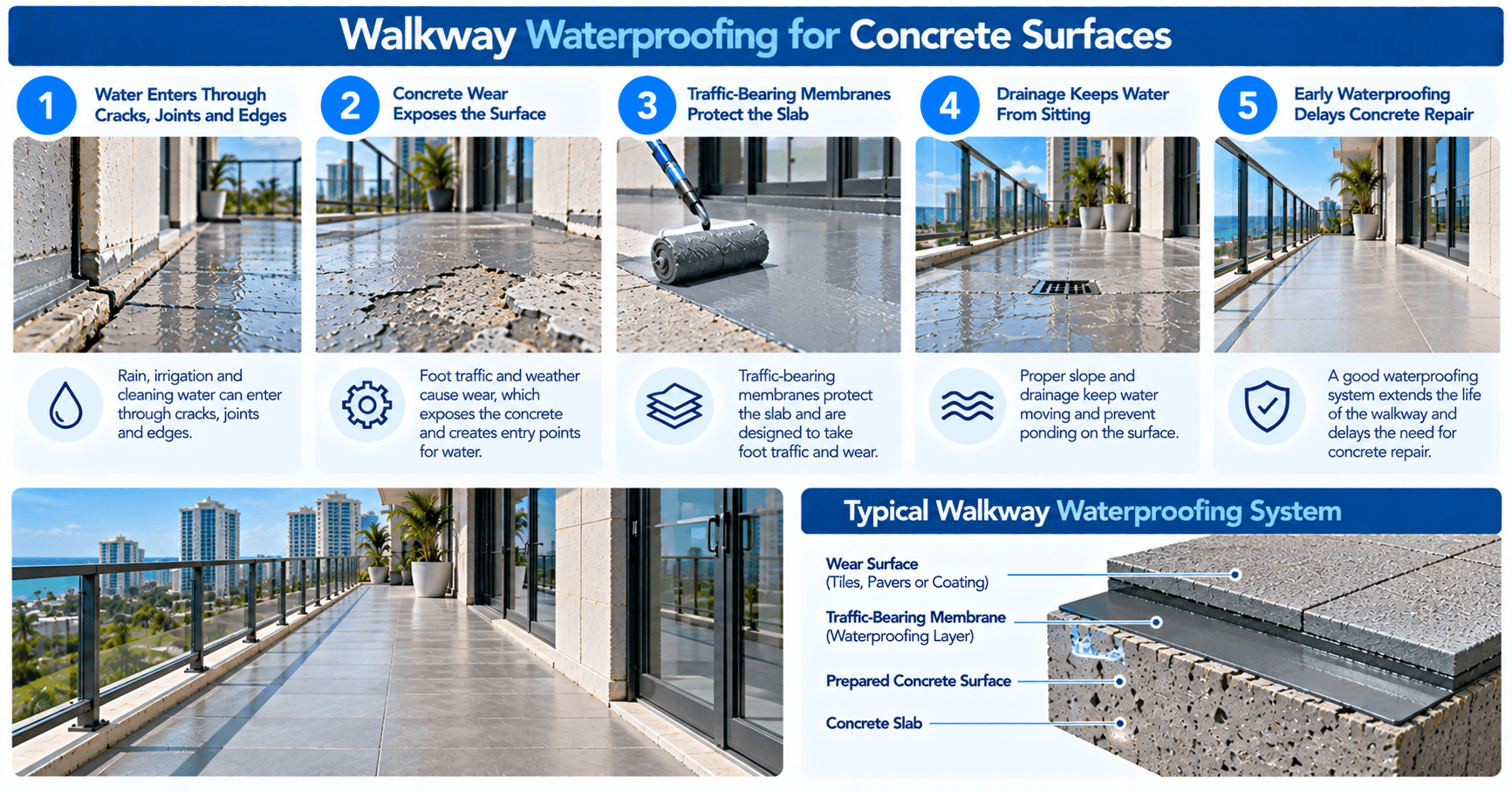
Exterior walkways, breezeways and corridors take water from rain, irrigation and cleaning. They also take foot traffic, which wears protective coatings. Cracks and failing joints are the usual entry points.
- Water enters through cracks, joints and edges
- Concrete wear exposes the surface
- Traffic-bearing membranes protect the slab and take wear
- Drainage keeps water from sitting on the surface
- Early waterproofing delays the need for concrete repair
Balcony Waterproofing Systems and Materials
Systems commonly used on commercial balconies and walkways include liquid-applied membranes, sheet membranes, cementitious waterproofing, elastomeric coatings, traffic deck systems, joint and crack sealants and protective concrete coatings. The right choice depends on the slab, the movement, the traffic and the budget, which is why a system is specified after inspection, not before.
Balcony Waterproofing vs. Concrete Repair
- Waterproofing addresses water entry
- Concrete repair addresses damage that has already happened
- Damaged concrete should be repaired first
- Many balconies need both
- Waterproofing cannot fix structural damage
This distinction is the reason a waterproofing quote should come with an inspection of the concrete. A contractor who proposes to coat over spalled or hollow-sounding concrete is proposing a repair that will fail.
How Waterproofing Helps Prevent Concrete Spalling
Spalling follows a path: moisture, corrosion, expansion, breakage. Waterproofing interrupts the first step. Removing deteriorated concrete, repairing the surface, protecting the steel and then installing the waterproofing breaks the cycle, and monitoring repaired areas confirms it is holding.
Commercial Balcony Waterproofing Process
- Initial inspection
- Moisture and damage assessment
- Concrete repair
- Surface preparation
- Crack and joint treatment
- Membrane application
- Edge and penetration detailing
- Protective surface installation
- Quality control
- Final inspection
Balcony Waterproofing Cost: What Affects Pricing?
There is no standard price for balcony waterproofing, because commercial and multi-unit projects vary widely. These are the factors that determine cost.
- Balcony size and number of balconies
- Condition of the concrete
- Extent of cracking
- Required concrete repair
- Waterproofing system selected
- Surface preparation
- Drainage and slope corrections
- Access, including height
- Edge and penetration detailing
- Protective finish
- Labor and equipment
A written scope after inspection gives the only reliable number.
Common Balcony Waterproofing Problems
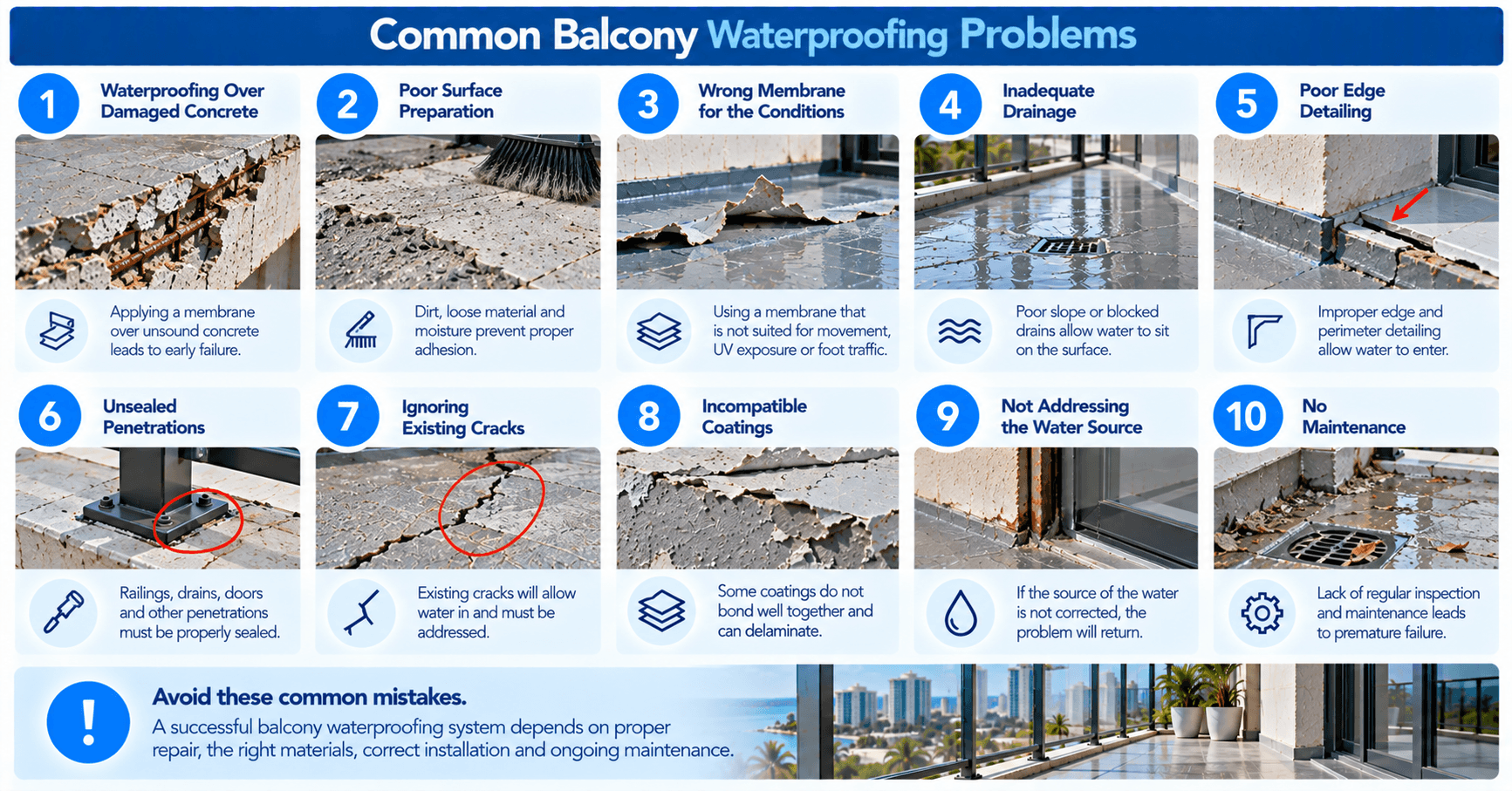
- Waterproofing over damaged concrete
- Poor surface preparation
- Wrong membrane for the conditions
- Inadequate drainage
- Poor edge detailing
- Unsealed penetrations
- Ignoring existing cracks
- Incompatible coatings
- Not addressing the water source
- No maintenance
How to Maintain a Waterproofed Balcony or Walkway
- Inspect the surface regularly
- Keep drains clear
- Monitor cracks
- Check joints and sealants
- Look for blistering or peeling
- Deal with ponding water
- Repair damage early
- Schedule professional inspections
When Should a Balcony Be Waterproofed?
Ideally before deterioration spreads: when cracks appear, when water ponds, when leaks show below the balcony, after concrete repairs, when coatings are failing, and as part of planned building maintenance. After a long wet season or a major storm is a good moment to re-inspect.
Professional Balcony & Walkway Waterproofing
A professional job starts with an assessment of existing conditions and the water sources, specifies a system that suits the slab and exposure, repairs existing damage and then protects the concrete from future moisture. Basile Contractors provides waterproofing and concrete restoration for commercial and high-rise buildings in Miami-Dade, Broward and Palm Beach counties, and every project begins with an inspection and a written scope.
Not sure which repair your building needs?
Walk the building with a licensed restoration contractor before you write a scope.
Conclusion: Protecting Concrete With Balcony Waterproofing
Water is a leading cause of concrete deterioration. Waterproofing reduces moisture intrusion, but damaged concrete has to be repaired first, and the right membrane, correctly installed, makes the system last. Routine maintenance keeps it performing.