Stucco Repair for Commercial Buildings: How to Fix Cracks, Spalling & Deterioration
How commercial stucco repair works: what causes cracks, spalling and water damage, when to repair or replace, and how South Florida weather affects stucco.
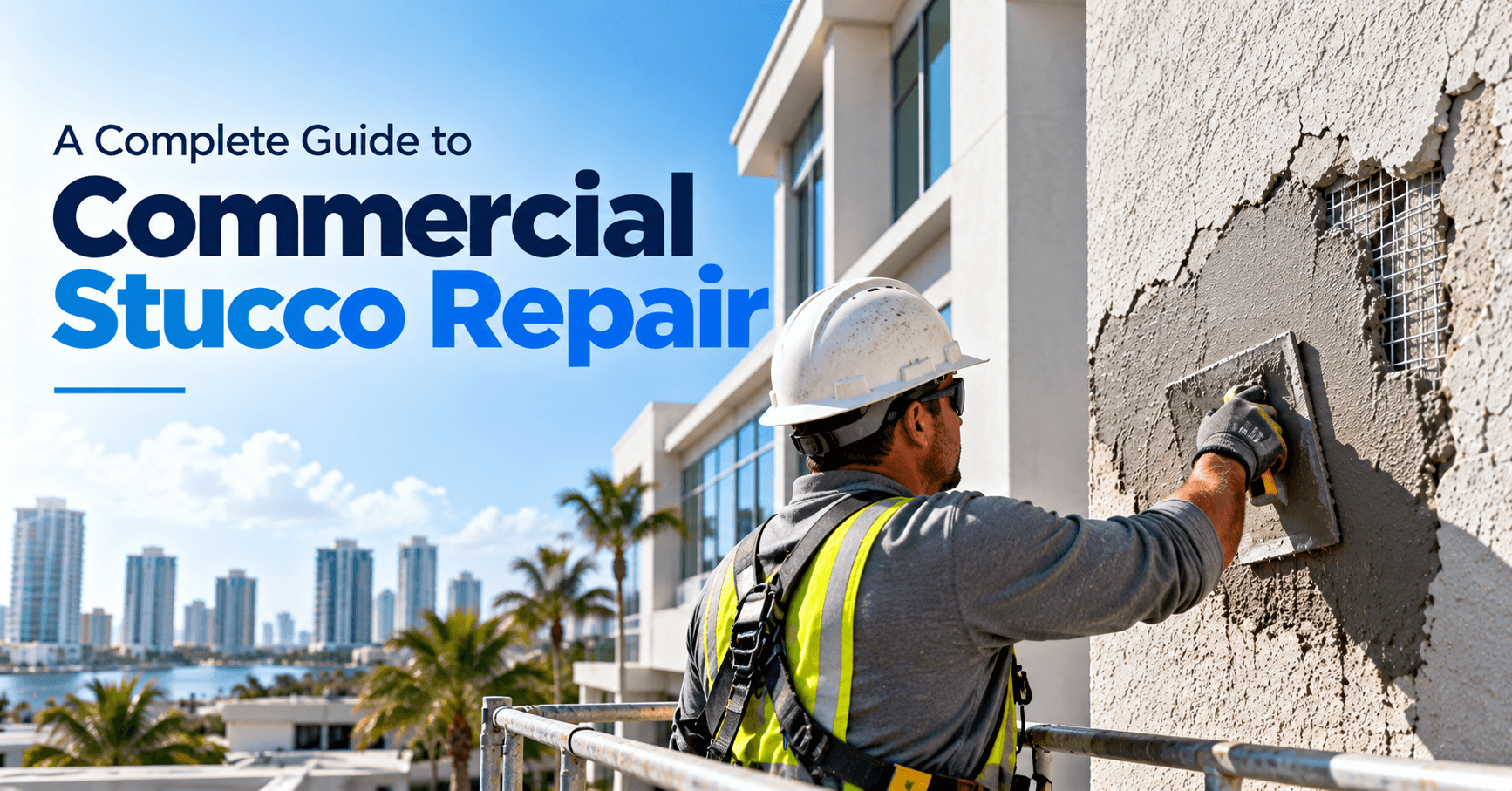
Stucco hides problems well. A hairline crack, a faint stain or a small bubble can sit on a wall for years while water works its way behind the finish. By the time stucco falls off, the wall underneath is usually damaged too. This guide explains what commercial stucco repair involves, what causes stucco to crack, spall and deteriorate, how repairs are done, when replacement makes more sense, and what South Florida weather does to stucco.
What Is Commercial Stucco Repair?

Commercial stucco repair restores damaged stucco on a commercial or multi-family building: cracks, loose or missing sections, water damage, and surface deterioration. Good repair also finds and fixes why the stucco failed, because stucco that keeps taking in water will fail again.
Why Stucco Is Used on Commercial Buildings
Stucco is durable, fire resistant and can be finished in many textures and colors. It is common on South Florida commercial, retail, office and residential buildings, applied over masonry or over a lath and framed wall.
Cosmetic vs. Serious Stucco Damage
A fine, dry, stable hairline crack is usually cosmetic. A wide crack, a bulge, a stain that keeps returning or a section that sounds hollow when tapped points to moisture or loss of bond. Those are serious, because they involve the wall behind the stucco.
What Causes Stucco Damage on Commercial Buildings?
- Moisture and water intrusion: failed sealants, flashing and drainage let water in
- Building movement and settlement
- Temperature changes: expansion and contraction of the wall
- Improper installation: too thin, wrong mix, no control joints
- Poor drainage at the base of the wall
- Impact damage
- Aging stucco
- Salt and coastal exposure
- Storm damage
- Failed sealants and flashing around windows and openings
Common Types of Commercial Stucco Damage
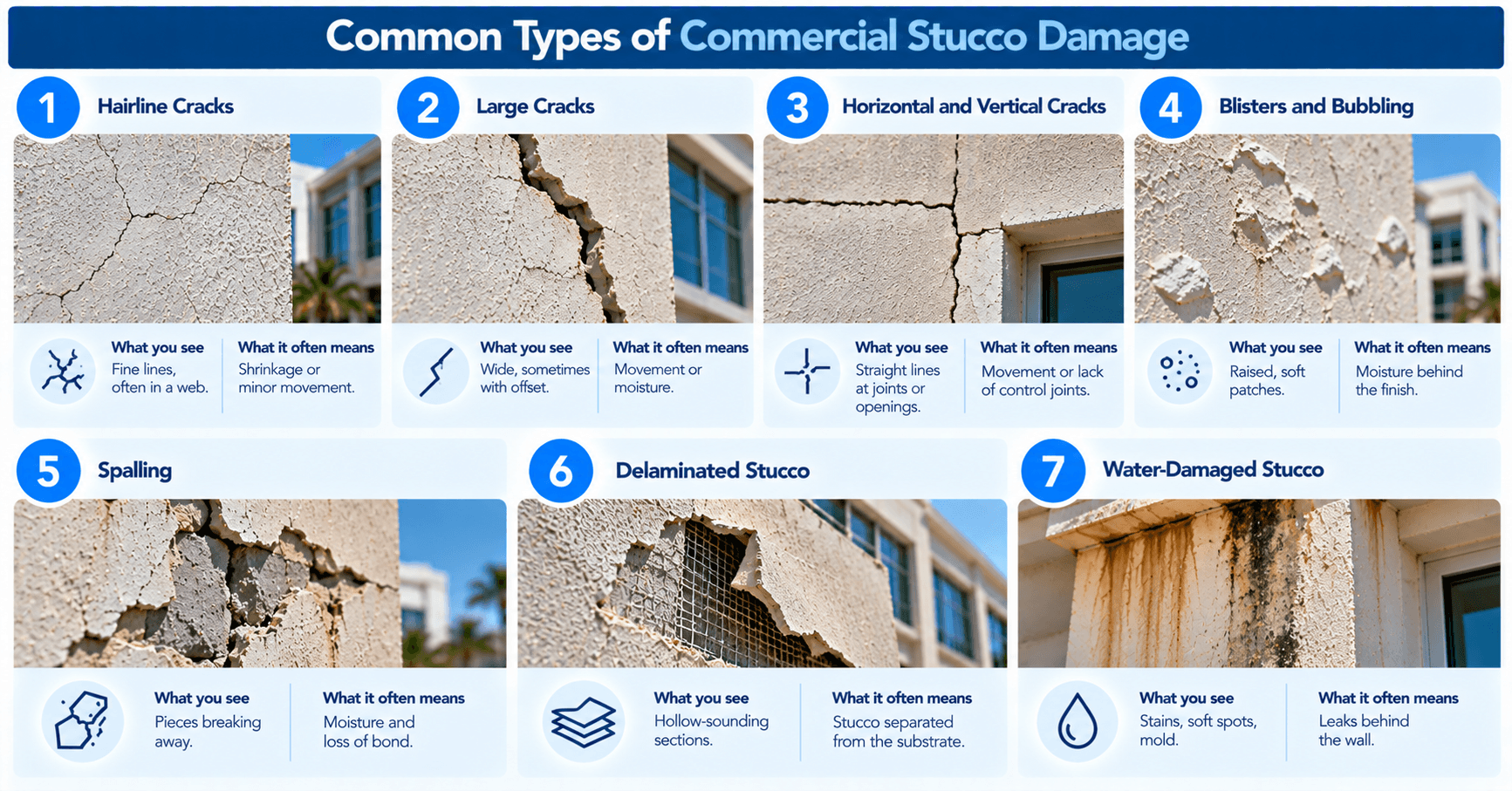
| Type | What you see | What it often means |
|---|---|---|
| Hairline cracks | Fine lines, often in a web | Shrinkage or minor movement |
| Large cracks | Wide, sometimes with offset | Movement or moisture |
| Horizontal and vertical cracks | Straight lines at joints or openings | Movement or lack of control joints |
| Blisters and bubbling | Raised, soft patches | Moisture behind the finish |
| Spalling | Pieces breaking away | Moisture and loss of bond |
| Delaminated stucco | Hollow-sounding sections | Stucco separated from the substrate |
| Water-damaged stucco | Stains, soft spots, mold | Leaks behind the wall |
Chipped or missing stucco, stained or discolored stucco and generally deteriorated surfaces round out the list. Each of them is a symptom, and the repair depends on the cause.
How to Tell if Commercial Stucco Cracks Need Repair
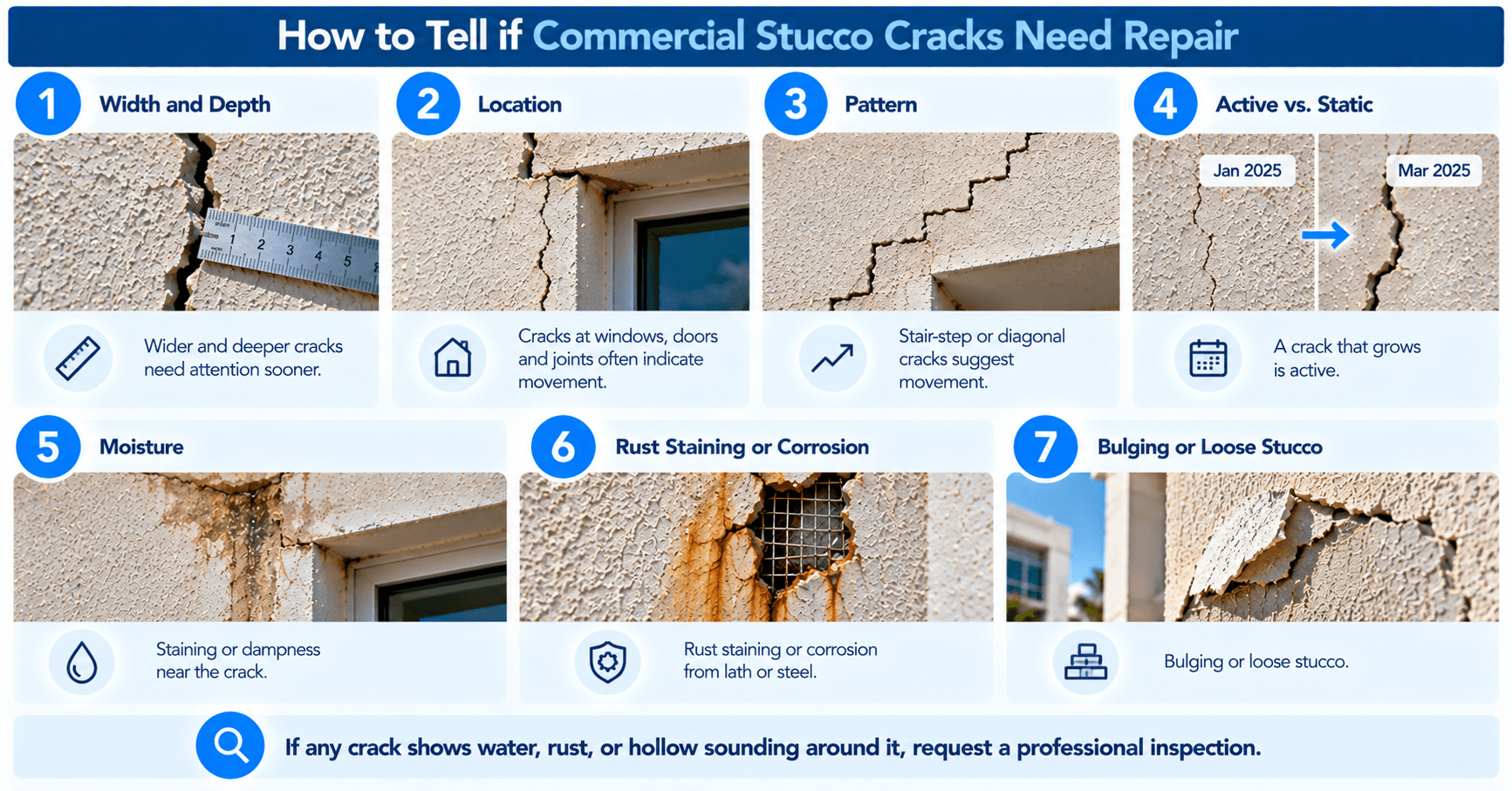
- Width and depth: wider and deeper cracks need attention sooner
- Location: cracks at windows, doors and joints often indicate movement
- Pattern: stair-step or diagonal cracks suggest movement
- Active vs. static: a crack that grows is active
- Moisture: staining or dampness near the crack
- Rust staining or corrosion from lath or steel
- Bulging or loose stucco
If any crack shows water, rust, or hollow sounding around it, request a professional inspection.
How Is Commercial Stucco Repaired?
- Initial inspection of the walls
- Identify the cause of damage
- Remove loose or damaged stucco
- Prepare the area
- Repair cracks
- Replace damaged stucco
- Fix moisture intrusion
- Repair damaged underlying wall
- Apply new stucco
- Match the existing texture
- Prime and paint the repair
- Final inspection
Commercial Stucco Crack Repair
Hairline cracks are cleaned and filled with a flexible patching compound or elastomeric sealant. Larger cracks are routed out, sealed and patched. Cracks around windows and doors need attention to sealants and flashing as well. If a crack reopens, the movement or moisture source behind it has not been fixed, and filling it again will not change that.
Stucco Spalling Repair
Spalling is stucco breaking away from the wall, typically after moisture has weakened the bond or corroded the metal lath behind it. Repair means removing all loose and delaminated stucco back to sound material, repairing the substrate, applying replacement stucco in coats and finishing it to match.
Stucco Water Damage Repair
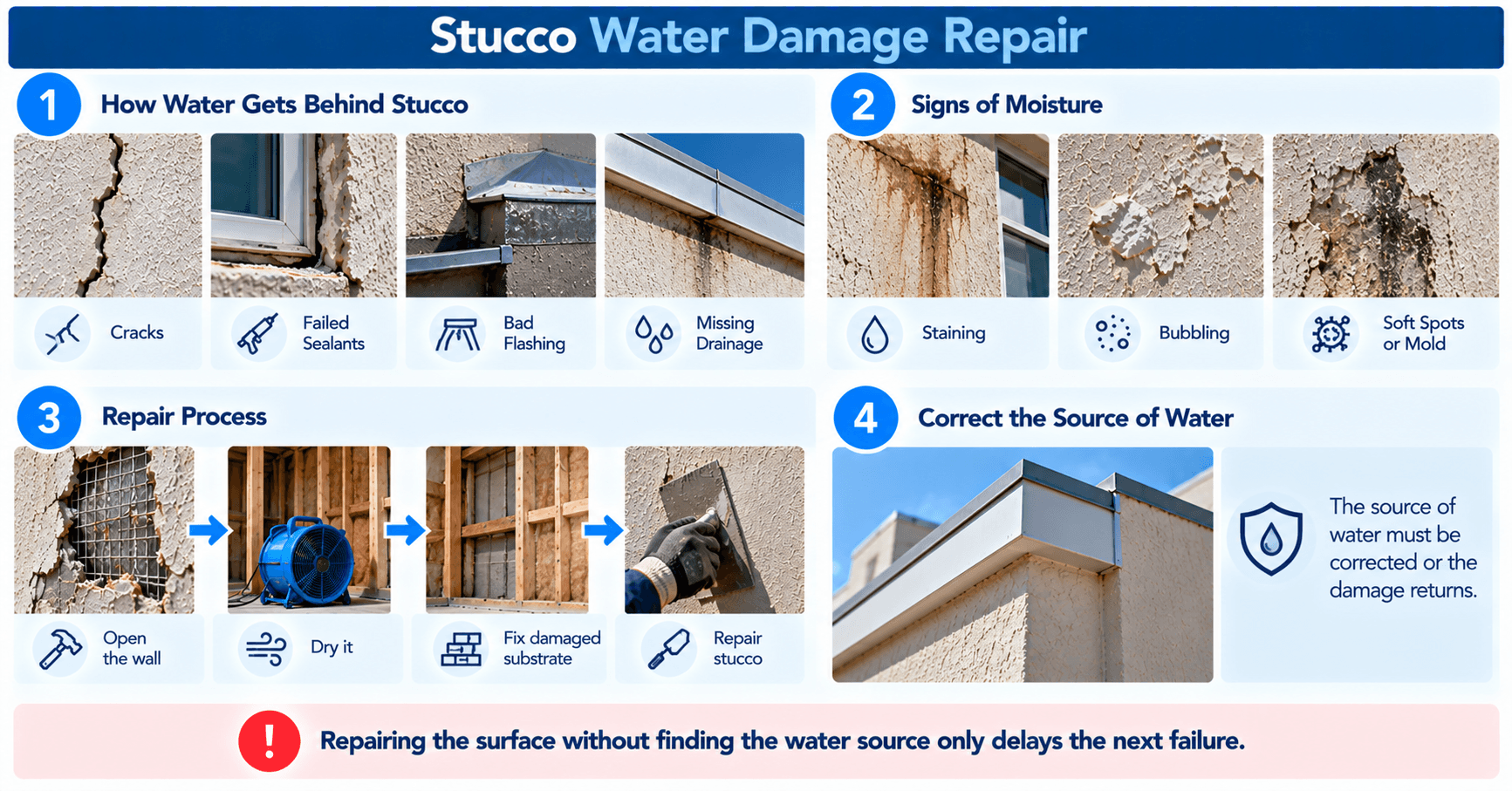
Water behind stucco shows up as stains, bubbling, soft areas and sometimes mold. Repairing the surface without finding the water source only delays the next failure.
- How water gets behind stucco: cracks, failed sealants, bad flashing and missing drainage
- Signs of moisture: staining, bubbling, soft spots
- Repair: open the wall, dry it, fix damaged substrate, repair stucco
- The source of water must be corrected or the damage returns
Commercial Stucco Repair vs. Stucco Replacement
- Repair is appropriate when damage is limited and the wall behind is sound
- Partial replacement is appropriate where sections are loose, delaminated or water-damaged
- Extensive replacement is appropriate where damage is widespread or repairs keep failing
- Age, substrate condition and recurring problems all influence the decision
A professional assessment should come first. It tells you how far the damage extends, which decides between repair and replacement.
Commercial Stucco Repair Process
- Property inspection
- Identify the cause
- Document damaged areas
- Determine repair scope
- Remove damaged materials
- Repair the substrate
- Install new stucco
- Match texture and finish
- Seal and protect the repair
- Final quality inspection
Commercial Stucco Repair Cost: What Affects Pricing?
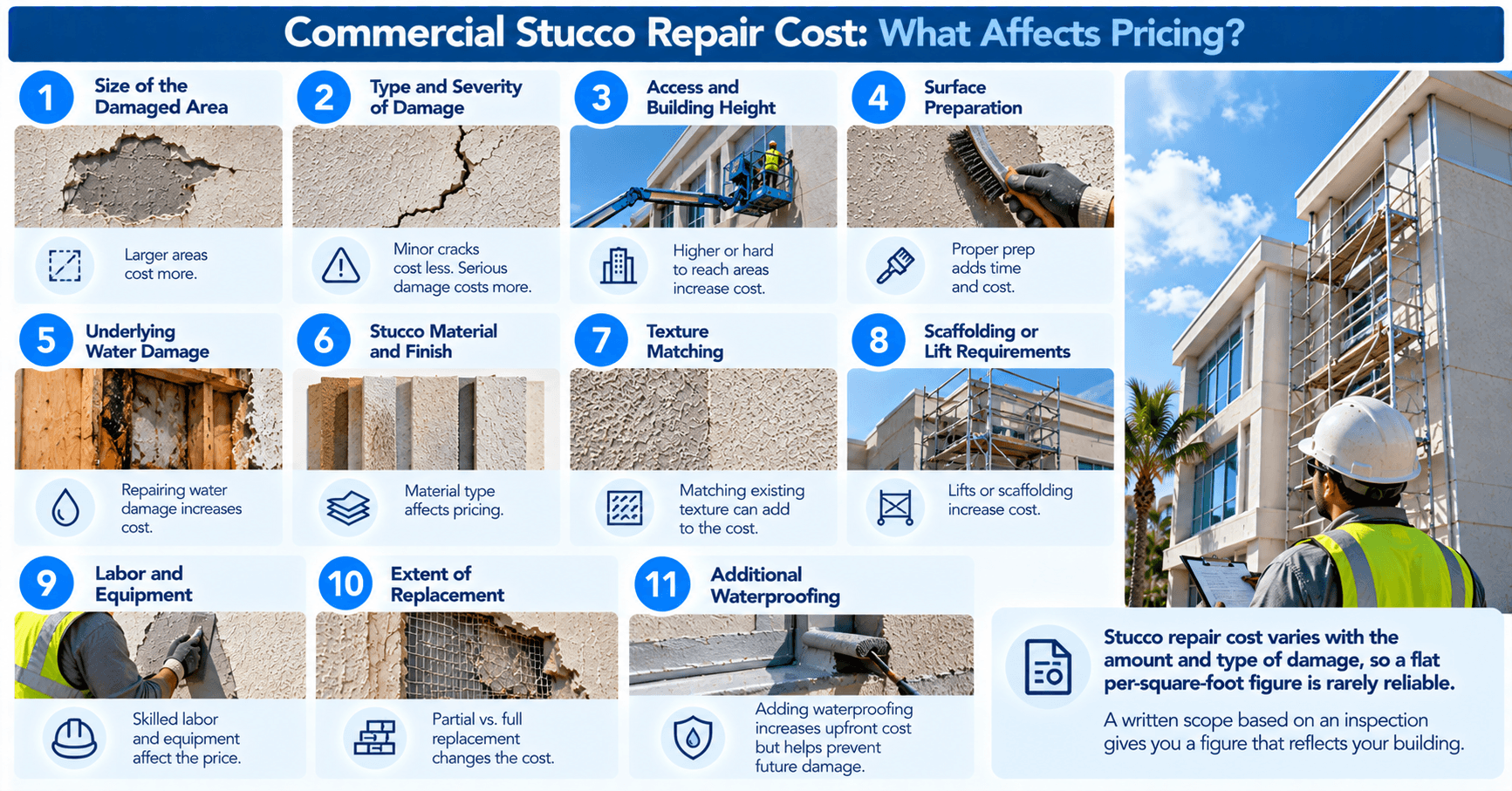
Stucco repair cost varies with the amount and type of damage, so a flat per-square-foot figure is rarely reliable. The factors are below.
- Size of the damaged area
- Type and severity of damage
- Access and building height
- Surface preparation
- Underlying water damage
- Stucco material and finish
- Texture matching
- Scaffolding or lift requirements
- Labor and equipment
- Extent of replacement
- Additional waterproofing
A written scope based on an inspection gives you a figure that reflects your building.
Commercial Stucco Repair in South Florida
South Florida buildings face humidity, heavy rain, salt air, strong sun and hurricane season. Stucco absorbs moisture and releases it slowly, and any gap in the sealant, flashing or coating gives water a way in. Commercial and high-rise buildings in Miami-Dade, Broward and Palm Beach counties see recurring cracking, staining and spalling, especially at windows, parapets, balconies and the base of walls.
How South Florida Weather Affects Commercial Stucco
- High humidity keeps stucco damp
- Heavy rain exposes weak sealants and flashing
- Coastal salt corrodes lath and fasteners
- Water intrusion damages the wall behind
- UV exposure fades and weakens coatings
- Temperature swings cause movement
- Hurricanes and storms cause impact and water driving
- Waterproofing and coatings protect repaired stucco
Commercial Stucco Maintenance and Prevention
- Schedule routine exterior inspections
- Repair small cracks early
- Maintain sealants around openings
- Inspect flashing and drainage
- Watch for water intrusion
- Maintain exterior coatings
- Inspect after severe weather
- Keep records of past repairs
- Create a preventive maintenance schedule
Common Commercial Stucco Repair Mistakes
- Painting over damaged stucco
- Filling cracks without finding the cause
- Ignoring water intrusion
- Repairing only the visible damage
- Using the wrong repair material
- Failing to match existing stucco
- Ignoring loose or delaminated stucco
- Delaying repairs
- Choosing a contractor on price alone
When Should Commercial Stucco Be Repaired?
- Small cracks are getting bigger
- Stucco is separating from the wall
- Water damage is visible
- Stucco is bulging or bubbling
- Pieces are falling
- Staining is spreading
- Damage appears after a storm
- Repairs keep failing
- Before major exterior renovation or repainting
How to Choose a Commercial Stucco Repair Contractor
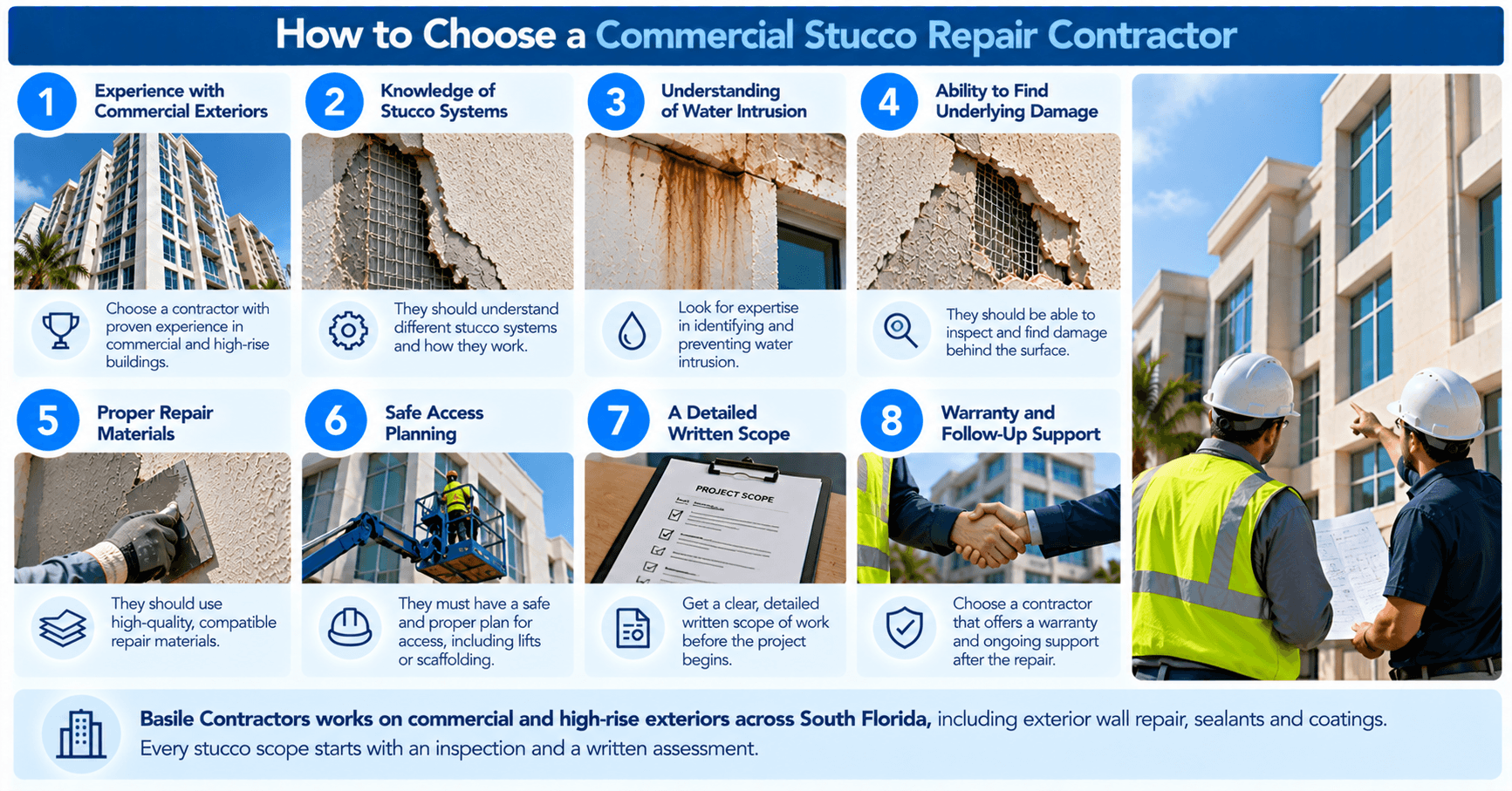
- Experience with commercial and high-rise exteriors
- Knowledge of stucco systems
- Understanding of water intrusion
- Ability to find underlying damage
- Proper repair materials
- Safe access planning
- A detailed written scope
- Warranty and follow-up support
Basile Contractors works on commercial and high-rise exteriors across South Florida, including exterior wall repair, sealants and coatings. Every stucco scope starts with an inspection and a written assessment.
Commercial Stucco Repair Checklist
- Inspect exterior walls
- Document visible cracks
- Check for spalling
- Look for water damage
- Inspect windows and doors
- Check sealants and flashing
- Look for loose stucco
- Inspect after severe weather
- Schedule a professional evaluation
Schedule Commercial Stucco Repair
Finding stucco damage early, learning the cause and repairing the cracks and deteriorated areas before water spreads keeps the repair limited and protects the wall behind it.
Not sure which repair your building needs?
Walk the building with a licensed restoration contractor before you write a scope.
Conclusion: Protecting Commercial Buildings From Stucco Damage
Stucco damage has several causes. Cracks and spalling should be evaluated properly, and moisture has to be addressed for any repair to last. The right repair depends on the damage, and early repair keeps deterioration from spreading.
Frequently asked questions
Updated: October 15, 2026