Concrete Delamination Repair: Causes, Warning Signs & Restoration Methods
Learn what concrete delamination is, what causes it in South Florida, how to spot the warning signs, and how spalling, scaling and flaking are repaired.
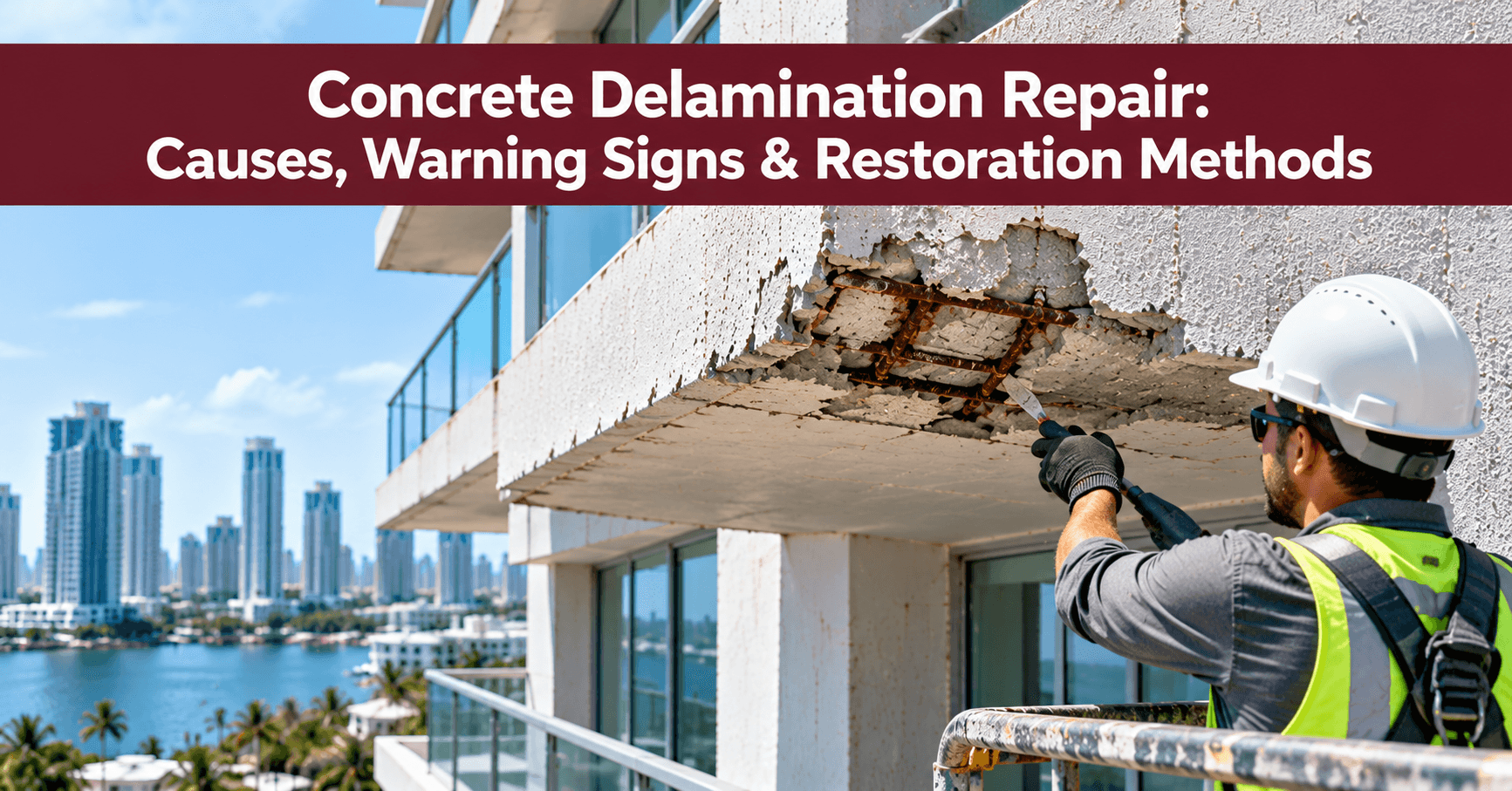
Delaminated concrete looks sound from a distance. Up close, a thin layer of the surface has separated from the concrete beneath it, and nothing holds it in place except habit. On a South Florida building that layer is usually separating because water and salt have reached the steel inside. This guide explains what delamination is, how it differs from spalling, scaling and flaking, how it is found and repaired, and when it becomes an emergency.
What Is Concrete Delamination?
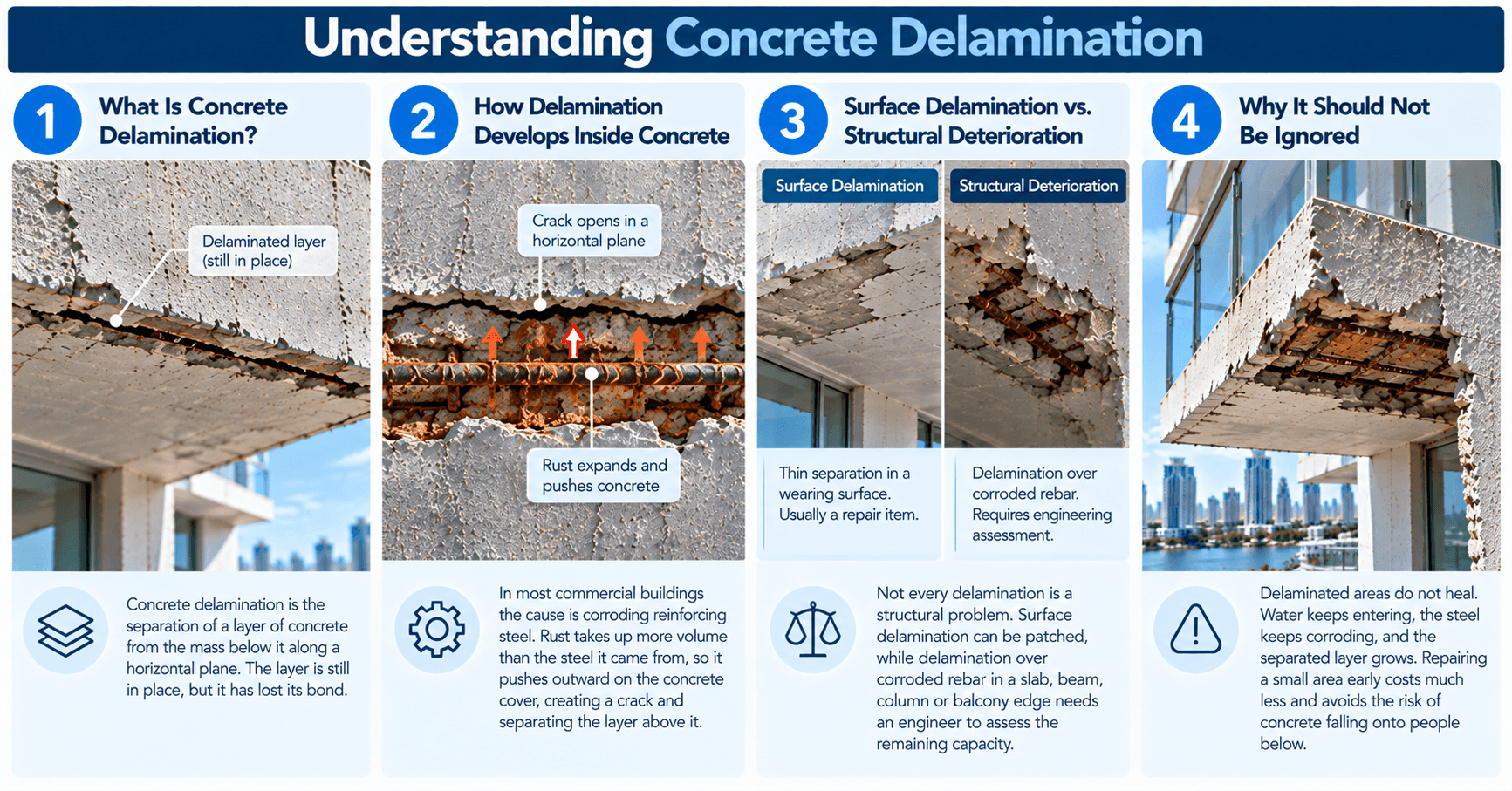
Concrete delamination is the separation of a layer of concrete from the mass below it along a horizontal plane. The layer is still in place, so the damage is easy to miss, but it has lost its bond. Tapping the surface gives it away: sound concrete rings, and delaminated concrete sounds hollow or dull.
How Delamination Develops Inside Concrete
In most commercial buildings the cause is corroding reinforcing steel. Rust takes up more volume than the steel it came from, so it pushes outward on the concrete cover. A crack opens in a plane parallel to the surface, and the layer above it separates. Nothing is visible yet, which is why delamination often goes unnoticed until a piece falls.
Surface Delamination vs. Structural Deterioration
Not every delamination is a structural problem. A thin separation in a wearing surface is a repair item. Delamination over corroded rebar in a slab, beam, column or balcony edge is different, because the steel that carries load is losing section. The first can be patched. The second needs an engineer to decide how much capacity is left.
Why Concrete Delamination Should Not Be Ignored
Delaminated areas do not heal. Water keeps entering, the steel keeps corroding, and the separated layer grows. Repairing a small area early costs a fraction of repairing the same area after it has spread, and it avoids the risk of concrete falling onto people below.
What Causes Concrete Delamination?
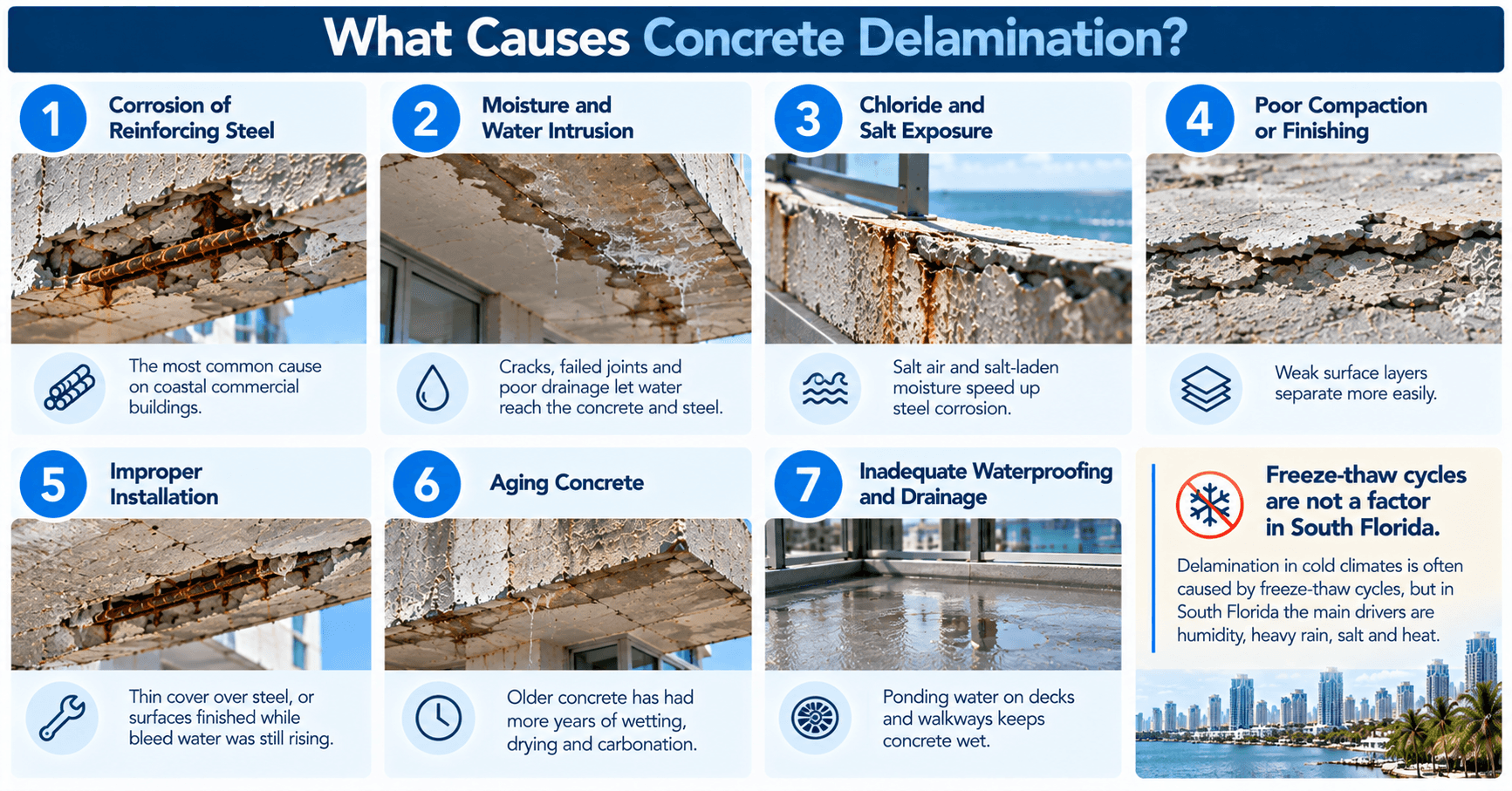
- Corrosion of reinforcing steel: the most common cause on coastal commercial buildings
- Moisture and water intrusion: cracks, failed joints and poor drainage let water reach the concrete and steel
- Chloride and salt exposure: salt air and salt-laden moisture speed up steel corrosion
- Poor compaction or finishing: weak surface layers separate more easily
- Improper installation: thin cover over steel, or surfaces finished while bleed water was still rising
- Aging concrete: older concrete has had more years of wetting, drying and carbonation
- Inadequate waterproofing and drainage: ponding water on decks and walkways keeps concrete wet
Freeze-thaw cycles cause delamination in cold climates, but they are not a factor in South Florida. Here the drivers are humidity, heavy rain, salt and heat.
Concrete Delamination vs. Spalling vs. Scaling vs. Flaking
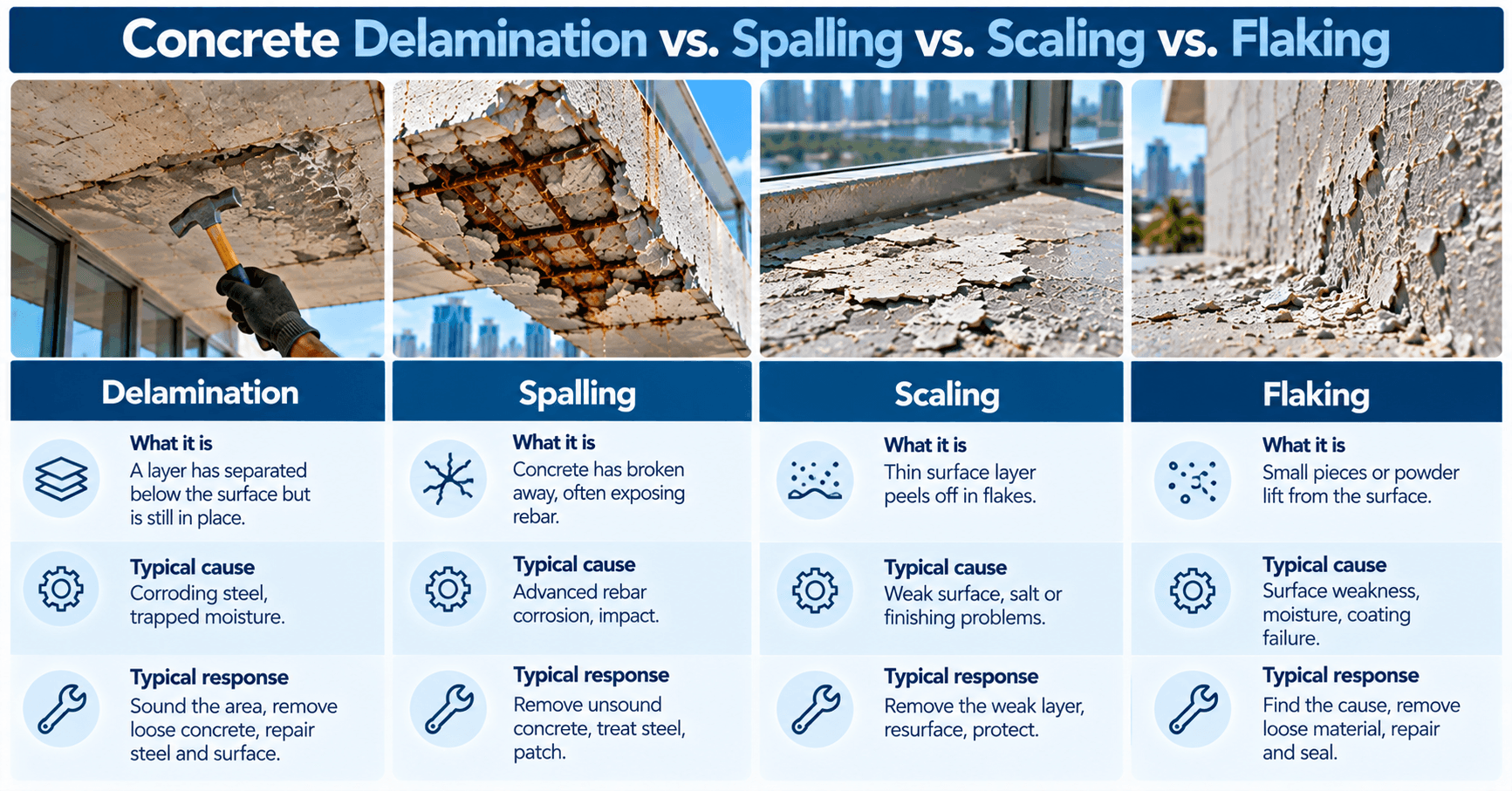
These terms describe related damage, and mixing them up leads to the wrong repair. The table separates them.
| Problem | What it is | Typical cause | Typical response |
|---|---|---|---|
| Delamination | A layer has separated below the surface but is still in place | Corroding steel, trapped moisture | Sound the area, remove loose concrete, repair steel and surface |
| Spalling | Concrete has broken away, often exposing rebar | Advanced rebar corrosion, impact | Remove unsound concrete, treat steel, patch |
| Scaling | Thin surface layer peels off in flakes | Weak surface, salt or finishing problems | Remove the weak layer, resurface, protect |
| Flaking | Small pieces or powder lift from the surface | Surface weakness, moisture, coating failure | Find the cause, remove loose material, repair and seal |
Delamination often comes first. If it is not found, it turns into spalling. Identifying which one you have, and whether the steel is involved, decides how deep the repair has to go.
Warning Signs of Concrete Delamination
- Hollow or dull sound when the surface is tapped
- Cracks that follow the line of the reinforcement
- Bulging or raised areas
- Surface flaking or peeling
- Spalled areas with exposed steel
- Rust stains running down the concrete
- Water staining or efflorescence
- Repairs that keep failing in the same place
How to Identify Concrete Delamination
Visual inspection finds the obvious signs. Sounding finds the rest. A trained inspector taps the surface with a hammer or drags a chain across it and marks the areas that sound hollow. On large facades and balconies, rope access makes it possible to sound every elevation without scaffolding.
- Visual inspection for cracks, stains and spalls
- Sounding and tapping to map hollow areas
- Looking at exposed reinforcement for section loss
- Checking for moisture sources such as failed joints, drains and sealants
- Recording the extent of each area so the repair scope is measurable
A professional inspection is recommended whenever delamination is found on a balcony, edge beam, column, parking deck or any elevated element. Structural evaluation belongs to a licensed engineer, and the repair scope should follow their findings.
How to Fix Spalling and Delaminated Concrete
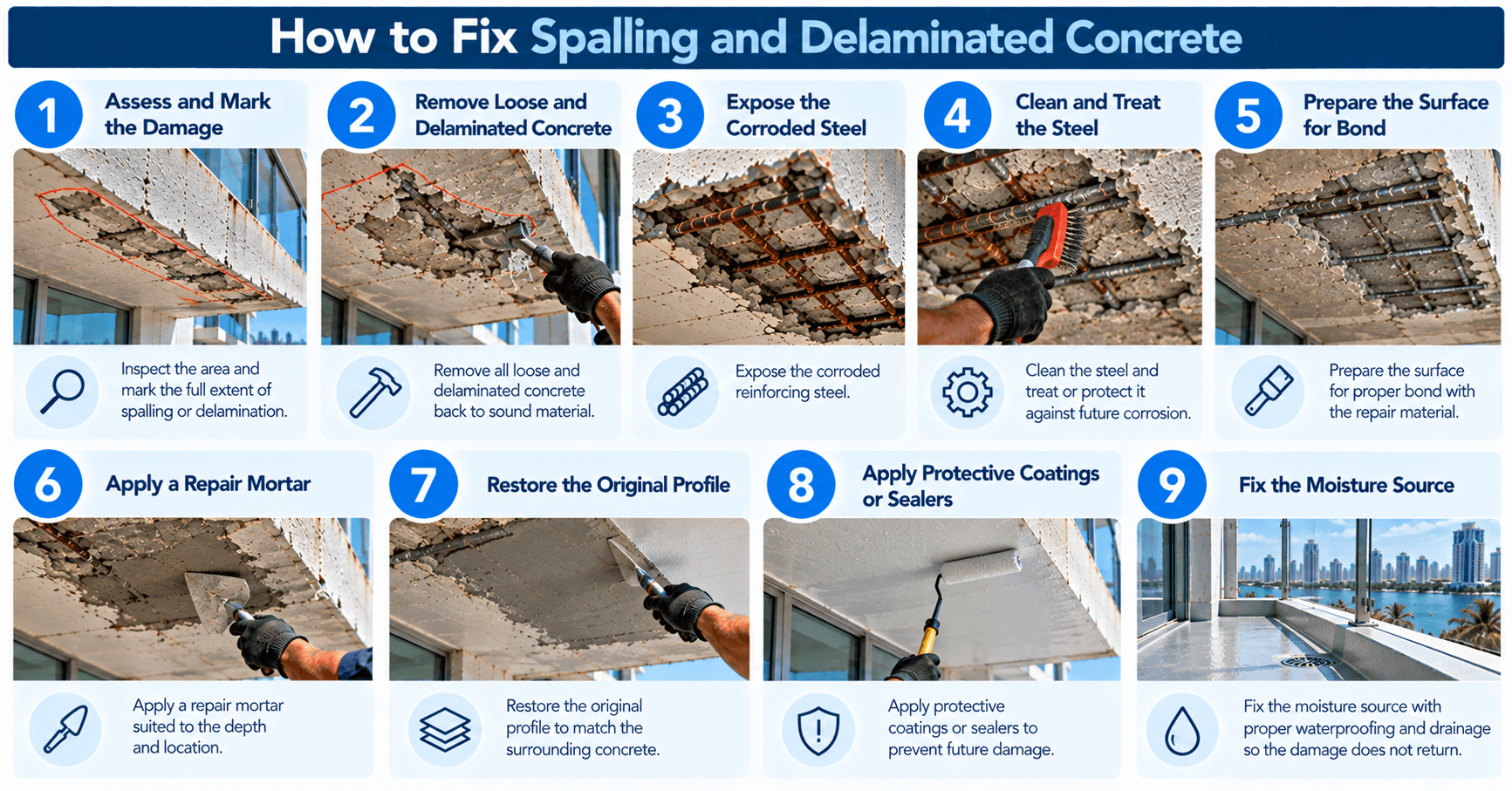
The repair follows the same logic whether the damage is called spalling or delamination. Remove what is unsound, deal with the steel, rebuild the section and stop the water.
- Assess and mark the extent of damage
- Remove loose and delaminated concrete back to sound material
- Expose the corroded reinforcing steel
- Clean the steel and treat or protect it
- Prepare the surface for bond
- Apply a repair mortar suited to the depth and location
- Restore the original profile
- Apply protective coatings or sealers
- Fix the moisture source so the damage does not return
Skipping the last step is the most common reason repairs fail. A patch over a leak is a temporary patch.
Concrete Spall Repair Methods
- Small localized spall repairs: hand-applied repair mortar on shallow damage
- Concrete patching: removal and replacement of damaged sections
- Repair mortars: cementitious products chosen for depth and exposure
- Polymer-modified materials: better bond and lower permeability on exposed surfaces
- Larger replacement: formed and poured repairs where damage is deep
- Reinforcement repair: cleaning, coating or supplementing corroded steel
- Protective coatings and waterproofing after repair
Concrete Scaling Repair
Scaling is the loss of a thin surface layer, usually from a weak finish, salt exposure or repeated wetting. Unlike delamination, the damage starts at the surface and does not usually involve the steel. Repair means removing the weakened layer, preparing the surface, resurfacing with a compatible material and sealing it. Without a protective treatment, scaling returns.
How to Repair Flaking Concrete
Flaking has several possible causes, so start by finding the reason the concrete is flaking.
- Identify why the concrete is flaking: coating failure, surface weakness or moisture
- Remove loose surface material
- Check for deeper delamination with sounding
- Inspect reinforcing steel in any open areas
- Repair damaged areas and restore the surface
- Seal or coat the surface against water
Structural Concrete Repair for Delaminated Concrete
Delamination becomes a structural concern when the steel has lost enough section to affect capacity, or when the damaged element carries load. Columns, beams, structural slabs, balcony edges and parking decks fall in this group. Repair there goes beyond patching: it can involve removing more concrete, supplementing or replacing steel, and restoring the section to the engineer’s specification. Basile Contractors carries out the concrete restoration work. The structural assessment and the repair design come from a licensed engineer.
Emergency Concrete Repairs: When Is Immediate Action Necessary?
- Concrete falling or loose over walkways, entrances or parking
- Exposed reinforcing steel with heavy rust
- Severe spalling on balconies or elevated structures
- Cracks that are widening quickly
- Damaged balconies, railings or edges
- Concrete falling from a facade
- Concrete damage after a major storm
When any of these appear, restrict access below and around the area first, then arrange an assessment. Do not leave loose concrete overhead while waiting for a repair schedule.
Concrete Delamination Repair in South Florida
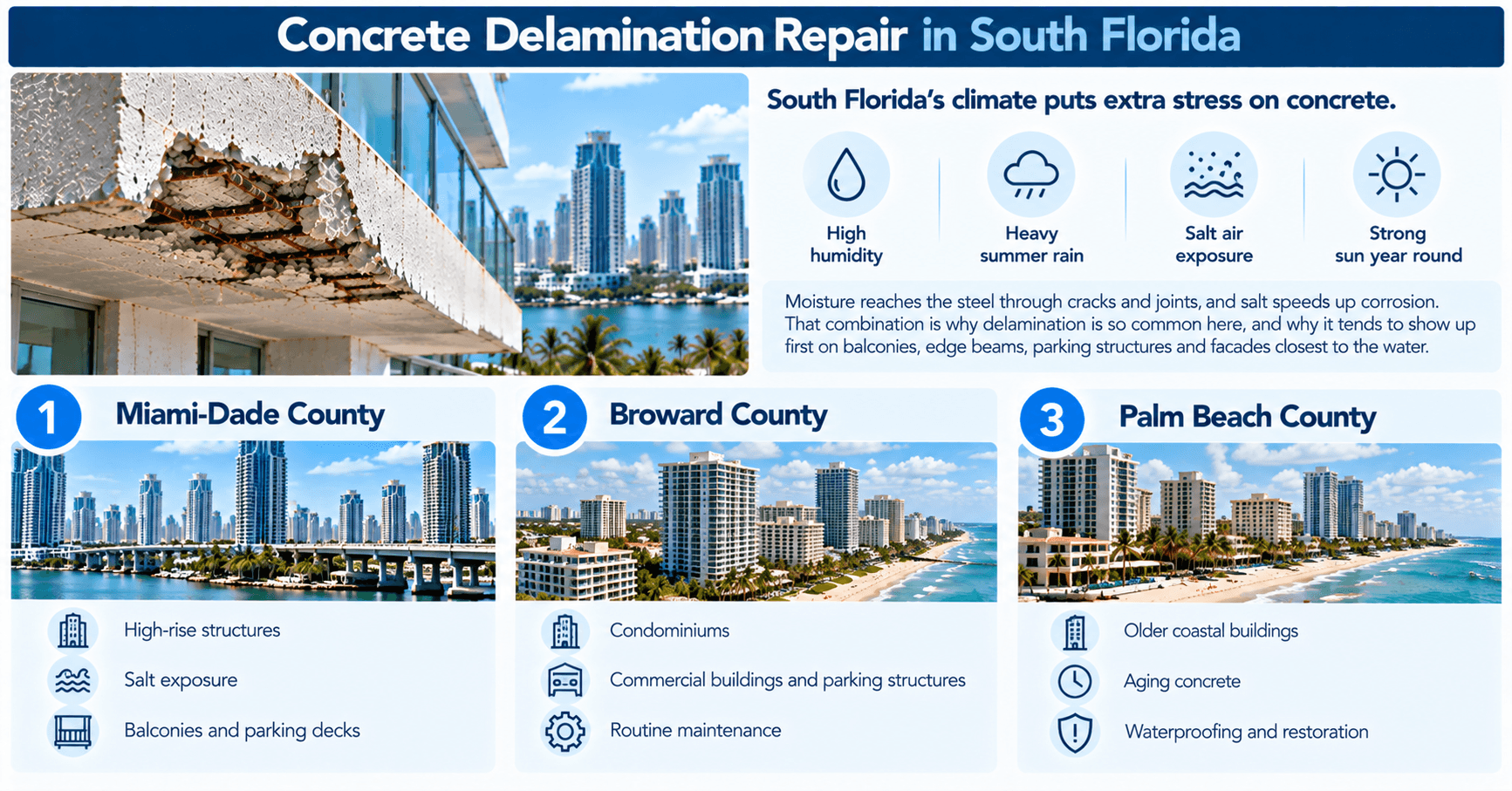
South Florida concrete is exposed to humidity, heavy summer rain, salt air and strong sun year round. Moisture reaches the steel through cracks and joints, and salt speeds up corrosion. That combination is why delamination is so common here, and why it tends to show up first on balconies, edge beams, parking structures and facades closest to the water.
- Miami-Dade County: high-rise structures, salt exposure, balconies and parking decks
- Broward County: condominiums, commercial buildings, parking structures and routine maintenance
- Palm Beach County: older coastal buildings, aging concrete, waterproofing and restoration
Concrete Restoration and Repair: Preventing Recurring Delamination
- Address the root cause, usually water
- Improve waterproofing at decks, balconies and walkways
- Protect reinforcing steel during repair
- Apply protective coatings to restored concrete
- Fix drainage so water does not pond
- Maintain sealants and joints
- Schedule routine inspections
Concrete Delamination Repair Cost: What Affects Pricing?
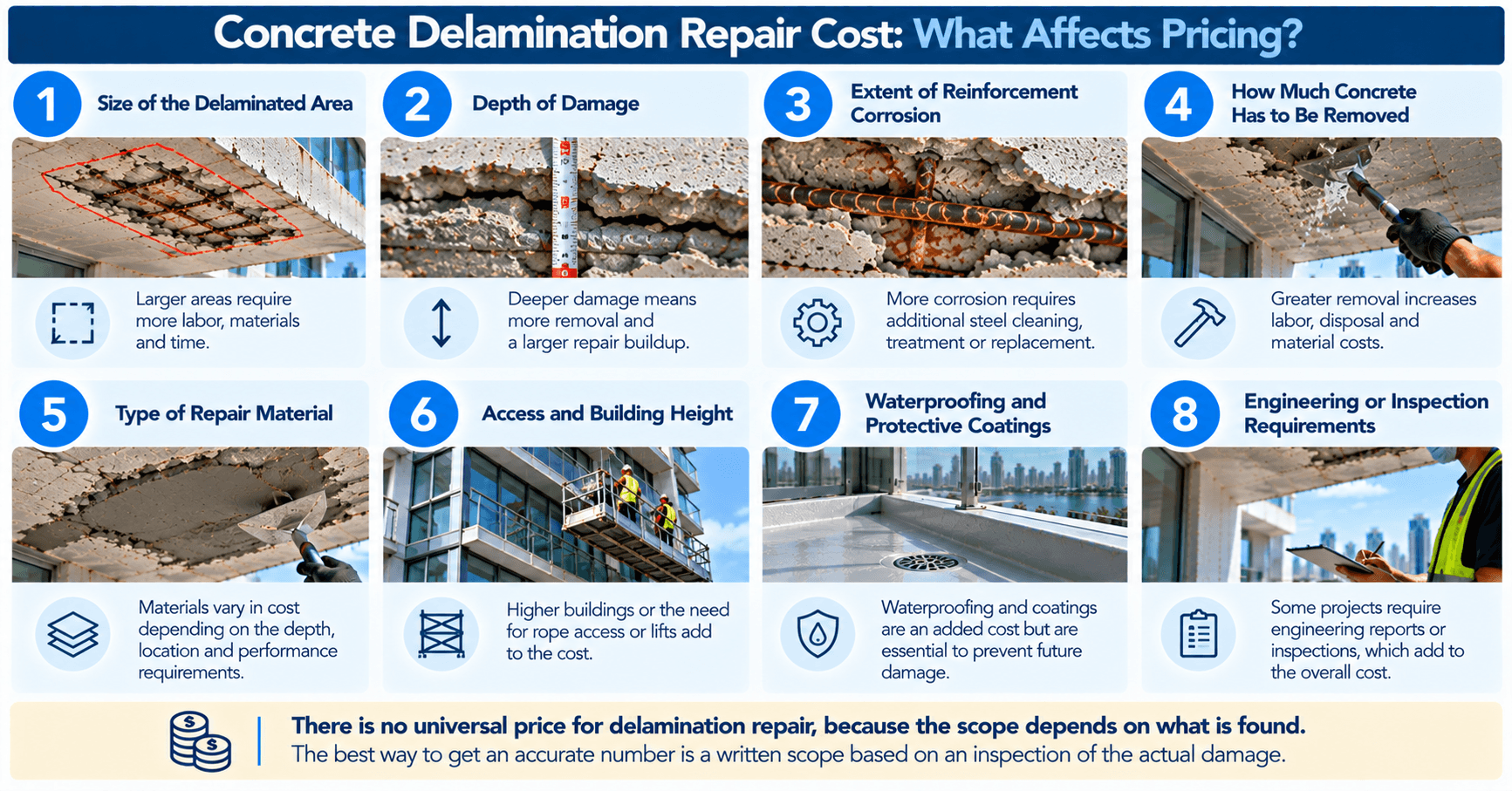
There is no universal price for delamination repair, because the scope depends on what is found. These are the factors that move the cost.
- Size of the delaminated area
- Depth of damage
- Extent of reinforcement corrosion
- How much concrete has to be removed
- Type of repair material
- Access, including building height and the need for rope access or lifts
- Waterproofing and protective coatings
- Engineering or inspection requirements
The way to get an accurate number is a written scope based on an inspection of the actual damage.
How to Choose a Concrete Restoration and Repair Contractor
- Experience with structural and reinforced concrete
- Experience with spalling and delamination specifically
- Appropriate repair materials and methods
- Experience on commercial and high-rise properties
- Safety procedures and access planning
- Current license and insurance
- A detailed inspection and written scope of work
- References from previous restoration projects
- Clear timeline and pricing
Common Concrete Delamination Repair Mistakes
- Patching the surface without removing the delaminated concrete
- Leaving corroded reinforcement untreated
- Not finding the moisture source
- Placing new concrete over unsound concrete
- Using a repair material that does not suit the exposure
- Skipping waterproofing
- Treating structural damage as cosmetic
- Delaying repairs
Concrete Delamination Prevention Checklist
- Schedule regular concrete inspections
- Monitor cracks and spalls
- Look at exposed reinforcement
- Maintain waterproofing systems
- Address water intrusion quickly
- Maintain sealants and joints
- Protect concrete from coastal exposure
- Repair small areas before they spread
When Should You Schedule Concrete Delamination Repair?
Schedule an assessment when you see visible spalling, hollow-sounding concrete, exposed rebar, rust staining, cracks that keep growing, concrete falling from elevated areas, or repairs that keep failing. Any one of these means water has already reached the steel.
Not sure which repair your building needs?
Walk the building with a licensed restoration contractor before you write a scope.
Conclusion: Addressing Concrete Delamination Before It Gets Worse
Delamination is a sign of deterioration underneath the surface. Proper repair removes the unsound concrete, deals with the steel and fixes the water problem. A professional assessment tells you whether the repair is surface-level or structural, and early action keeps the scope small.
Frequently asked questions
Updated: October 15, 2026