Concrete Crack Repair for Commercial Buildings: Causes, Methods & Prevention
How commercial concrete cracks form, which ones are serious, and how crack repair, fillers, slab repair and structural repair work on South Florida buildings.
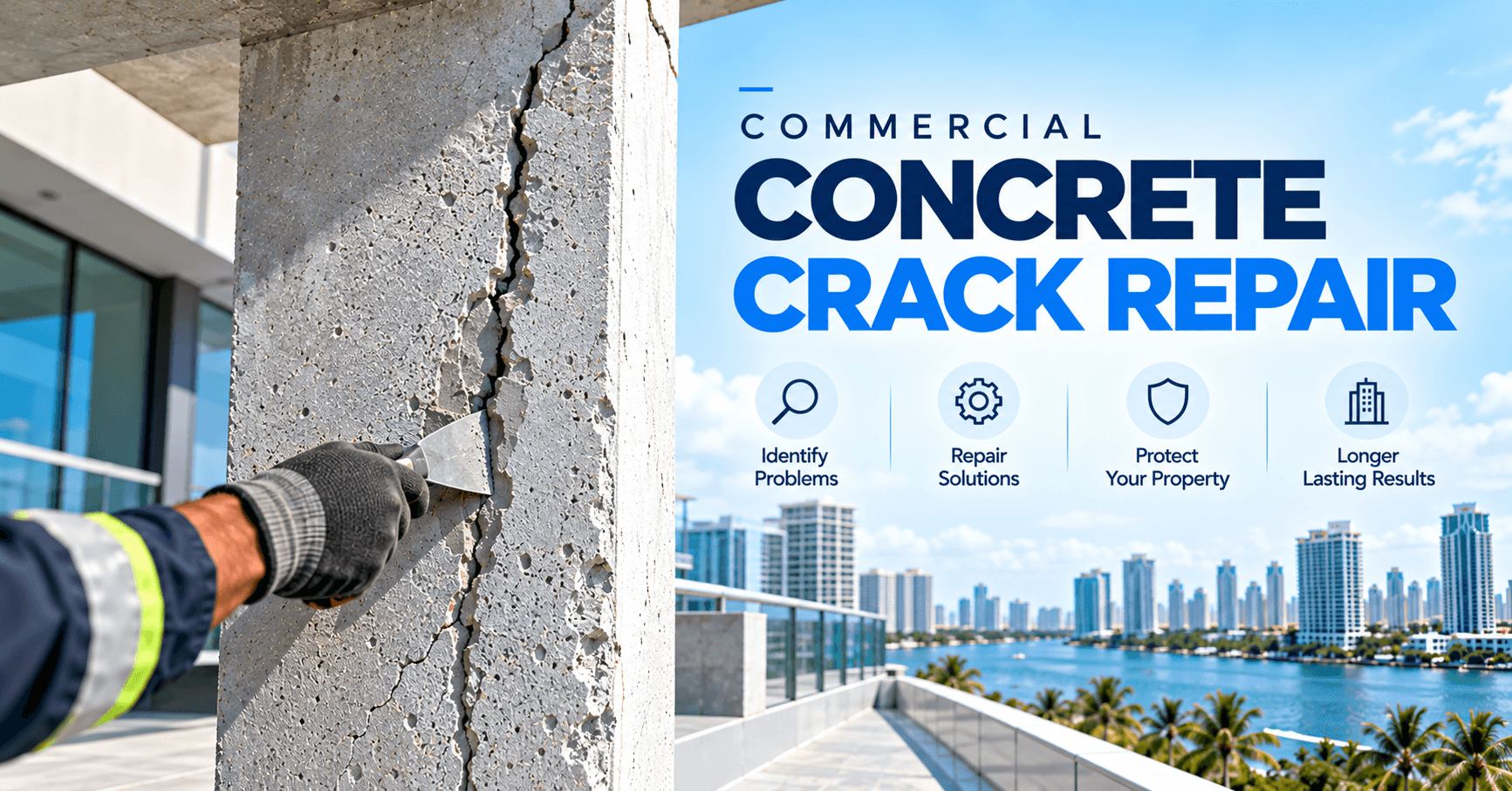
Every commercial concrete surface cracks eventually. Most cracks are harmless. A few are the first visible sign of water, corrosion or movement that will cost far more to fix later. The job is telling them apart, then choosing a repair that addresses the cause instead of hiding the line. This guide covers why commercial concrete cracks, how to judge which cracks matter, the main repair methods, how floors, slabs and structural elements differ, and what to expect in South Florida.
What Is Commercial Concrete Crack Repair?
Commercial concrete crack repair is the process of evaluating a crack, finding out why it formed, and sealing, injecting or rebuilding it so that it stops letting water in and, where needed, regains strength. It covers everything from sealing hairline cracks in a walkway to repairing structural cracks in a column or slab.
Cosmetic vs. Structural Concrete Cracks
A cosmetic crack is narrow, stable and does not leak. A structural crack is wide, growing, or located in an element that carries load. The same word, crack, covers both, which is why an assessment should come before any filler goes in.
When Professional Concrete Repair Is Necessary
Call for an evaluation when a crack is widening, leaking, stained with rust, located in a beam, column, slab or balcony, or accompanied by spalling. Those are signs that water and corrosion are involved.
Why Does Concrete Crack?
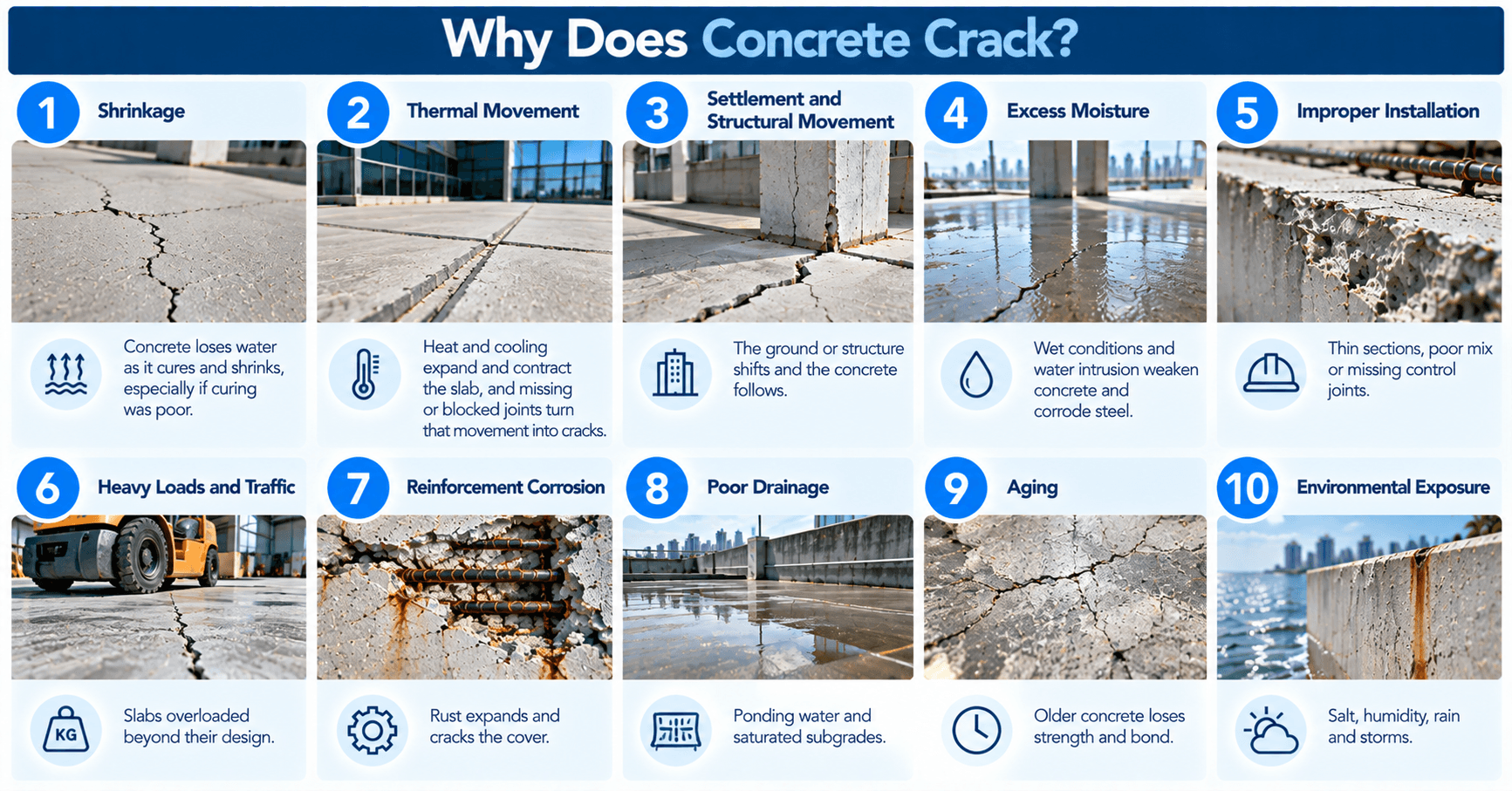
- Shrinkage: concrete loses water as it cures and shrinks, especially if curing was poor
- Thermal movement: heat and cooling expand and contract the slab, and missing or blocked joints turn that movement into cracks
- Settlement and structural movement: the ground or structure shifts and the concrete follows
- Excess moisture: wet conditions and water intrusion weaken concrete and corrode steel
- Improper installation: thin sections, poor mix or missing control joints
- Heavy loads and traffic: slabs overloaded beyond their design
- Reinforcement corrosion: rust expands and cracks the cover
- Poor drainage: ponding water and saturated subgrades
- Aging: older concrete loses strength and bond
- Environmental exposure: salt, humidity, rain and storms
Common Types of Cracks in Commercial Concrete
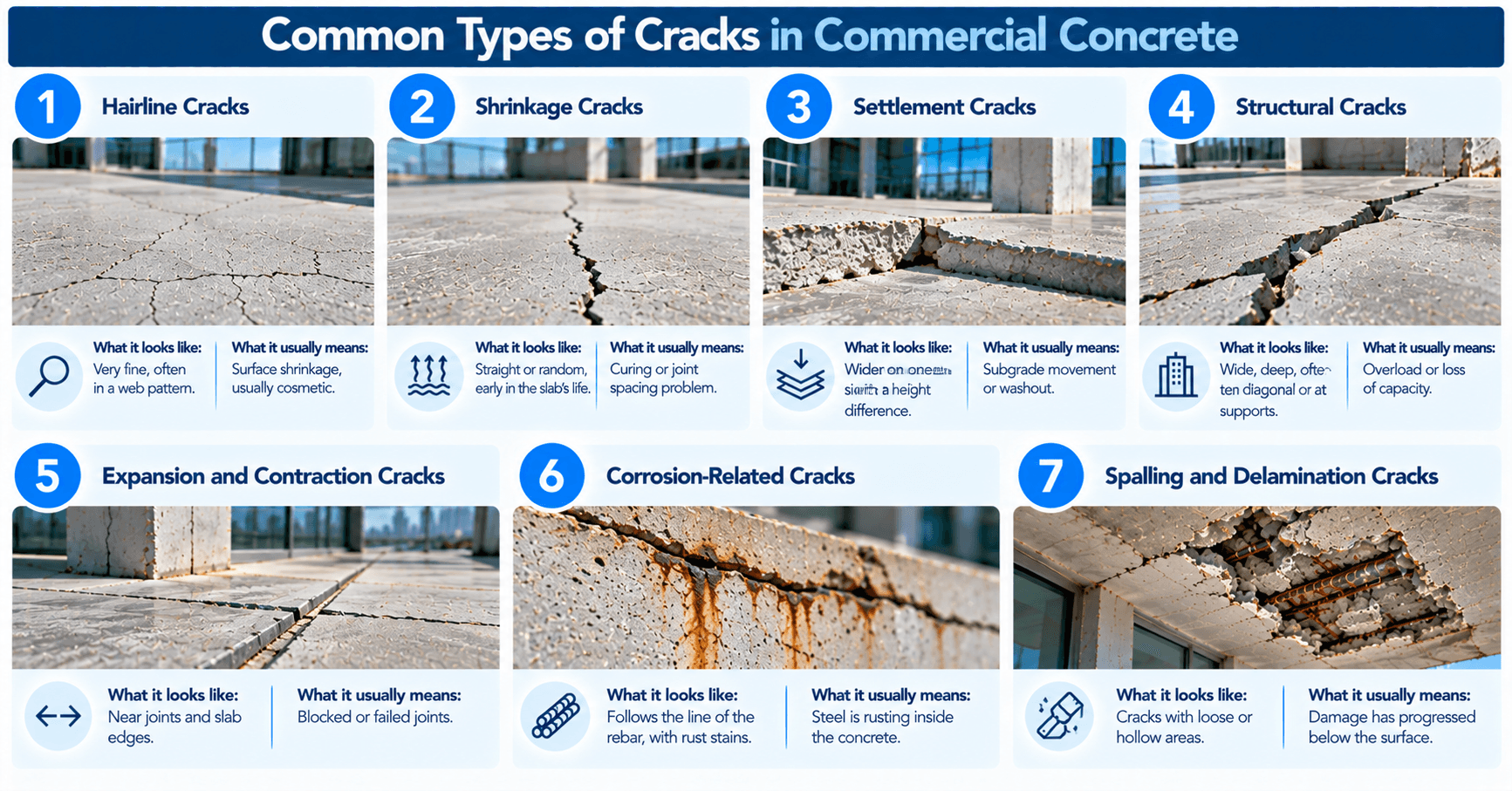
| Crack type | What it looks like | What it usually means |
|---|---|---|
| Hairline | Very fine, often in a web pattern | Surface shrinkage, usually cosmetic |
| Shrinkage | Straight or random, early in the slab’s life | Curing or joint spacing problem |
| Settlement | Wider on one side, with a height difference | Subgrade movement or washout |
| Structural | Wide, deep, often diagonal or at supports | Overload or loss of capacity |
| Expansion and contraction | Near joints and slab edges | Blocked or failed joints |
| Corrosion-related | Follows the line of the rebar, with rust stains | Steel is rusting inside the concrete |
| Spalling and delamination cracks | Cracks with loose or hollow areas | Damage has progressed below the surface |
Floor slab cracks, cracks around joints and cracks that follow reinforcement each point to a different cause, and each needs a different repair.
How to Tell if a Concrete Crack Is Serious
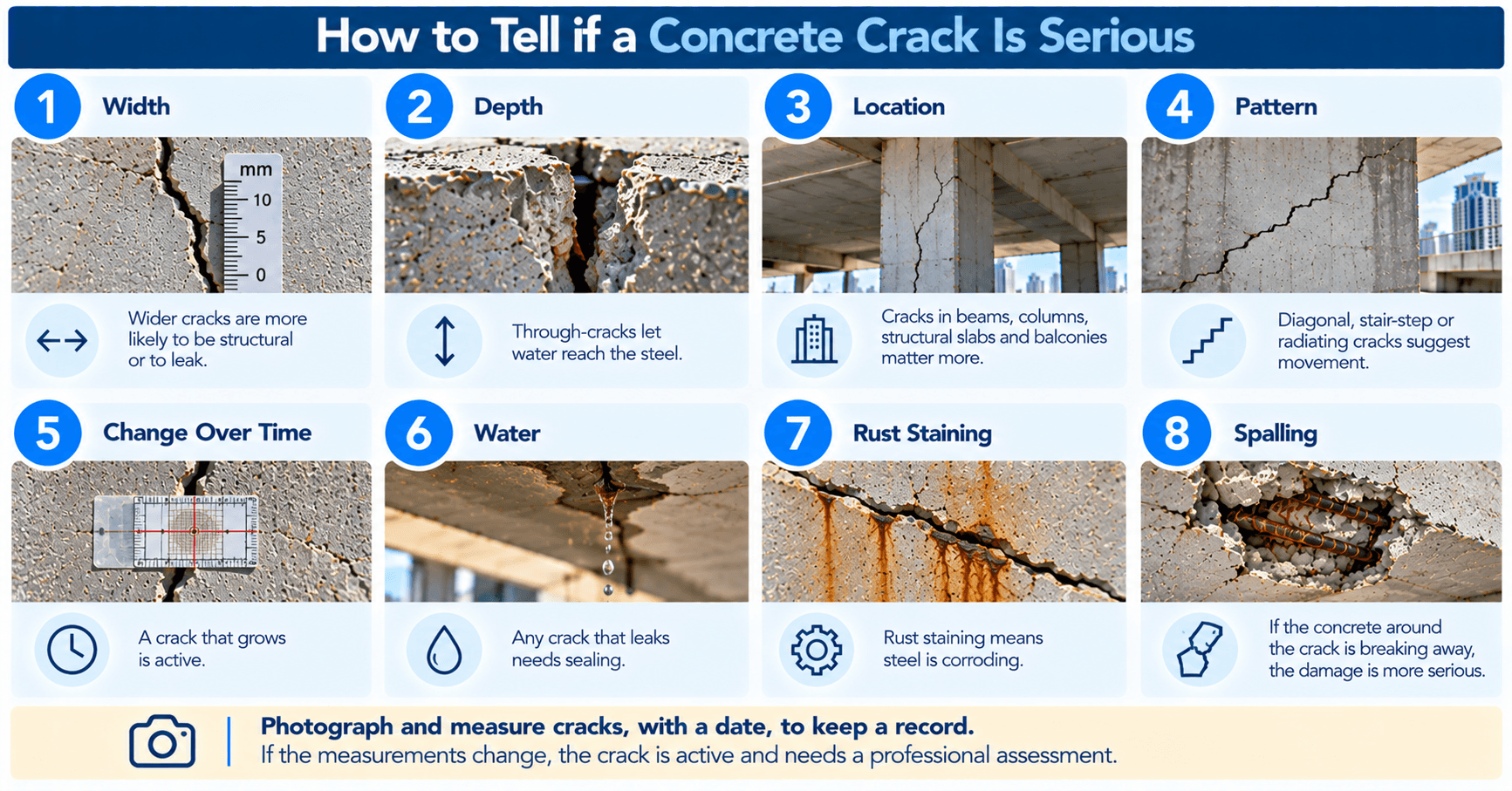
- Width: wider cracks are more likely to be structural or to leak
- Depth: through-cracks let water reach the steel
- Location: cracks in beams, columns, structural slabs and balconies matter more
- Pattern: diagonal, stair-step or radiating cracks suggest movement
- Change over time: a crack that grows is active
- Water: any crack that leaks needs sealing
- Rust staining: steel is corroding
- Spalling: the concrete around the crack is breaking away
Photographing and measuring cracks, with a date, gives you a record. If the measurements change, the crack is active and needs a professional assessment.
Commercial Concrete Crack Repair Methods
- Cleaning and preparation: the crack is cleaned and opened so repair material bonds
- Crack filling: surface filling of small, stable cracks
- Crack sealing: flexible sealants for cracks that still move
- Epoxy injection: structural bonding of cracks that need strength restored
- Polyurethane injection: flexible, water-stopping injection for leaking cracks
- Routing and sealing: grooving the crack and sealing it with sealant
- Patching and surface repair: for damaged edges and shallow loss
- Structural repair: strengthening, steel repair or section rebuilding
- Replacement: where deterioration is too extensive to repair
The method follows the crack. Epoxy restores strength in a stable crack. Polyurethane or flexible sealant suits a crack that moves or leaks. Rigid filler in a moving crack fails within months.
Concrete Crack Filler: When Is It Appropriate?
Crack filler is a product, not a repair strategy. It is appropriate for narrow, stable, non-structural cracks in surfaces where appearance and light water resistance are the goal. It is not appropriate where a crack moves, leaks under pressure, or indicates a structural problem.
- Surface-level use: hairline and shrinkage cracks in slabs and walkways
- Not enough: structural cracks, active cracks, cracks over corroding steel
- Preparation: clean, dry and sound edges are required
- Material choice: match the filler to movement, moisture and exposure
Commercial Concrete Flooring Crack Repair
Warehouse, retail and industrial floors crack from shrinkage, joint failure, heavy equipment and moisture from below. Repairs have to survive forklift and pallet traffic, so edges are cut back and filled with a semi-rigid material, and joints are kept as joints. After repair, a protective coating or joint treatment helps keep the repair from reopening.
Note that this guide discusses floor repair for information. Basile Contractors’ focus is exterior and structural concrete restoration on commercial and high-rise buildings.
Concrete Slab Repair
Slabs crack from settlement, movement, overloading and moisture or drainage problems underneath them. Repairs range from crack injection to partial replacement of failed sections. Full replacement is reserved for slabs that have lost support or are deteriorated throughout.
Concrete Spalling Repair
A crack over corroding steel often precedes spalling. Water enters the crack, steel rusts, rust expands and the cover breaks off. Repair means removing the loose concrete, cleaning and protecting the steel, rebuilding with repair mortar and sealing the surface. See our separate guides on concrete spalling and delamination for detail.
Structural Concrete Crack Repair
A crack is structural when it affects the capacity of the element it is in. Beams, columns, structural slabs, balcony slabs and parking structures are the elements to watch. A licensed engineer should evaluate these cracks. The repair may involve injection, steel repair or strengthening, and the engineer’s specification governs the work.
Commercial Concrete Crack Repair Process
- Initial inspection
- Crack mapping and documentation
- Identify the cause
- Determine severity
- Select the repair method
- Prepare the concrete
- Perform the repair
- Waterproof or seal
- Final inspection
- Monitor repaired areas
Commercial Concrete Crack Repair Cost: What Affects Pricing?
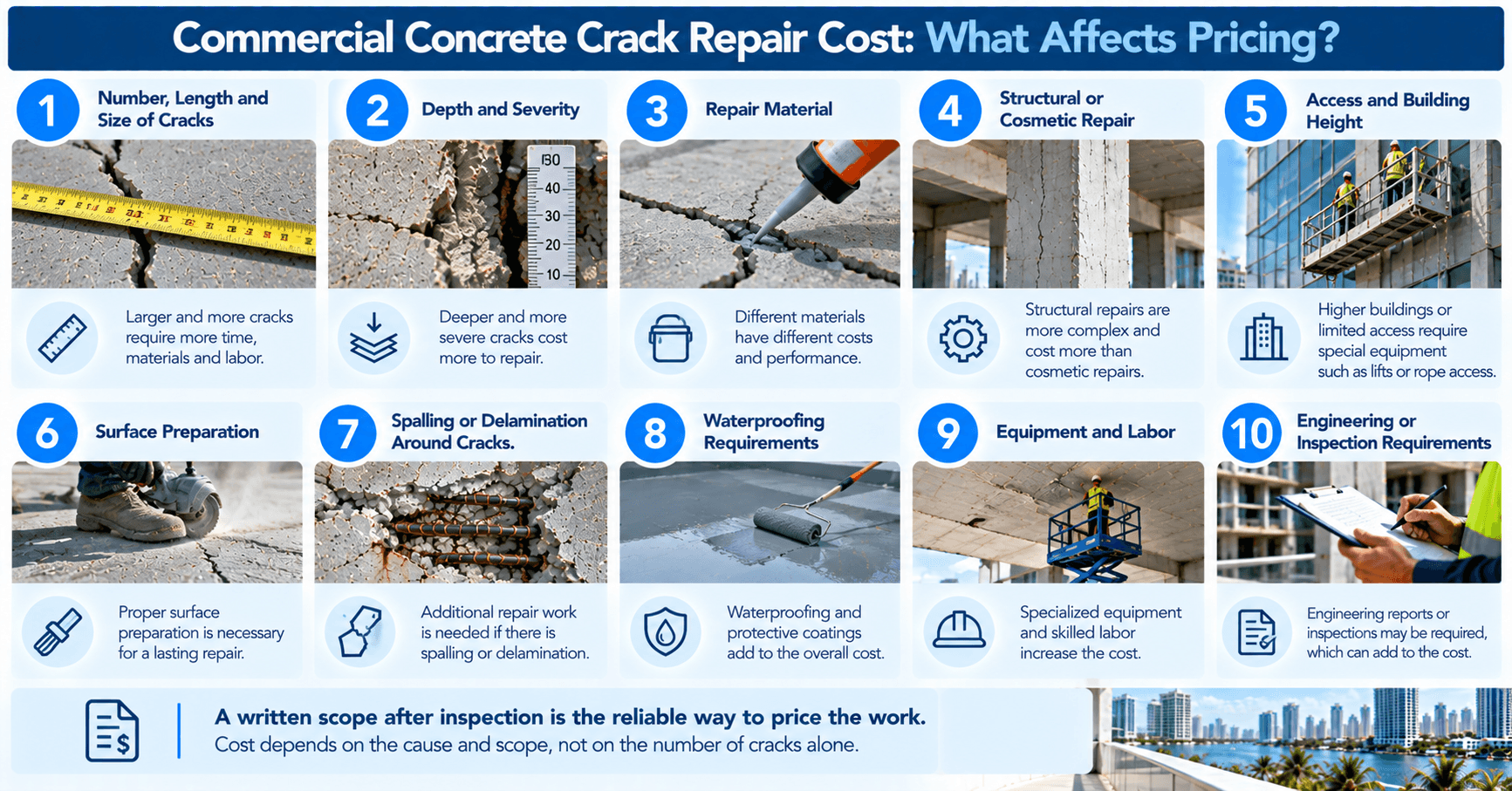
Cost depends on the cause and scope, not on the number of cracks alone.
- Number, length and size of cracks
- Depth and severity
- Repair material
- Structural or cosmetic repair
- Access, including building height and slab accessibility
- Surface preparation
- Spalling or delamination around cracks
- Waterproofing requirements
- Equipment and labor
- Engineering or inspection requirements
A written scope after inspection is the reliable way to price the work.
Commercial Concrete Crack Repair in South Florida
Humidity, heavy summer rain, salt air and storm exposure keep concrete wet and push water into cracks. Once water reaches the steel, corrosion follows, and cracks turn into spalls. High-rise and coastal properties in Miami-Dade, Broward and Palm Beach counties see this most, particularly on balconies, slab edges, parking structures and exterior walkways.
How South Florida Conditions Affect Concrete Cracks
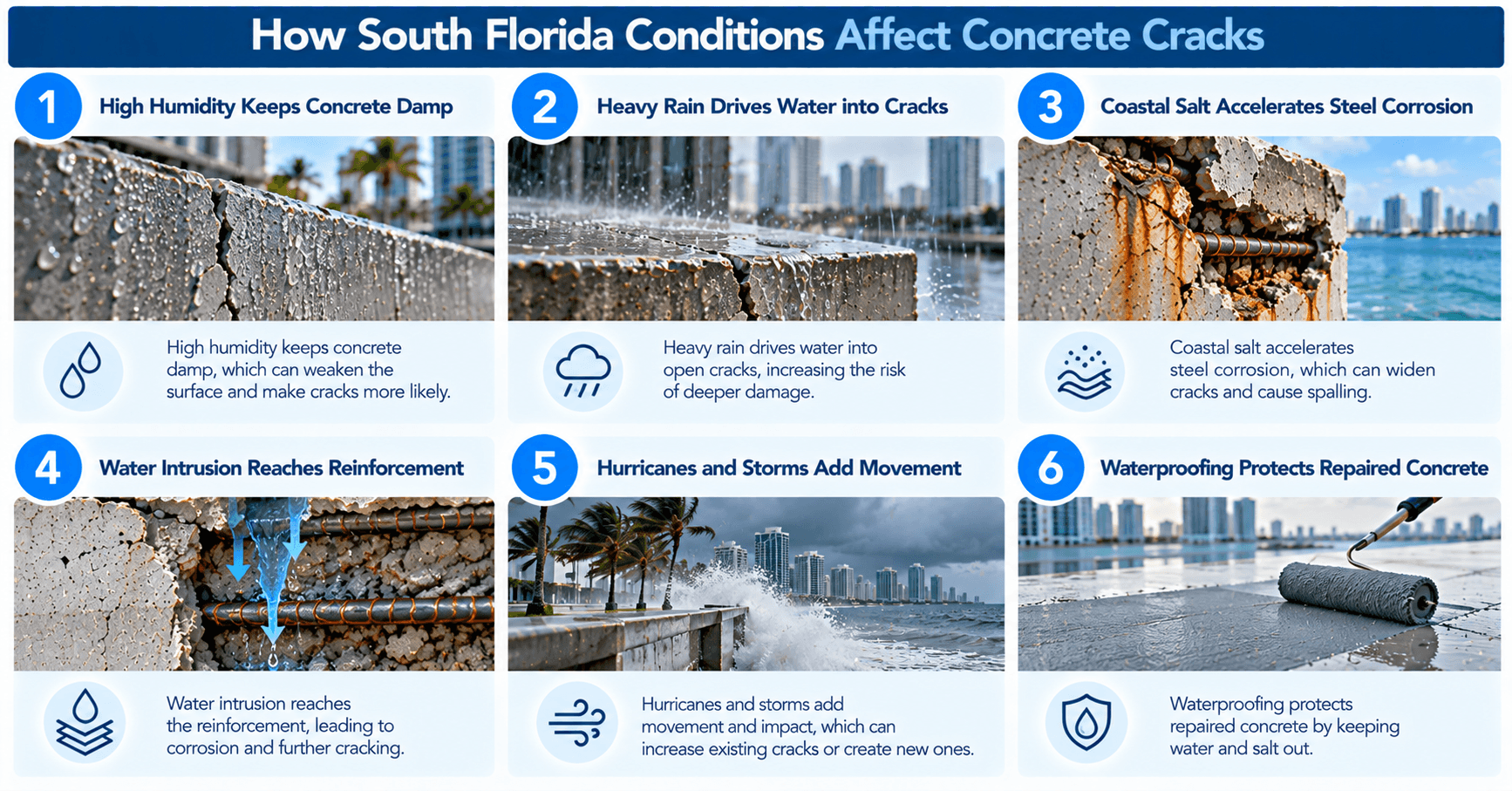
- High humidity keeps concrete damp
- Heavy rain drives water into open cracks
- Coastal salt accelerates steel corrosion
- Water intrusion reaches reinforcement
- Hurricanes and storms add movement and impact
- Waterproofing protects repaired concrete
How to Prevent Cracks in Commercial Concrete
- Routine inspections
- Maintain expansion and control joints
- Manage water and drainage
- Waterproof exposed concrete
- Protect reinforcing steel during repairs
- Maintain coatings
- Repair small cracks early
- Monitor repaired areas
Common Commercial Concrete Crack Repair Mistakes
- Filling cracks without finding the cause
- Using the wrong filler
- Treating structural cracks as cosmetic
- Ignoring water intrusion
- Ignoring reinforcement corrosion
- Applying repair material to unsound concrete
- Skipping surface preparation
- Waiting too long
- Choosing a contractor on price alone
When Should You Repair or Replace Cracked Concrete?
- Repair when damage is localized
- Repair when structural capacity is not compromised
- Consider partial replacement for severely damaged areas
- Consider replacement when deterioration is extensive
- Re-evaluate when repeated repairs keep failing
- Get a professional assessment first
Commercial Concrete Crack Repair Checklist
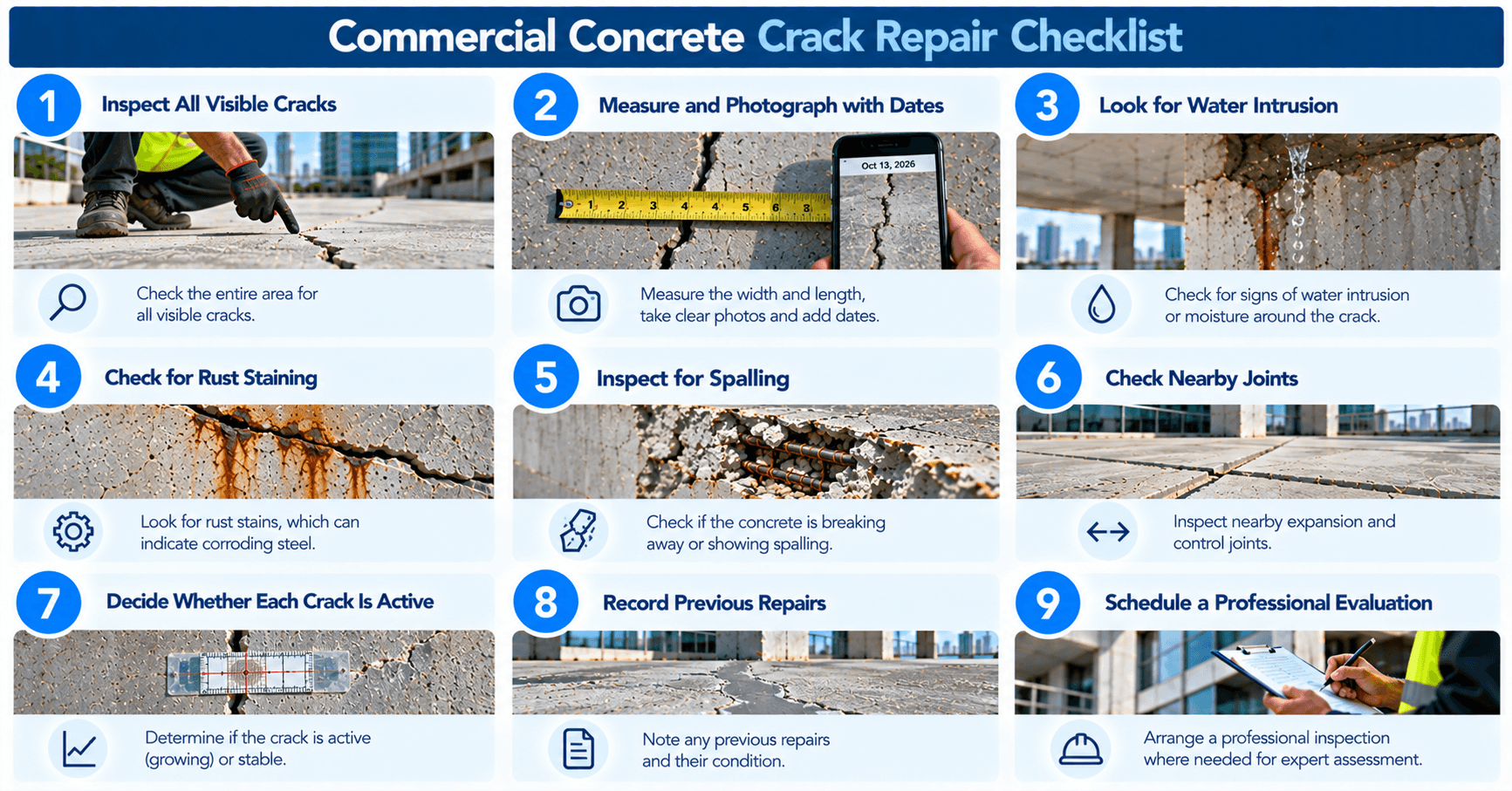
- Inspect all visible cracks
- Measure and photograph them with dates
- Look for water intrusion
- Check for rust staining
- Inspect for spalling
- Check nearby joints
- Decide whether each crack is active
- Record previous repairs
- Schedule a professional evaluation where needed
Schedule Professional Commercial Concrete Repair
Finding cracks early, learning what caused them and repairing them before water does further damage keeps repair scope small. A professional assessment tells you which cracks need injection, which need structural repair and which can wait.
Not sure which repair your building needs?
Walk the building with a licensed restoration contractor before you write a scope.
Conclusion: Protecting Commercial Concrete From Crack Damage
Cracks have different causes, and the right repair depends on the type of crack and what caused it. Early repair prevents spalling and corrosion, and structural cracks need professional evaluation before any repair begins.
Frequently asked questions
Updated: October 15, 2026