Roof Coating vs. Roof Replacement: Which Is Better for Commercial Buildings?
Commercial roof coating vs. roof replacement compared: what each involves, costs, lifespan, when each is the right call, and how to choose for your building.
By Luigi Basile
President
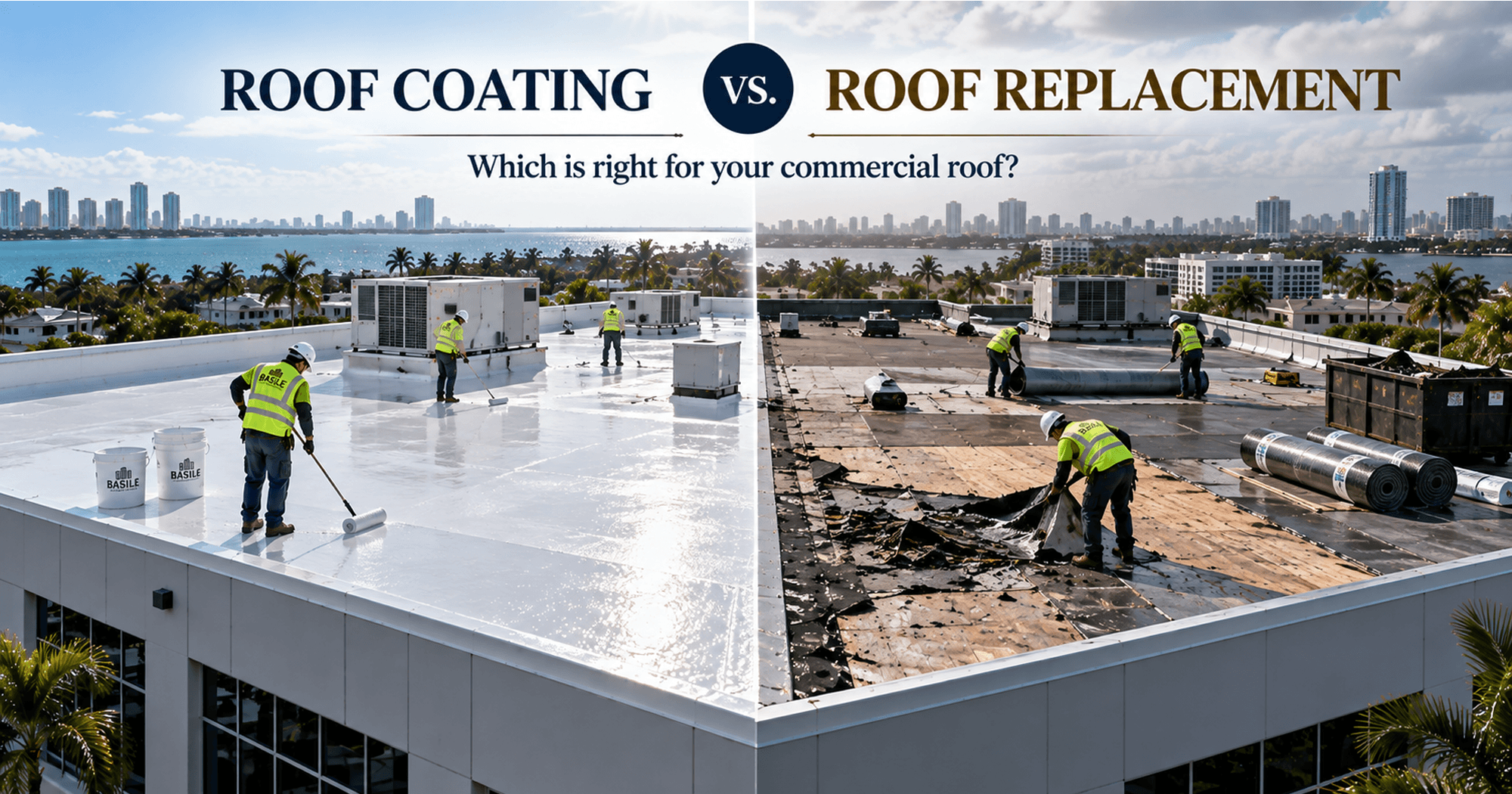
When a commercial roof starts to show its age, the decision usually comes down to two paths: apply a commercial roof coating to protect and extend the roof you have, or replace the roofing system entirely. It is one of the more consequential — and most misunderstood — calls a property owner or facility manager makes, because the two options differ enormously in cost, disruption, and what they can actually fix. This guide compares roof coating vs. commercial replacement in depth: what each involves, what each costs, when each is appropriate, and how to decide which is better for your building.
The honest answer is that neither option is universally "better." A coating can add years of protective, watertight life to a sound roof at a fraction of replacement cost and with far less disruption — but it cannot rescue a roof that has failed structurally. Replacement gives you a new roofing system when the old one is beyond saving, but it is the larger, costlier project and is often unnecessary on a roof that is still serviceable. The cheapest option upfront is not always the best long-term value, and the right choice depends entirely on the condition of the existing roof. That is why it starts with an inspection.
What Is Commercial Roof Coating?
Commercial roof coating is a fluid-applied protective layer installed over an existing roof to seal it, protect it from the elements, and extend its useful service life. Rather than tearing off and replacing the roofing system, a coating is applied on top of a roof that is still fundamentally sound, curing into a continuous, seamless membrane that shields the surface below.
That seamless quality is much of the value: because the coating flows over the roof and cures as one layer, it covers seams, penetrations, and vulnerable transitions where water tends to find its way in. A coating differs fundamentally from a complete new roof — it does not replace the roofing system, it protects and reinforces it. On a roof with minor weathering, surface wear, or manageable water-infiltration concerns, a coating can address those issues and renew the roof's protection without the expense and disruption of replacement.
How Commercial Roof Coating Works
A professional coating project is a disciplined process, not just rolling on a product. It begins with a roof inspection to confirm the roof is a suitable candidate, followed by surface preparation and thorough cleaning so the coating can bond. Existing damage — cracks, open seams, failed flashing — is repaired first, and a primer is applied where the roof material or coating system requires it. Then the commercial roof coating is applied at the specified thickness, often in multiple coats, and allowed to cure before a final inspection confirms full, even coverage. Skipping any of these steps, especially preparation and repair, is the fastest way to a coating that fails early.
Common Types of Commercial Roof Coatings
There is no single best coating; the right system depends on the roof and its environment. The common categories are silicone coatings, prized for their resistance to ponding water and UV; acrylic coatings, valued for reflectivity and cost-effectiveness; polyurethane coatings, known for durability and abrasion resistance; and elastomeric coatings, which stretch and flex with the roof to bridge small cracks. Which system fits depends on the existing roof material, the climate, ponding-water conditions, UV exposure, the extent of existing damage, and the building's specific requirements. A silicone system that excels on one roof may be the wrong choice on another, so the selection follows the assessment — not a one-size-fits-all rule.
What Is Commercial Roof Replacement?
Commercial roof replacement means removing the existing roofing system and installing a new one. Where a coating works with the roof you have, replacement starts over: the old roofing materials are torn off, the roof deck is inspected, any damaged components are repaired or replaced, and a new roofing system is installed from the substrate up.
Replacement becomes necessary when the existing roof can no longer be saved — when deterioration is extensive, the system has failed, or the roof has simply reached the end of its serviceable life. Because it involves removal, disposal, deck work, and a full new installation, replacement is generally a larger, longer, and more expensive project than coating. It is also the more comprehensive solution: when the underlying roof is truly failing, replacement is the only option that genuinely fixes it.
When Is Commercial Roof Replacement Necessary?
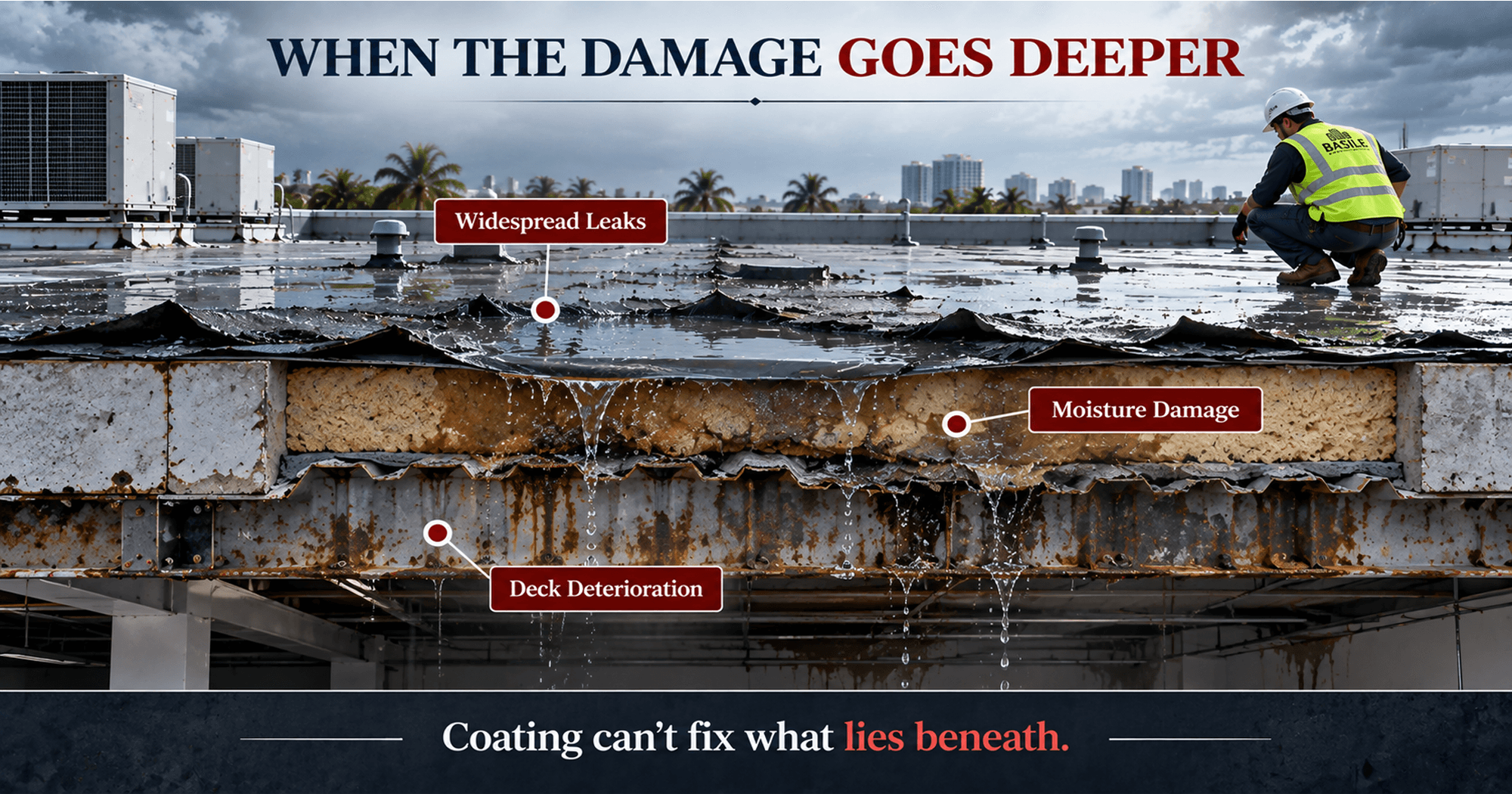
Replacement is the right call when the roof's problems run deeper than a coating can reach. Clear indicators include extensive roof deterioration, widespread leaks, and structural damage; failed roofing materials and severe moisture damage throughout the system; a history of multiple unsuccessful repairs; a roof that has reached the end of its serviceable life; and a damaged substrate or decking beneath the membrane. In these situations, coating over the problem only hides it while the deterioration continues underneath. When the roof is this far gone, roof coating vs. commercial replacement is no longer a real contest — replacement is what the building needs.
Commercial Roof Coating vs. Roof Replacement: What's the Difference?
The two approaches differ across almost every dimension that matters to a property owner. The table below lays them side by side.
| Factor | Commercial Roof Coating | Roof Replacement |
|---|---|---|
| Existing roof | Must generally be suitable for coating | Existing system is removed and replaced |
| Project scope | More targeted | More extensive |
| Cost | Often lower upfront | Generally higher upfront |
| Installation time | Often shorter | Usually longer |
| Building disruption | Generally lower | Potentially greater |
| Roof lifespan | Can extend useful service life | Provides a new roofing system |
| Material removal | Limited | Existing roofing may need removal |
| Best for | Serviceable roofs with manageable deterioration | Severely deteriorated or failed roofs |
| Maintenance | Still required | Still required |
| Water protection | Can improve waterproofing | New roofing system provides protection |
The key takeaway is balance: commercial roof coating is not a replacement for every failed roof, and replacement is not automatically necessary for every aging roof. Matching the solution to the roof's actual condition is the entire decision.
What Are the Benefits of Commercial Roof Coating?
When a roof is a good candidate, coating offers real advantages.
Extends the Life of an Existing Roof
A coating protects the existing roofing system from the weather that degrades it, and on a roof that remains structurally sound, that protection can meaningfully extend its useful service life — deferring the far larger cost of replacement.
Helps Prevent Water Intrusion
By sealing vulnerable areas, reducing the pathways water uses to get in, and protecting seams and penetrations, a coating supports the roof's overall waterproofing. Effective commercial roof sealing at these weak points is often the difference between a dry building and a recurring leak.
Lower Initial Project Cost
Because it avoids tear-off, disposal, and a full new installation, coating can be a more economical alternative to replacement — depending on the roof's condition and the scope of work. On a serviceable roof, it delivers protection for a fraction of the upfront cost.
Less Disruption to Commercial Operations
Coating a roof typically means reduced construction disruption, a potentially shorter installation period, and far less material removal than a tear-off. For an occupied commercial building, that often means the business can keep operating with minimal interruption while the work is done.
Reflective and Protective Benefits
A coating adds a protective surface against UV exposure, heat, and general weathering, shielding the roof material beneath it. Where the selected coating system is specifically designed and rated for it, a reflective coating can also help with rooftop heat — but energy benefits should only be claimed for systems engineered for that purpose.
What Are the Benefits of Commercial Roof Replacement?
Replacement is the more comprehensive solution, and when the roof warrants it, its benefits are decisive. It installs a completely new roofing system, addressing extensive deterioration that a coating cannot cover. It allows damaged components to be replaced and gives the contractor a chance to correct underlying roofing problems — deck issues, drainage, insulation — rather than sealing over them. It delivers long-term performance with updated roofing materials and systems, and it is simply the right fit when the existing roof has reached the end of its useful life. When coating cannot adequately address the roof's condition, replacement is what provides a durable, lasting result.
When Is Commercial Roof Coating a Better Option?
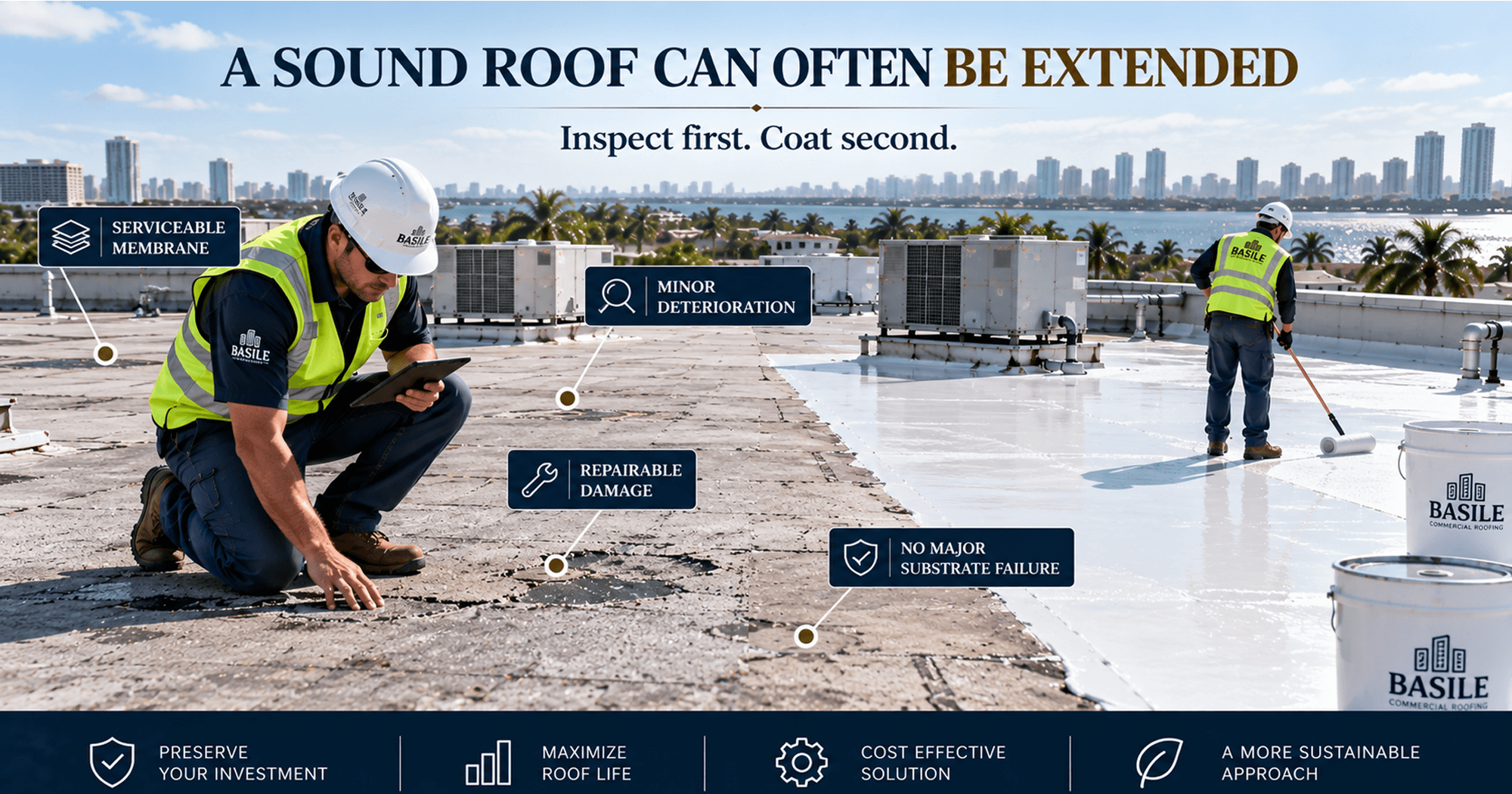
Coating is often the smarter choice when the roof still has good bones. It may be appropriate when the existing roof is structurally sound; the damage is limited or repairable; the roofing membrane remains serviceable; there is no widespread substrate failure; existing leaks can be located and addressed; the existing materials are compatible with the coating system; the owner wants to extend the roof's service life; and a less disruptive solution is preferred. When most of these are true, coating protects the investment already in the roof.
Signs Your Commercial Roof May Be Suitable for Coating
Certain conditions point toward a roof being a good coating candidate: general surface weathering, minor deterioration, and isolated leaks; aging but still serviceable roofing; minor seam or flashing issues; UV damage; and surface-level wear. These are problems a properly installed coating can address. Crucially, though, only a professional inspection can confirm suitability — a roof that looks coatable from the surface may hide moisture or substrate damage that rules it out.
When Is Commercial Roof Replacement a Better Option?
Replacement is the better option — and often the only real one — when the roof's problems are severe or systemic: severe deterioration, extensive leaks, and repeated repair failures; widespread membrane failure and significant water damage; structural concerns and a damaged roof deck; extensive ponding-water problems; a roofing system beyond practical restoration; or existing materials that are incompatible or otherwise unsuitable for coating. In these cases, coating cannot correct the underlying failure, and choosing it would waste money on a roof that needs replacing. Weighing roof coatings vs. full replacement for businesses always comes back to how deep the damage goes.
How Much Does Commercial Roof Coating Cost?
There is no flat price for commercial roof coating; the cost depends on the specific roof and project. The factors below drive it.
| Cost Factor | Potential Impact |
|---|---|
| Roof size | Larger roofs require more material and labor |
| Roof condition | More repairs increase project scope |
| Surface preparation | Extensive preparation increases labor |
| Coating type | Different systems have different costs |
| Number of coating layers | Additional layers may increase material and labor |
| Roof accessibility | Difficult access can increase complexity |
| Existing leaks | Leak repairs may add to project scope |
| Flashings and penetrations | Additional detailing may be required |
| Existing roofing material | Compatibility affects system selection |
| Ponding water | May require additional corrective work |
Because these variables interact, an inspection and project-specific assessment are generally required for an accurate estimate. A reputable contractor evaluates the roof in person rather than quoting a blanket per-square-foot rate.
How Much Does Commercial Roof Replacement Cost?
Replacement pricing spans an even wider range, because the project is larger and touches more of the building. Costs are influenced by the roof size and the removal and disposal of the existing roof; the condition of the roof deck; the roofing material and insulation selected; flashings, drainage, and penetrations; labor; the building's height and accessibility; permitting requirements; and overall project complexity. Because replacement involves tear-off, deck work, and a full new installation, it generally carries a substantially larger upfront scope than coating — which is exactly why it is reserved for roofs that genuinely need it.
Commercial Roof Coating vs. Replacement: Cost vs. Long-Term Value
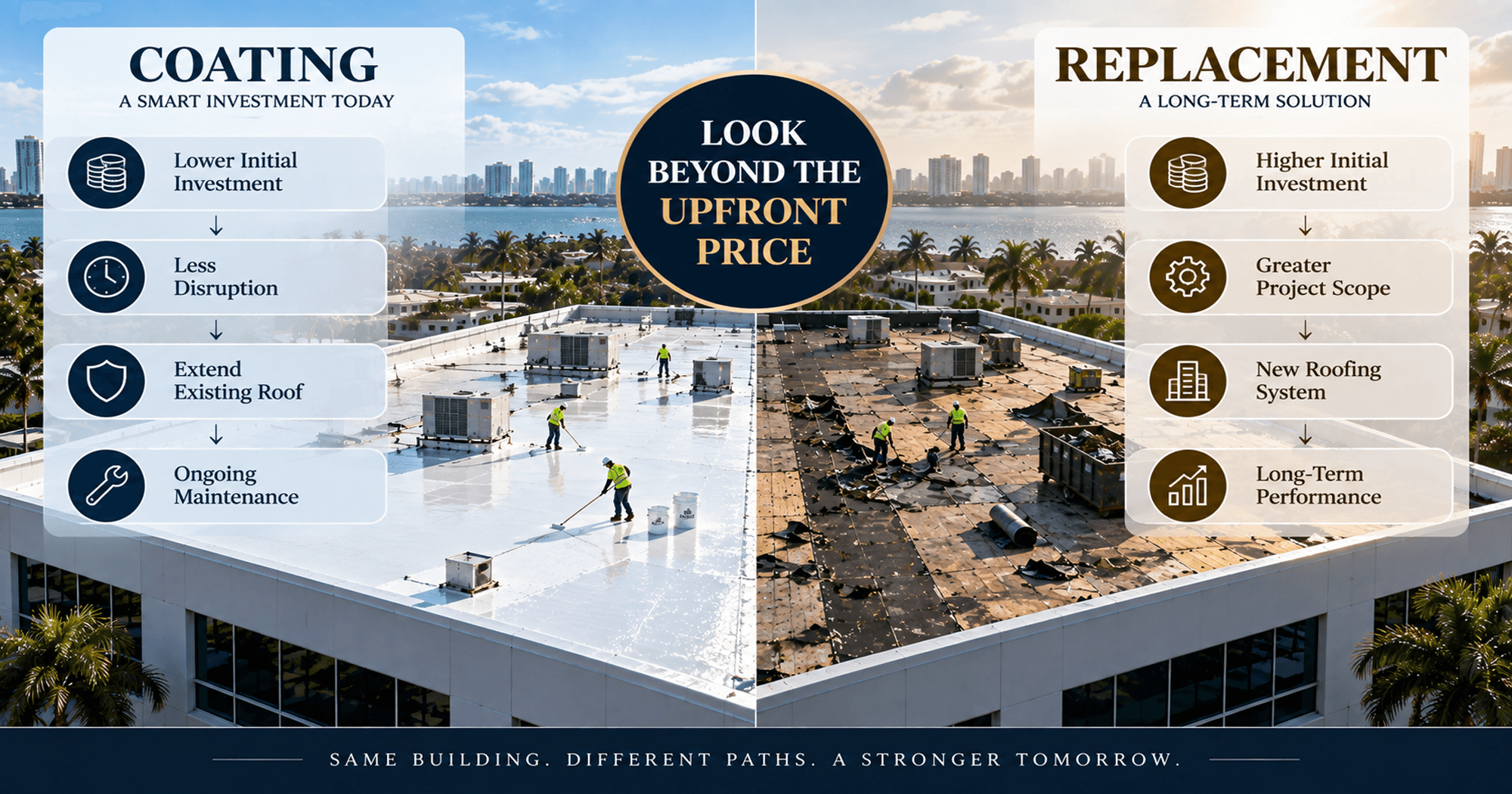
Comparing the two on upfront price alone is a mistake. The better lens is total lifecycle value. Weigh the initial investment against the expected service life each option provides; the maintenance requirements and future repair needs of each; the installation disruption to your operations; the long-term protection of the property; the risk of recurring leaks if a coating is applied to an unsuitable roof; and the potential future replacement cost either way. A coating that extends a sound roof for years is excellent value; a coating applied to a failing roof is money spent twice, because replacement still follows. Conversely, replacing a roof that could have been coated wastes capital that the building did not need to spend. Evaluating lifecycle value — not just the lowest bid — is what leads to the right financial decision.
Can Commercial Roof Coating Stop Existing Roof Leaks?
This is where many coating projects go wrong. A coating should never be treated as a substitute for diagnosing a leak. Existing leaks must be located and repaired first; damaged roofing areas may need repair before any coating goes on; and the flashings, seams, penetrations, and drains should be inspected as the likely sources. Moisture trapped beneath the roofing system is a particular concern — coating over wet insulation seals the problem in rather than solving it. A commercial roof sealer and coating system can absolutely help protect against future water intrusion, but only when applied to a roof that has been properly diagnosed, repaired, and confirmed suitable. Coating is protection, not a leak diagnosis.
What Is Commercial Roof Sealing?
Commercial roof sealing refers to sealing the specific vulnerable points on a roof rather than coating the entire surface. Where a full coating covers the whole roof, sealing targets the areas most prone to leaks: roof penetrations, flashings, seams, joints, and vulnerable transitions. These details are where most commercial roof leaks begin, and a commercial roof sealer applied to them reinforces the roof's defenses at its weakest points. Sealing and coating often work together — the seams and penetrations are sealed, then the surface is coated — but they are not identical, and sealing alone is not the same as a complete roof coating system.
The Commercial Roof Coating Process
A professional coating project follows a clear sequence, and the quality of the result depends heavily on the early steps.
1. Roof Inspection
The project starts by assessing the existing roofing material, leaks, ponding water, membrane condition, flashings, penetrations, and surface deterioration — confirming the roof is a suitable candidate for coating.
2. Roof Cleaning and Preparation
Crews remove dirt and debris, clean contaminants off the surface, prepare it for adhesion, and identify the areas that need repair.
3. Repair Existing Damage
Cracks, open seams, failed flashings, penetrations, and damaged sections are repaired before any coating is applied, so the system bonds to sound material.
4. Primer Application
Primer is applied where the existing roof material, coating system, surface condition, or manufacturer requirements call for it, promoting adhesion.
5. Apply Commercial Roof Coating
The coating is applied by the appropriate method, at the specified coverage and thickness, in multiple coats where required and always to manufacturer specifications.
6. Final Inspection
A final inspection verifies coverage, seams, flashings, penetrations, and drainage, and checks for any defects before the project is considered complete.
The Commercial Roof Replacement Process
Replacement is a larger undertaking with more stages.
1. Roof Inspection and Assessment
A full evaluation establishes the roof's condition and confirms that replacement — not coating — is the right path.
2. Selecting the Replacement System
The new roofing system is chosen to fit the building, its use, and its environment.
3. Removing Existing Roofing
The old roofing materials are torn off and prepared for disposal.
4. Inspecting the Roof Deck
With the roof stripped, the deck is inspected for damage that was hidden beneath the old system.
5. Repairing Underlying Damage
Any damaged decking, structure, or components are repaired or replaced before the new roof goes on.
6. Installing the New Roofing System
The new roofing system is installed from the substrate up, to specification.
7. Flashing, Drainage and Penetration Details
The critical details — flashings, drainage, and penetrations — are installed and sealed, since these determine whether the new roof stays watertight.
8. Final Inspection
A final inspection confirms the new system is complete, properly detailed, and performing as intended.
Common Mistakes to Avoid When Choosing Between Coating and Replacement
Choosing Based Only on Upfront Cost
Picking the cheaper option without weighing lifecycle value often costs far more over time.
Coating a Roof With Severe Underlying Damage
A coating cannot fix structural or substrate failure; applied over it, it simply hides the problem while it worsens.
Replacing a Roof That Could Be Successfully Restored
Tearing off a roof that a coating could have protected wastes capital the building did not need to spend.
Ignoring Existing Leaks
Leaks must be diagnosed and repaired before any coating; sealing over them guarantees they return.
Failing to Inspect the Roof Deck
Hidden deck or substrate damage changes the entire decision and must be identified before committing to a solution.
Applying Coating Without Proper Surface Preparation
A coating only bonds to a clean, prepared, repaired surface; skipping preparation guarantees early failure.
Ignoring Drainage and Ponding Water
Coating over standing water without correcting drainage traps the problem and undermines the whole system.
Choosing a Roofing System Without Considering Compatibility
The coating or replacement system must be compatible with the existing roof and building conditions, or it will not perform.
How to Choose the Right Solution for Your Commercial Roof
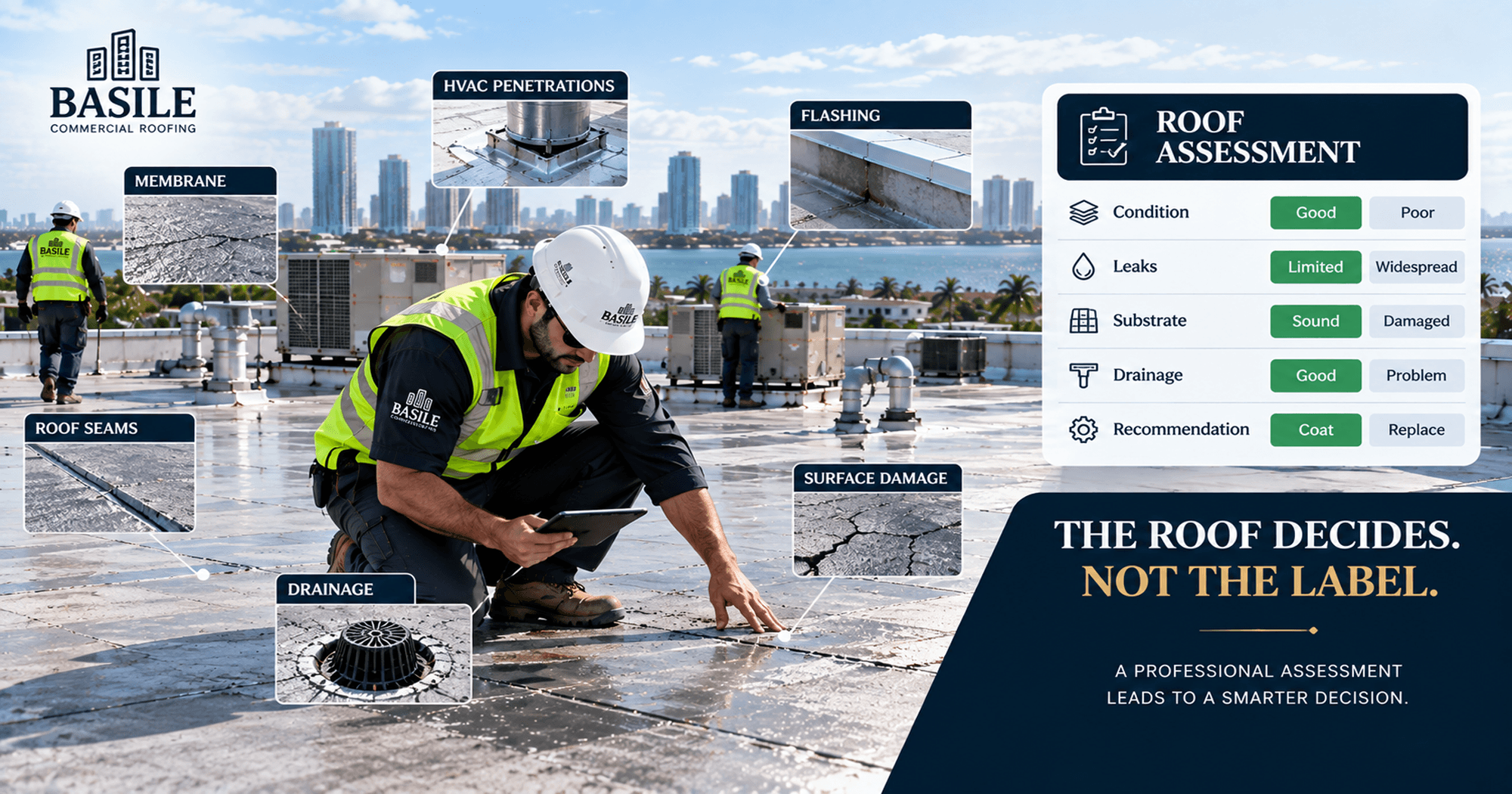
Choosing between coating and replacement is a matter of working through the roof's real condition. Consider the age of the existing roof and its overall condition; the extent of any leaks and the structural condition; the existing roofing material and whether moisture is trapped beneath the system; the roof deck condition, previous repairs, and maintenance history; the expected remaining service life; your budget and tolerance for business disruption; and your long-term goals for the property. When most signs point to a sound, serviceable roof, coating is usually the smart, cost-effective choice; when they point to systemic failure, replacement is warranted. Because so much of this is hidden from a ground-level look, a professional roof assessment is essential before deciding.
Successful Commercial Roof Coating Projects: What Makes Them Work?
The coating projects that succeed share the same fundamentals — and understanding them is the best guide to a good outcome. Successful results come from a proper roof inspection and correct coating selection; a compatible existing roof; thorough surface preparation and proper repairs before coating; correct application thickness; and application under proper weather conditions. They depend on professional installation, followed by regular maintenance and periodic inspections. In other words, a successful coating project is less about a miracle product and more about matching the right system to a suitable roof and installing it correctly — which is exactly what a professional assessment and installation deliver.
Commercial Roof Maintenance After Coating or Replacement
Whichever path you choose, the work is not finished at installation — both a coating and a new roof require ongoing maintenance to protect the investment. That means regular roof inspections; drain cleaning and drainage maintenance; inspection of flashings, seams, and penetrations; ongoing leak monitoring and inspections after major storms; clearing debris; and addressing minor damage early before it spreads. Preventative maintenance is what turns a good coating or a new roof into decades of reliable protection — and neglecting it shortens the life of either.
Why Professional Commercial Roofing Assessment Matters
Nearly every point in this guide comes back to the same thing: the right decision depends on an accurate read of the roof, and that requires professional judgment. A professional commercial roofing assessment delivers an accurate roof-condition evaluation, identifies hidden problems, and determines whether the roof is genuinely suitable for coating. It identifies moisture intrusion, guides the selection of appropriate materials, and ensures correct surface preparation and application — the factors that decide long-term performance. It also brings the safety and code compliance that commercial roofing work demands. Whether the answer turns out to be commercial roof coating, targeted commercial roof sealing, or full replacement, that decision should rest on a professional inspection, not a guess.
Why Choose Basile Contractors?
Basile Contractors brings more than 25 years of South Florida commercial building experience to exactly this decision. As a licensed Florida roofing contractor (license #CCC1511747), fully insured and bonded, and ICRI certified, OSHA compliant, and manufacturer-certified, Basile assesses your roof honestly and recommends the solution that actually fits its condition — coating, sealing, repair, or replacement — rather than defaulting to the biggest job. The team's strengths in commercial roof coating, waterproofing, and building restoration mean a sound roof gets protected and extended, while its rope-access and high-rise capabilities let even difficult elevations be inspected and worked safely. Serving commercial properties across Broward, Miami-Dade, and Palm Beach, Basile pairs roofing expertise with real knowledge of how South Florida's sun, heat, rain, and storms treat a commercial roof.
Not sure which repair your building needs?
Walk the building with a licensed restoration contractor before you write a scope.
Is Your Commercial Roof Ready for Coating or Replacement?
The only way to know whether your roof should be coated, sealed, repaired, or replaced is a professional assessment. Basile Contractors helps commercial property owners, building and facility managers, property management companies, developers, and business owners evaluate their roofs and choose the right path. Call (352) 657-8653 to schedule a professional commercial roof assessment.
Conclusion
Commercial roof coating and roof replacement serve different purposes, and the better choice is the one that matches your roof's real condition. Coating is an effective, economical way to protect and extend a roof that is still sound, sealing vulnerable areas and adding years of watertight service life. Replacement is the right answer when deterioration is extensive or the roofing system has reached the end of its life and coating simply cannot address the underlying failure. Cost should never be the only factor — roof condition, moisture, structural integrity, maintenance history, and your long-term goals all belong in the decision. A professional assessment is what makes that decision sound, and proper commercial roof sealing, coating, maintenance, and inspections are what keep recurring water damage from coming back. Contact Basile Contractors to schedule a professional roof evaluation and find out which solution is right for your building.
Frequently asked questions
Updated: October 8, 2026