Commercial Waterproofing: Complete Guide to Protecting Commercial Buildings in South Florida
Learn how commercial waterproofing protects buildings from leaks, moisture, and structural damage — plus the systems, costs, and expert solutions used in South Florida.
By Luigi Basile
President
Commercial waterproofing is the work that keeps water out of your building — and in South Florida, that is one of the most important things you can do to protect it. Good building waterproofing stops rain, humidity, and moisture from reaching the concrete and steel that hold your building up. When water gets past the envelope, it doesn't just leave a stain. It corrodes reinforcing steel, cracks concrete, feeds mold, and quietly turns a maintenance item into a structural repair. Waterproofing is how you stop that before it starts.
Florida makes this urgent. The same coastal climate that draws people here — heavy rain, high humidity, salt air, and hurricanes — is exactly what drives water into buildings and breaks them down from the inside. A small leak is never just a small leak; it is a sign that water has found a way in, and water always keeps moving. Proactive waterproofing is far cheaper than the repairs that follow water damage, which is why experienced property owners and HOA boards treat it as essential maintenance rather than an optional upgrade. This guide explains what commercial waterproofing is, why South Florida buildings need it, the systems available, what it costs, and how to choose the right waterproofing contractor.
What Is Commercial Waterproofing?
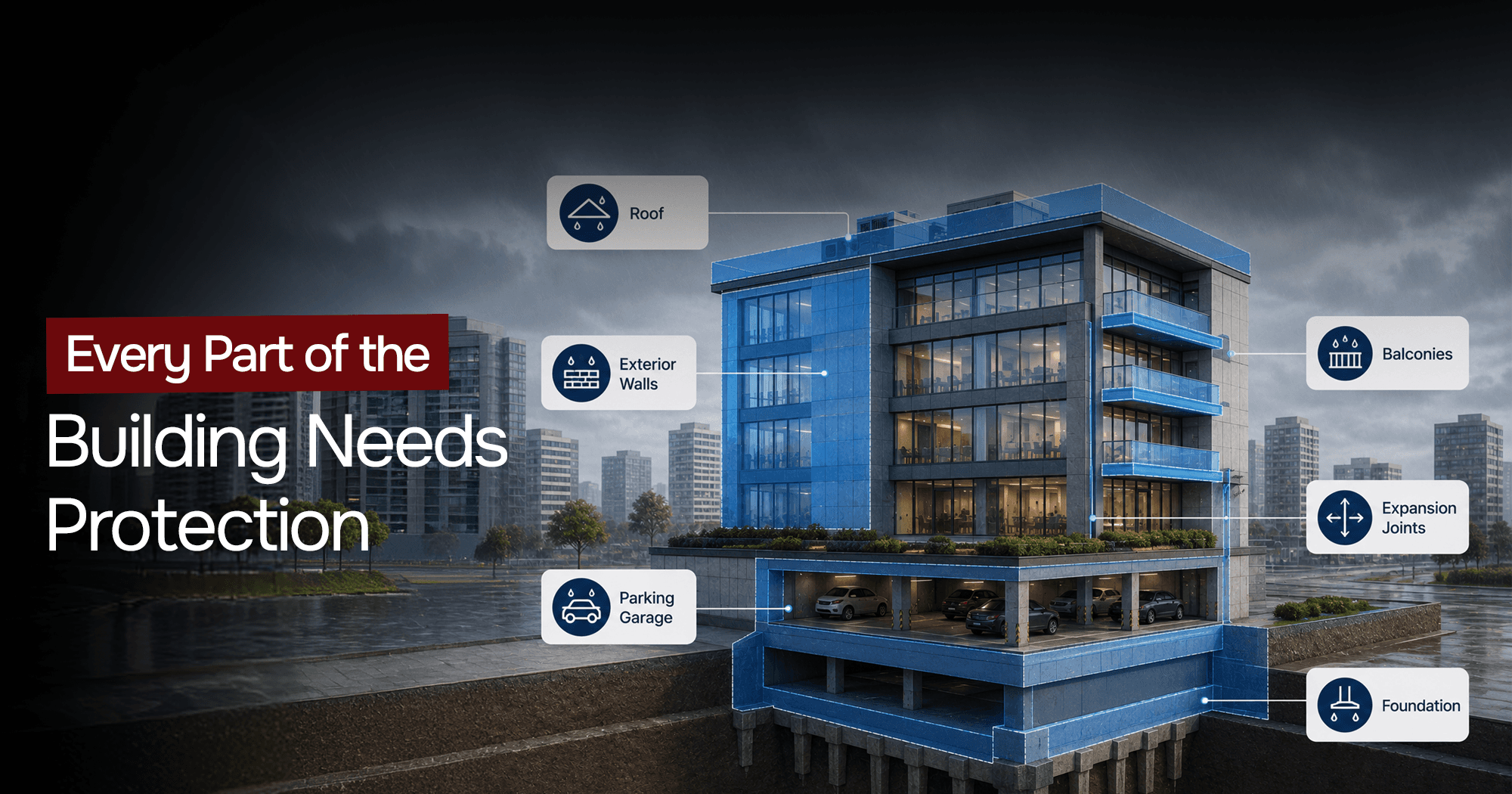
Commercial waterproofing is the process of sealing a building so water cannot penetrate its surfaces and reach the structure inside. It uses membranes, coatings, and sealants to create a continuous barrier across the parts of the building most exposed to water — roofs, balconies, decks, walls, foundations, and joints. The purpose is simple: keep water out, and keep the concrete and steel dry so they last.
It is worth understanding the difference between waterproofing and water resistance. A water-resistant surface slows water down; a waterproof surface stops it. Water resistance might keep out a light splash, but under Florida's driving rain and standing water it is not enough. True building waterproofing is designed to hold back water under pressure, over time, and across the whole surface — not just to shrug off a little moisture.
Every commercial building needs waterproofing because every building is exposed to water and because the materials that hold water out don't last forever. Membranes wear, sealants dry and crack, and coatings thin with sun and age. Without waterproofing — or with waterproofing that has failed — water finds the path of least resistance into the structure. Commercial waterproofing renews that protection and keeps the building envelope doing its job.
Why Commercial Buildings Need Waterproofing in South Florida
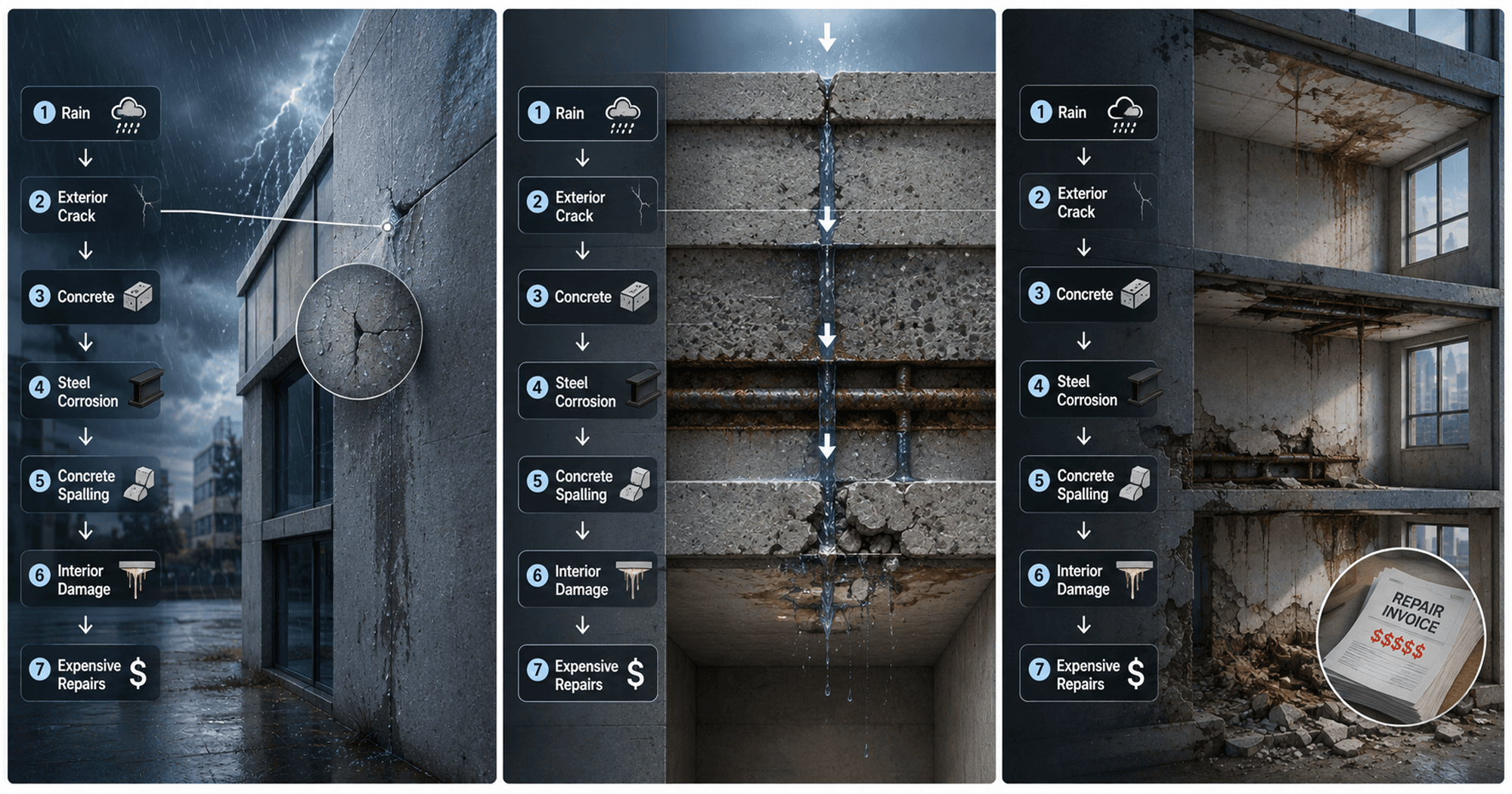
South Florida is one of the most demanding places in the country to keep a building dry. Waterproofing in South Florida is not a luxury; it is a response to a climate that pushes water at buildings from every direction.
Start with the rain. South Florida sees heavy, frequent rainfall, and much of it arrives in intense bursts that test every seam and surface. Add hurricanes, which drive wind-blown water into places ordinary rain never reaches and can overwhelm weak points in a single afternoon. Then there is salt air, which corrodes and degrades building materials along the coast, and high humidity, which keeps surfaces damp and gives moisture a constant path into the structure. Together these conditions cause water intrusion far faster than in a drier climate.
On top of the weather, buildings age. Envelopes that were watertight when new gradually loosen as sealants shrink, membranes wear, and coatings break down. In South Florida, that aging is accelerated by the very conditions the envelope is fighting. This is why waterproofing here is not a one-time job — it is ongoing protection for a building that is under constant pressure from water.
Signs Your Commercial Building Needs Waterproofing
Water problems usually give plenty of warning before they become serious. These are the signs that your building's waterproofing needs attention.
Water Leaks
Active leaks, or water appearing indoors after rain, are the clearest sign that the envelope has been breached somewhere and water is getting through.
Cracked Exterior Walls
Cracks in exterior walls are direct pathways for water. Even hairline cracks let moisture in, and they tend to widen over time.
Concrete Spalling
When concrete flakes or breaks away and exposes rusted steel, water has already reached the reinforcement. Waterproofing is a key part of stopping it.
Rust Stains
Brown or orange streaks on concrete and stucco mean the steel inside is corroding — a strong signal that water is getting where it shouldn't.
Mold & Mildew Growth
Mold and mildew need moisture. Their presence indicates water intrusion or trapped humidity, and they bring health and air-quality concerns of their own.
Damaged Sealants
Dried, cracked, or missing sealants around joints, windows, and connections leave gaps that water moves through easily.
Roof Leaks
The roof is a building's largest horizontal surface and a common source of water intrusion when its membrane fails.
Foundation Moisture
Dampness, staining, or standing water at or below grade points to foundation waterproofing problems that can affect the whole structure.
Types of Commercial Waterproofing Systems
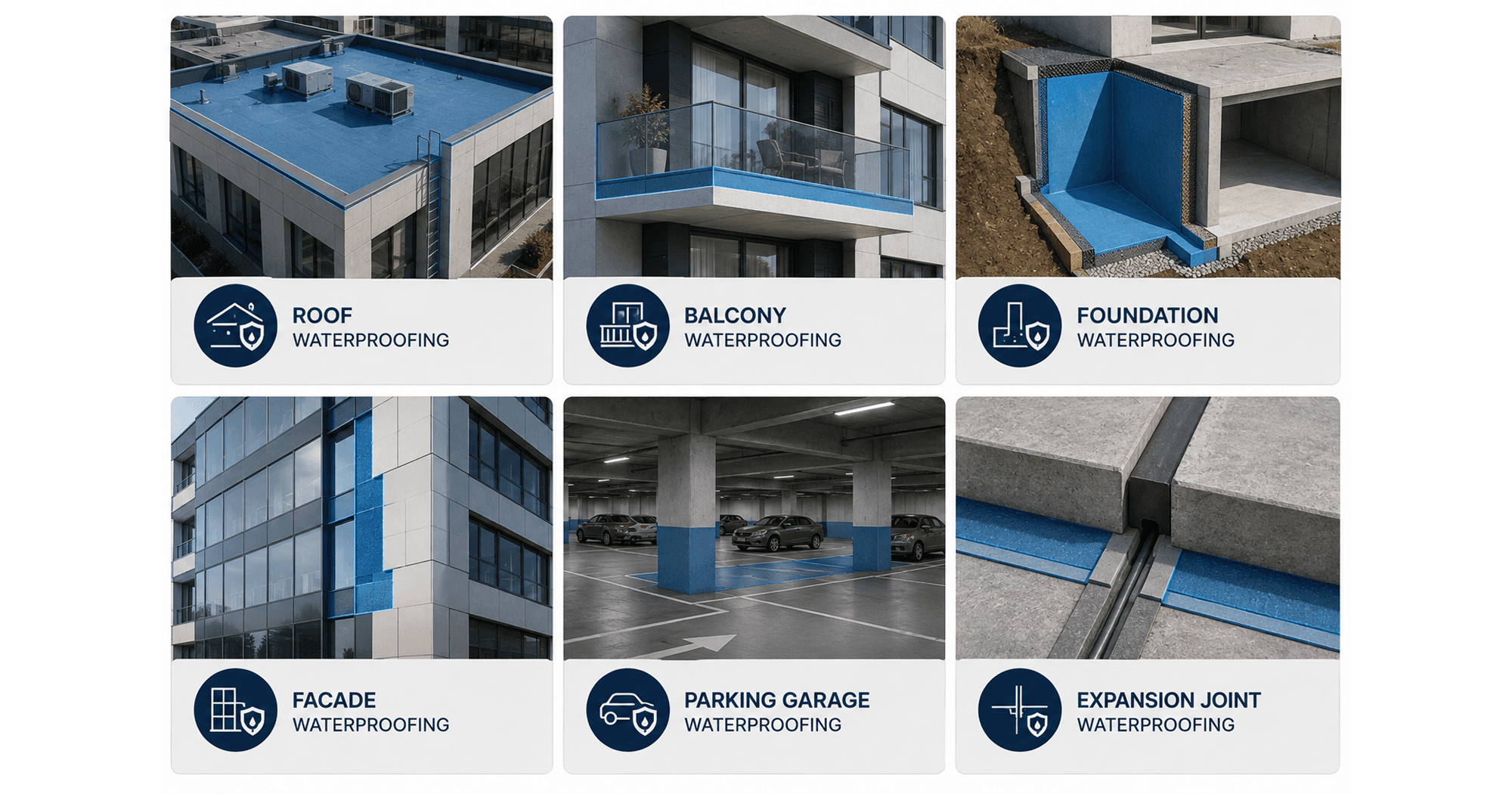
Commercial waterproofing is not a single product but a set of systems, each designed for a different part of the building. A complete approach matches the right system to each surface. Here are the main types.
Roof Waterproofing
Waterproof membranes and coatings protect the roof — the building's most exposed surface — from constant sun and rain and prevent leaks into the floors below.
Foundation Waterproofing
Below-grade barriers keep groundwater and soil moisture from reaching the foundation and the spaces it supports.
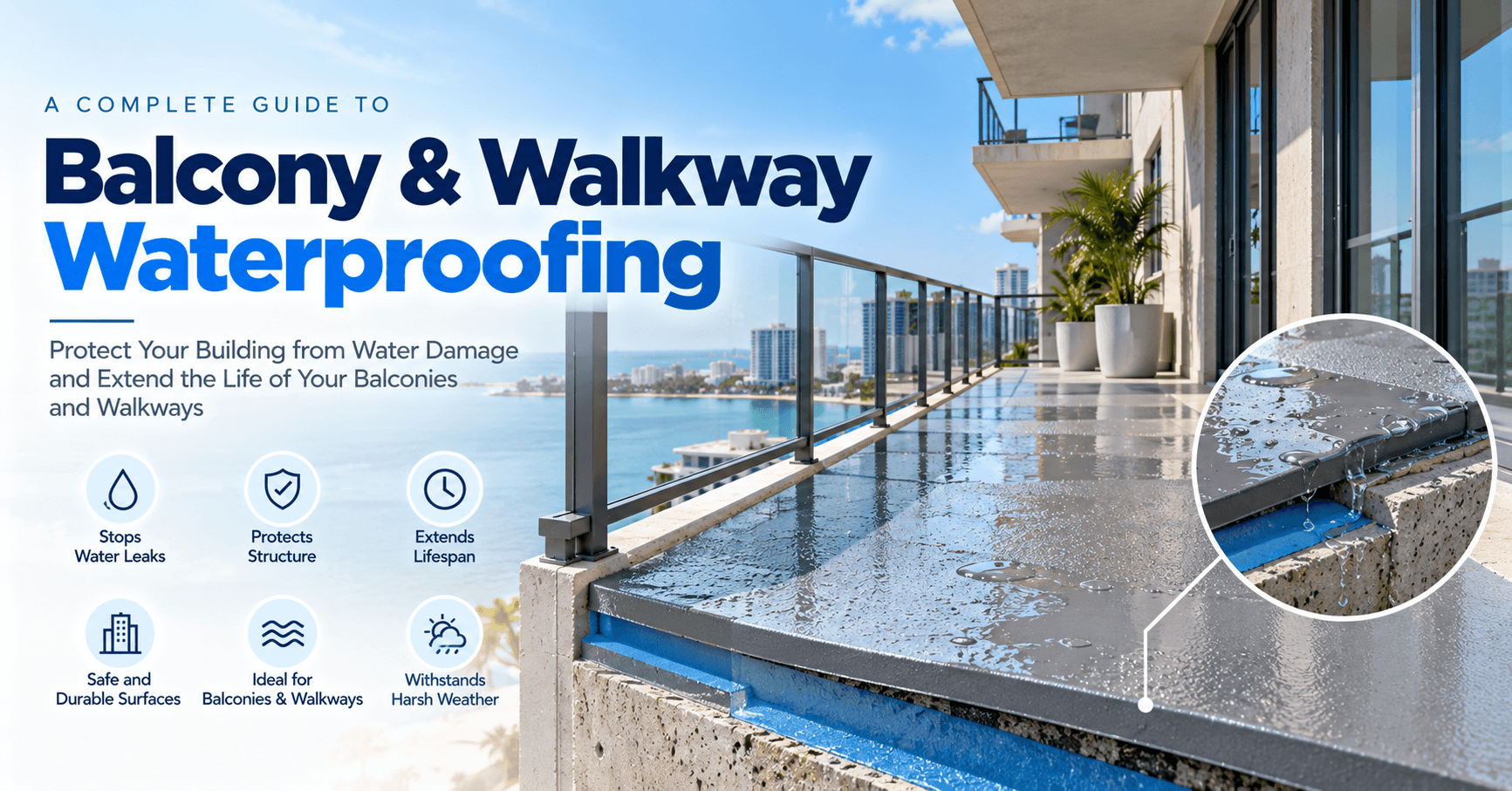
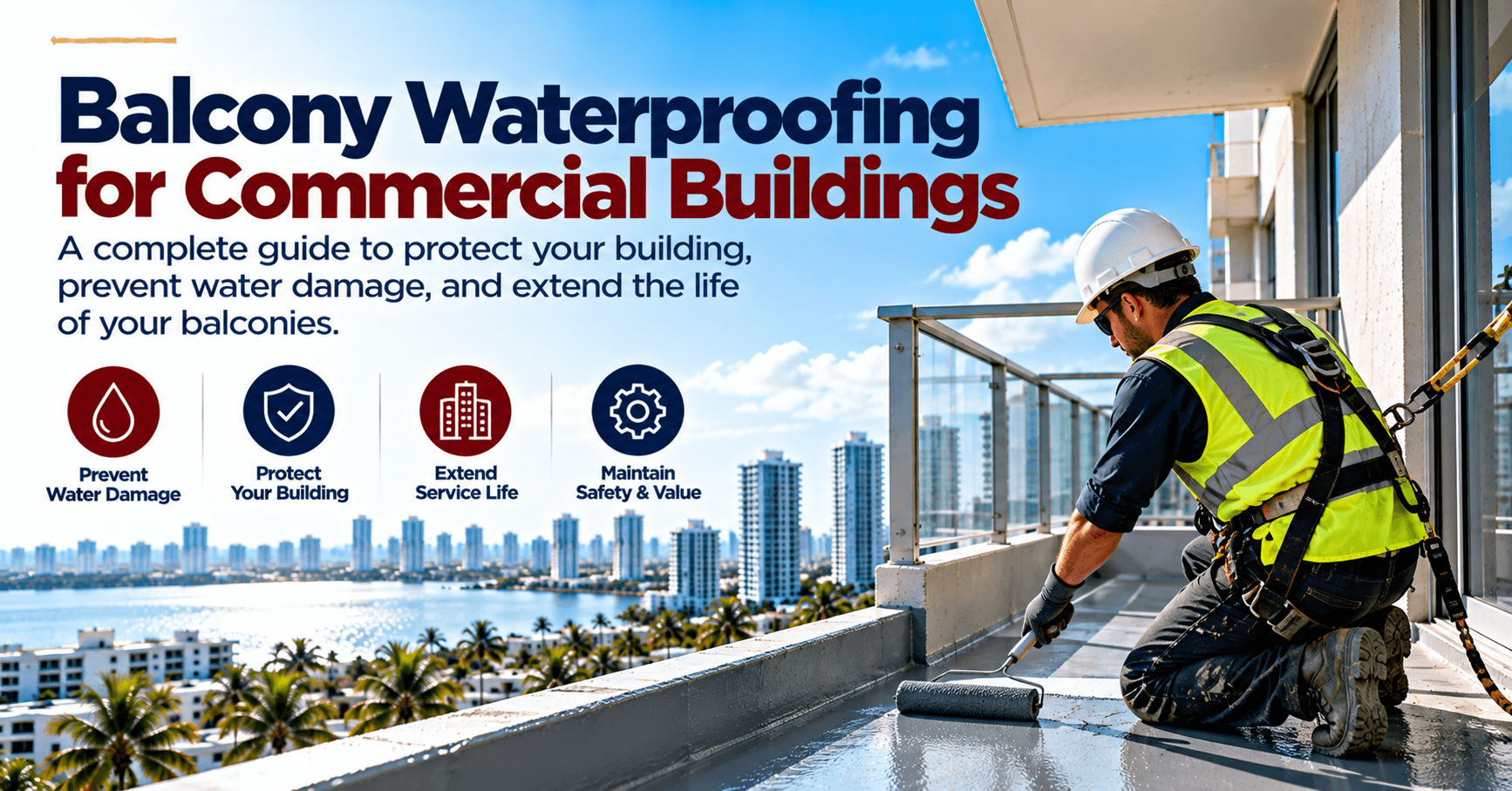
Balcony Waterproofing
Balconies are among the most water-exposed and failure-prone parts of a coastal building. Waterproof coatings protect the concrete and the steel within, and help prevent the spalling that balconies are prone to.
Parking Garage Waterproofing
Parking structures take heavy traffic, standing water, and road salts. Traffic-bearing waterproofing systems protect the decks and the structure below them.
Facade Waterproofing
Sealing the exterior walls and their joints keeps wind-driven rain out of the building envelope and protects the structure behind the facade.
Below-Grade Waterproofing
Below-grade systems protect the parts of the building in contact with soil, where constant moisture would otherwise work its way inside.
Expansion Joint Waterproofing
Expansion joints allow a building to move, but they are natural gaps in the envelope. Specialized joint systems keep them sealed against water while still allowing movement.
Our Commercial Waterproofing Process
Effective waterproofing follows a disciplined process, because a barrier is only as good as its weakest point. This is how Basile Contractors approaches the work.
Building Inspection
We inspect the building to identify where water is getting in and which surfaces are most at risk.
Moisture Assessment
We assess moisture levels and trace the true source of intrusion, so we treat the cause rather than the symptom.
Surface Preparation
We prepare every surface thoroughly. Proper preparation is what allows a waterproofing system to bond and last.
Crack & Joint Repairs
We repair cracks and joints before waterproofing, sealing the openings that would otherwise let water straight through.
Waterproof Membrane Installation
We install the appropriate waterproof membrane for each surface, creating a continuous barrier against water.
Protective Coatings
We apply protective coatings that shield the membrane and add another layer of defense against sun, salt, and rain.
Final Quality Inspection
We inspect the finished system to confirm the barrier is complete and performing as designed.
Benefits of Commercial Waterproofing
Waterproofing does more than stop leaks — it protects the whole building and everyone who uses it. It prevents water intrusion, keeping moisture out of the structure. It extends the building's lifespan by protecting the materials that hold it up. It protects the structural concrete and the steel inside it from corrosion. It prevents mold growth by keeping surfaces dry. It reduces maintenance costs, because preventing water damage is far cheaper than repairing it. It can improve energy efficiency by keeping the envelope intact. It protects property value by keeping the building in strong condition. And it increases tenant satisfaction, because dry, well-maintained buildings are more comfortable and more reliable to occupy.
Not sure which repair your building needs?
Walk the building with a licensed restoration contractor before you write a scope.
Buildings We Waterproof
Our commercial waterproofing services protect a wide range of properties across South Florida.
Commercial Buildings
We waterproof office and mixed-use buildings, protecting both the structure and the businesses inside.
Condominiums
We protect condo buildings from the water intrusion that drives special assessments, with an understanding of how association work is planned and communicated.
Hotels
We waterproof hotels while working around guests and daily operations.
Hospitals
We protect healthcare facilities with the care and coordination that occupied, sensitive buildings require.
Educational Facilities
We waterproof schools and campuses on schedules that respect the academic calendar.
Government Buildings
We handle public-sector waterproofing to the standards and documentation these projects demand.
Parking Structures
We apply traffic-bearing waterproofing to parking garages exposed to heavy use, standing water, and salts.
Service Areas Across South Florida
We provide waterproofing throughout South Florida, including Miami, Fort Lauderdale, Hollywood, Coral Gables, Miami Beach, and Boca Raton, and across Broward County, Miami-Dade County, and Palm Beach County. Wherever your building is in the region, our waterproofing team can reach it.
How Much Does Commercial Waterproofing Cost?
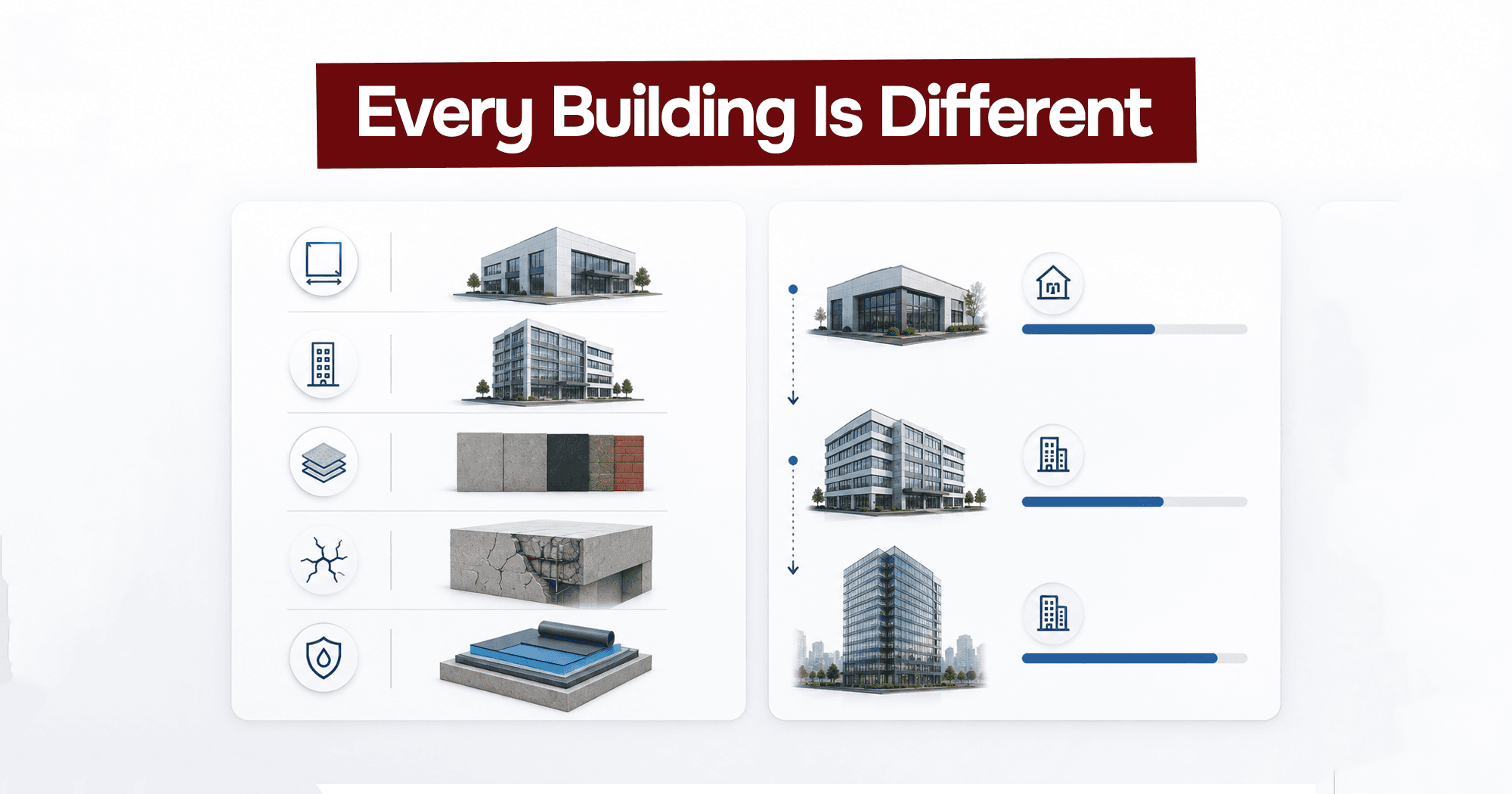
There is no fixed price for commercial waterproofing, because the cost depends on what needs protecting and how. The size and type of surface, the system required, the height of the building, and the condition of the existing surfaces all affect the price. Waterproofing a few balconies is a very different job from waterproofing an entire parking structure or high-rise facade. The table below shows the main factors that drive cost for each type of work.
| Project Type | Estimated Cost Factors |
|---|---|
| Roof Waterproofing | Roof size & material |
| Balcony Waterproofing | Number of balconies |
| Facade Waterproofing | Building height |
| Parking Garage | Square footage |
| Foundation Waterproofing | Excavation requirements |
Because the right system and the true scope only become clear after a professional evaluation, every waterproofing project should begin with an inspection. That inspection is also how you avoid paying to seal a symptom while water keeps entering somewhere else.
How Long Does Commercial Waterproofing Take?
Waterproofing timelines depend on the size of the building and the scope of the work. A small job may take a week or two; a large high-rise project can run for months. The table below gives a general range by building size.
| Project Size | Estimated Timeline |
|---|---|
| Small Commercial Property | 1–3 weeks |
| Mid-Rise Building | 1–2 months |
| High-Rise Building | 2–6 months |
Several factors affect the schedule: the extent of the repairs needed before waterproofing, the weather, how the surfaces are accessed, and the need to work around occupants and traffic. A good contractor accounts for all of this in the plan, so the timeline is realistic from the start.
Common Waterproofing Mistakes Property Owners Make
Most waterproofing failures come down to a few avoidable choices.
Ignoring Small Leaks
A small leak is an early warning. Ignored, it lets water keep entering and reaching the structure.
Delaying Waterproofing Repairs
Every season of delay lets water do more damage and turns a modest job into a major one.
Using Low-Quality Materials
Cheap materials fail early in Florida's climate, and the savings vanish when the system has to be redone.
Hiring Unlicensed Contractors
Unlicensed waterproofing often looks fine at first and fails later, with no protection for the owner.
Skipping Annual Inspections
Without regular inspections, small failures in the envelope go unnoticed until water damage appears inside.
Ignoring Preventive Maintenance
Waterproofing needs upkeep. Skipping maintenance lets protection lapse and problems return.
Best Practices for Long-Term Waterproofing Protection
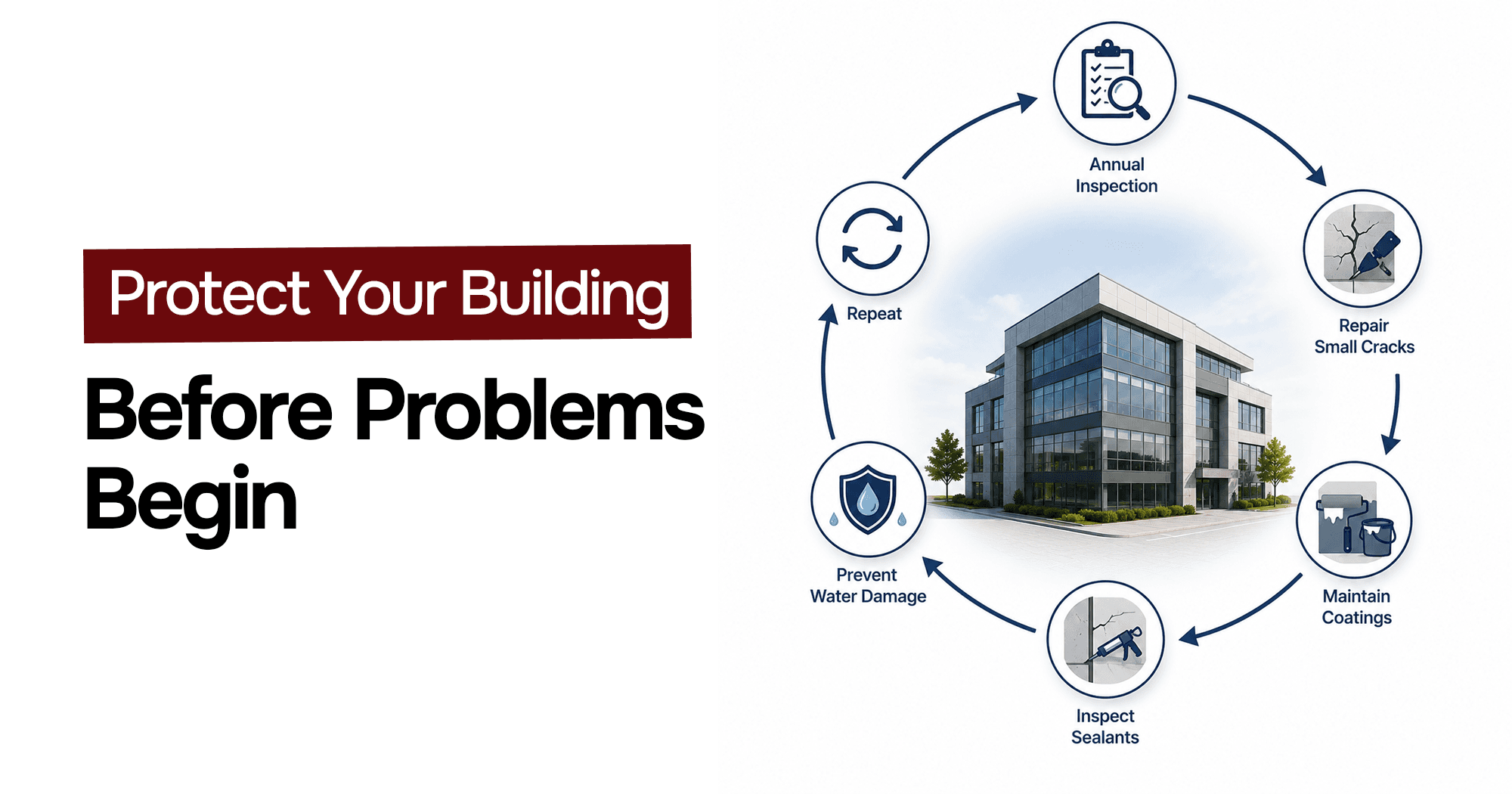
The buildings that stay dry are the ones with owners who stay ahead of the water. These habits keep waterproofing costs down over the life of the building.
Schedule Annual Building Inspections
A yearly inspection catches envelope problems early, before water reaches the structure.
Repair Cracks Immediately
Seal cracks as soon as they appear, since each one is a potential entry point for water.
Maintain Protective Coatings
Keep coatings in good condition so the waterproofing beneath them stays protected.
Inspect Sealants Regularly
Check sealants at joints, windows, and connections, and replace them before they fail.
Follow Preventive Maintenance Plans
A simple maintenance plan keeps the building's protection intact instead of letting it lapse.
Work With Experienced Waterproofing Contractors
Experienced, certified contractors install systems correctly the first time and stand behind them.
Schedule Your Free Commercial Waterproofing Consultation
Wondering where water might be getting into your building? Start with a professional inspection. Basile Contractors will evaluate your building, identify the sources of water intrusion, and design a customized waterproofing solution built for long-term protection. Contact us today to schedule your free commercial waterproofing consultation and protect your property before water damage becomes a structural repair.
See how our waterproofing service addresses these failures on occupied buildings.
Standards and further reading
Official standards and public sources on this topic:
- WBDG: Moisture Management Concepts, the Whole Building Design Guide's overview of how water and moisture move through building enclosures.
- WBDG: Integrity Testing for Roofing and Waterproofing Membranes, the methods used to test waterproofing membranes for leaks.
- ASTM E2128, the standard guide for evaluating water leakage of building walls.
- SWR Institute, the Sealant, Waterproofing and Restoration Institute, the trade body for sealant and waterproofing contractors.
Frequently asked questions
Updated: October 8, 2026