How to Restore Heritage Buildings: A Complete Guide to Historic Restoration
A complete guide to how to restore heritage buildings: the step-by-step process, techniques and materials, common problems, costs, and how professional restoration preserves historic character.
By Luigi Basile
President
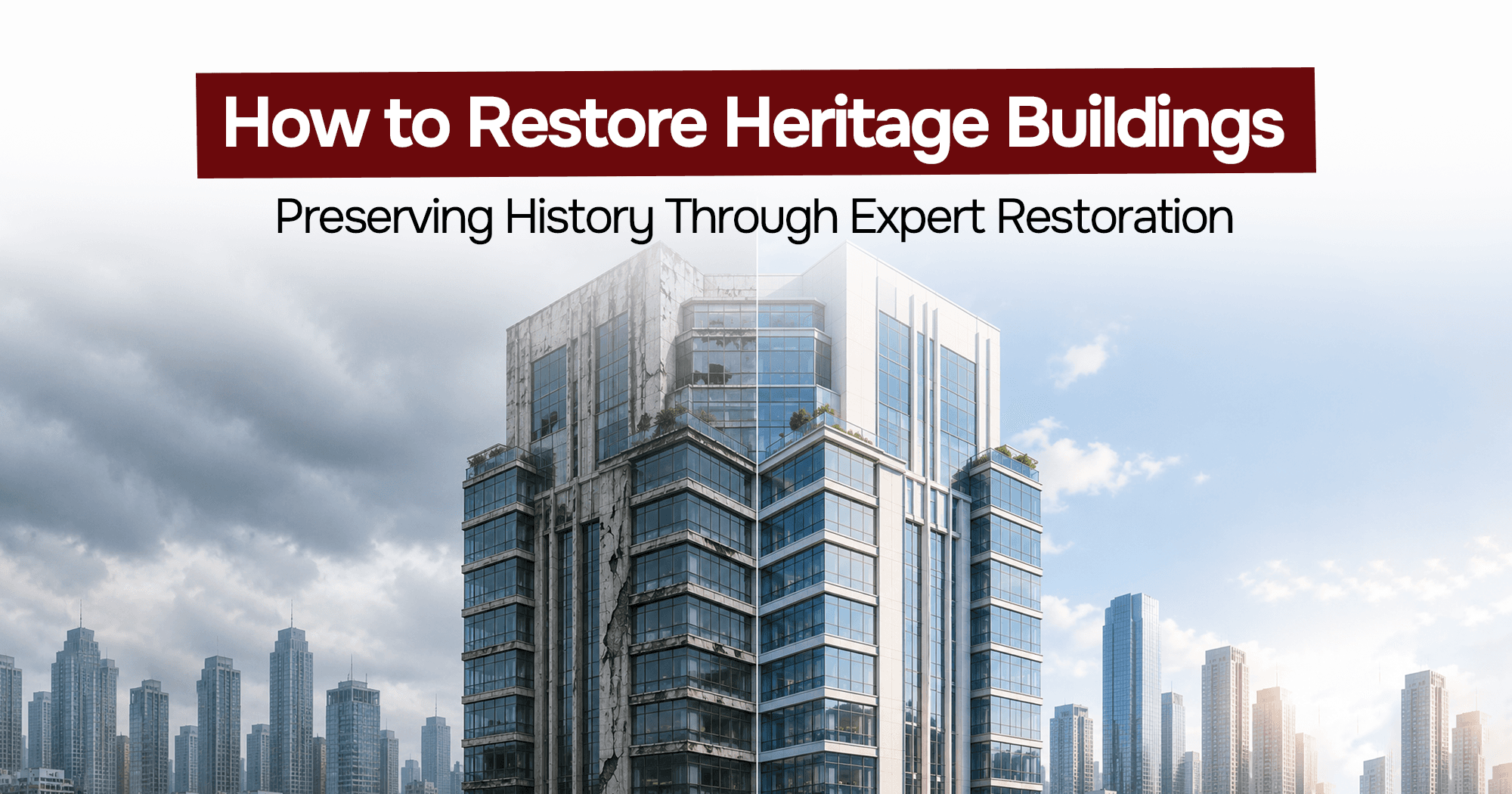
Knowing how to restore heritage buildings means understanding that an old building is not just old — it is a record of how people once built, worked, and lived, and that record is worth keeping. Heritage building restoration is the careful work of repairing an aging or damaged historic structure while preserving the architectural character and craftsmanship that make it significant. Done well, historic building restoration extends a landmark's life for another century; done carelessly, it erases in a season what took generations to earn. This guide walks through the entire process — what restoration actually involves, the techniques and materials used, the problems you will encounter, what it costs, and why the work belongs in experienced hands.
What Is Heritage Building Restoration?
Heritage building restoration is the process of returning a historic building to a sound, stable condition while retaining as much of its original fabric and appearance as possible. The purpose is preservation: repairing deterioration, reversing damage, and protecting the structure so that its historical and cultural value survives — not modernizing it into something new.
It helps to separate four terms that are often used interchangeably. Restoration returns a building to its original condition and appearance, keeping historic materials wherever they can be saved. Renovation updates a building for current use and often prioritizes function over historical accuracy. Rehabilitation adapts a building for a new purpose while retaining its character-defining features. Reconstruction rebuilds a structure, or parts of it, that no longer exist. Heritage work leans heavily toward restoration and rehabilitation, because the goal is continuity with the past rather than replacement of it.
That is why preserving original materials and architectural details matters so much. The specific brick, the hand-carved stone, the wavy glass in a historic window, the profile of a cornice — these are the building's authenticity, and once removed they cannot truly be recovered. Protecting them protects the cultural and historical value of the building and the community memory attached to it.
Why Is Heritage Building Restoration Important?
Restoring a heritage building does far more than fix a roof or a wall. It preserves the historical character that gives a place its identity and protects the architectural heritage that connects a community to its past. Restoration extends the building's usable lifespan and prevents structural deterioration from accelerating into failure. It maintains the community identity that historic districts and landmark buildings anchor, and it typically increases property value, since a well-restored historic property commands a premium that a neglected one never will.
Restoration is also the sustainable choice. Preserving and repairing an existing structure reuses the enormous embodied energy already invested in it and avoids the waste of demolition and new construction. In many cases restoration reduces the need to tear down and rebuild entirely — keeping materials out of landfills, keeping streetscapes intact, and keeping history standing.
How to Restore Heritage Buildings: Step-by-Step Process
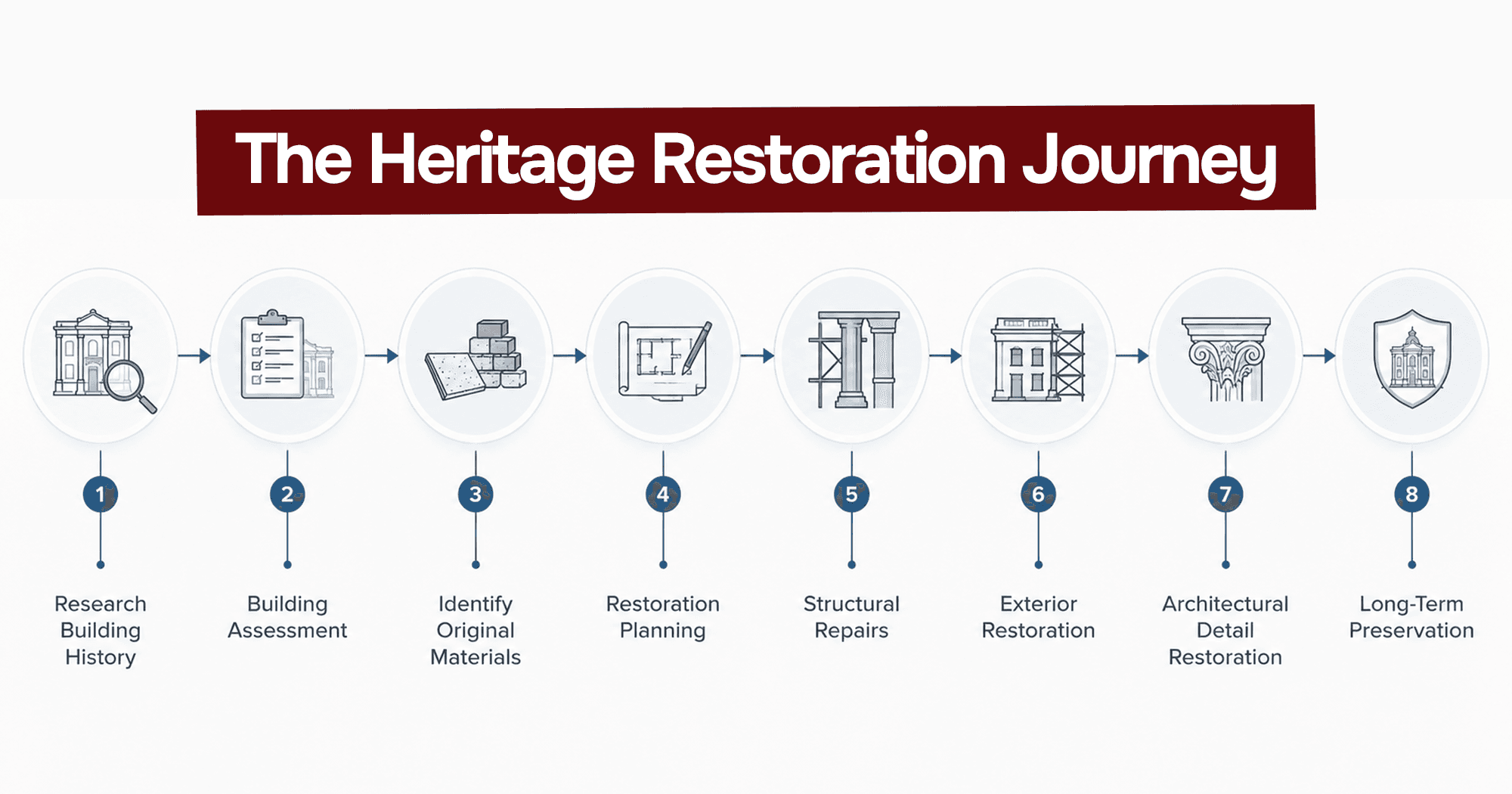
Heritage restoration follows a deliberate sequence. Rushing straight to visible repairs is how original features get lost and hidden problems get sealed in. The process below moves from understanding the building to protecting it for the long term.
1. Research the Building's History
Restoration begins in the archive, not on the scaffold. Establish the original construction date, the architectural style, and the sequence of previous modifications so you know what is original and what was added later. Gather original drawings, historical photographs, and any existing documentation. This research reveals the building's historical significance and becomes the reference standard for every decision that follows.
2. Conduct a Heritage Building Assessment
A thorough condition assessment documents the state of the structure, exterior, and roof, along with the masonry, windows and doors, and foundation. It maps moisture damage and evaluates previous repairs, many of which may themselves be causing harm. This assessment is the diagnostic foundation of the project — it defines what must be repaired, what can be preserved, and what is at risk.
3. Identify Original Materials and Features
Before any repair, catalog the building's original fabric: the brick, stone, and mortar; the woodwork and metalwork; the windows, decorative elements, and architectural detailing. Identifying what is authentic determines what must be preserved, what should be repaired in place, and what — only where truly unsalvageable — may need careful replication.
4. Develop a Restoration Plan
With research and assessment complete, build a restoration plan that defines the scope of work and restoration priorities, specifies materials, and sets out structural requirements, budget, and timeline. Crucially, the plan incorporates any preservation requirements that govern the property, so the work stays compliant as well as authentic.
5. Repair Structural Problems
Structure comes first, because everything else depends on it. Address foundation issues, structural cracks, damaged masonry, and deteriorated concrete, and resolve roof problems and water damage before restoring finishes. Cosmetic work applied over an unstable structure is wasted work.
6. Restore the Building Exterior
With the structure sound, restore the exterior envelope. This includes masonry, brick, and stone restoration; facade repairs; repointing failed mortar joints with a compatible mix; and applying appropriate exterior coatings. The exterior is both the building's public face and its first defense against weather, so its repair is central to the whole project.
7. Restore Original Architectural Features
Now the character-defining details are addressed: historic windows and doors, decorative trim, cornices, railings, woodwork, and ornamentation. The guiding principle is to restore rather than replace wherever possible, since these features carry the craftsmanship and identity that make the building historic.
8. Complete Final Preservation Work
The project closes with final inspections, finishing work, and thorough documentation of everything done — an essential record for the building's future stewards. A maintenance plan is put in place so the restoration is protected rather than left to deteriorate again.
Common Problems Found in Heritage Buildings
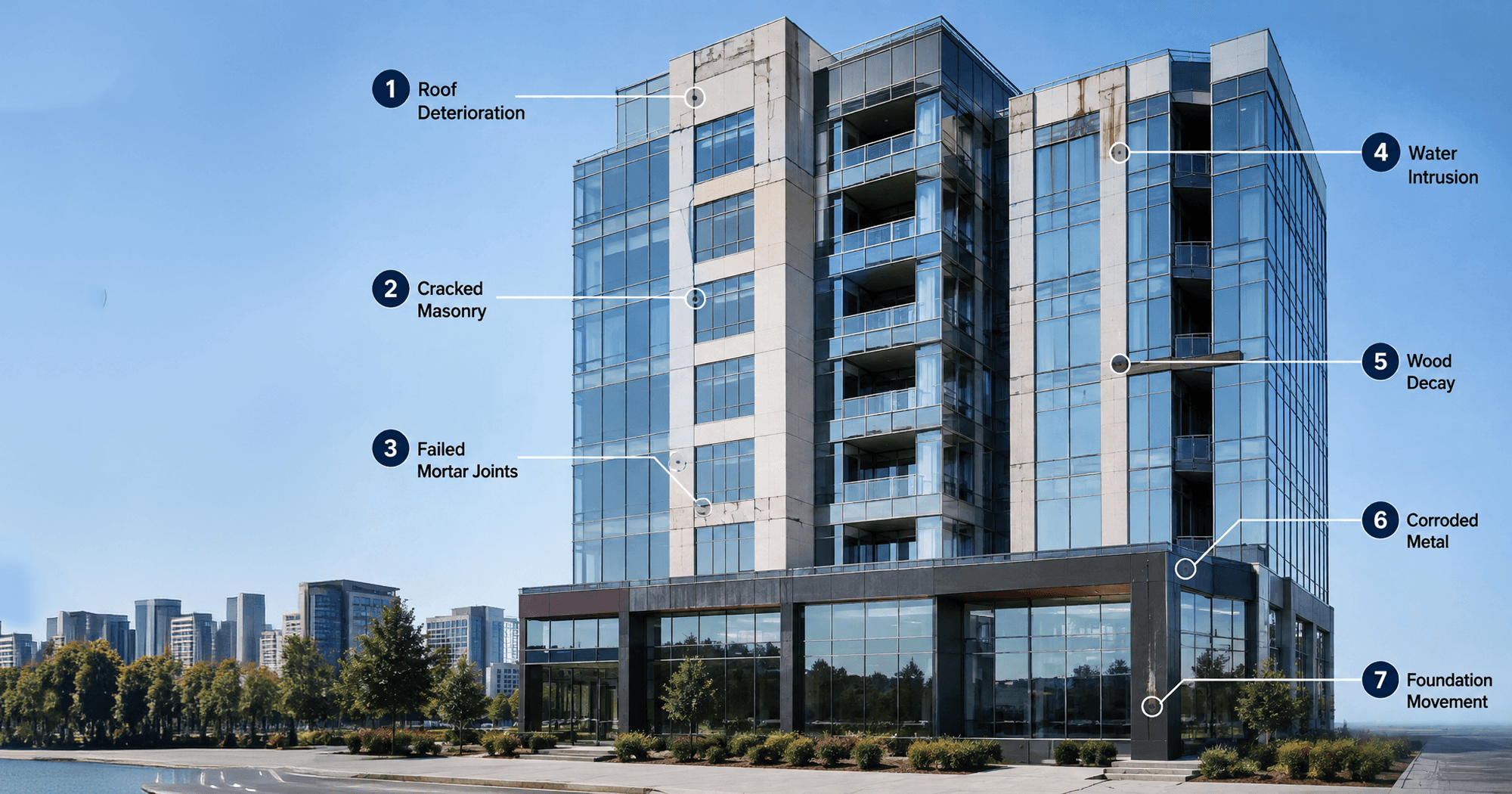
Age and exposure produce a recognizable set of problems in historic structures. Understanding them helps owners recognize when a building needs attention.
Deteriorated Masonry
Decades of weather, pollution, and moisture break down masonry surfaces, softening and spalling brick and stone.
Cracked Brick and Stone
Structural movement, freeze-thaw cycles, and settling crack individual units, opening paths for water and further damage.
Failed Mortar Joints
Old mortar erodes and loses its bond, weakening walls and letting water infiltrate — one of the most common and consequential heritage problems.
Water Intrusion
Water is the single greatest enemy of a historic building. It enters through failed joints, roofs, and flashing and quietly drives most other forms of deterioration.
Roof Deterioration
Aging roofing materials fail and allow water into the structure below, threatening framing, finishes, and everything the roof protects.
Foundation Problems
Settling, moisture, and age compromise foundations, producing the cracks and movement that show up throughout the building above.
Wood Rot and Decay
Moisture and insects destroy historic woodwork — from structural timbers to decorative trim — where it is not kept dry and maintained.
Corrosion of Metal Elements
Iron and steel components rust and expand, cracking the surrounding masonry and weakening railings, anchors, and structural connections.
Previous Poor-Quality Repairs
Well-meaning but incompatible past repairs — hard cement mortar, sealants that trap moisture, modern materials over historic fabric — are frequently a major source of ongoing damage that restoration must undo.
Heritage Building Restoration Techniques
Skilled restoration draws on a range of specialized techniques, matched to the building's materials and condition.
Masonry Repointing
Removing failed mortar and replacing it with a compatible mix restores the wall's integrity while allowing it to breathe as it was designed to.
Brick Restoration
Cleaning, repairing, and — only where necessary — replacing damaged brick with matching units preserves the original masonry surface.
Stone Restoration
Cleaning, consolidating, and repairing historic stone, or carefully replicating unsalvageable pieces, keeps carved and cut stonework intact.
Concrete Restoration
Repairing deteriorated and spalling concrete and addressing the corroded reinforcement inside it restores strength to concrete-framed historic structures.
Facade Restoration
Comprehensive repair of the building's exterior face brings back both its appearance and its weather protection.
Historic Window Restoration
Repairing original windows — rather than replacing them with modern units — preserves character-defining features and often outlasts a replacement.
Structural Reinforcement
Discreetly strengthening aging structural elements makes the building safe and stable while keeping the intervention as invisible as possible.
Waterproofing and Moisture Control
Because water drives most deterioration, controlling moisture through appropriate, breathable waterproofing is one of the most important protective techniques in any restoration.
How to Choose Materials for Heritage Building Restoration
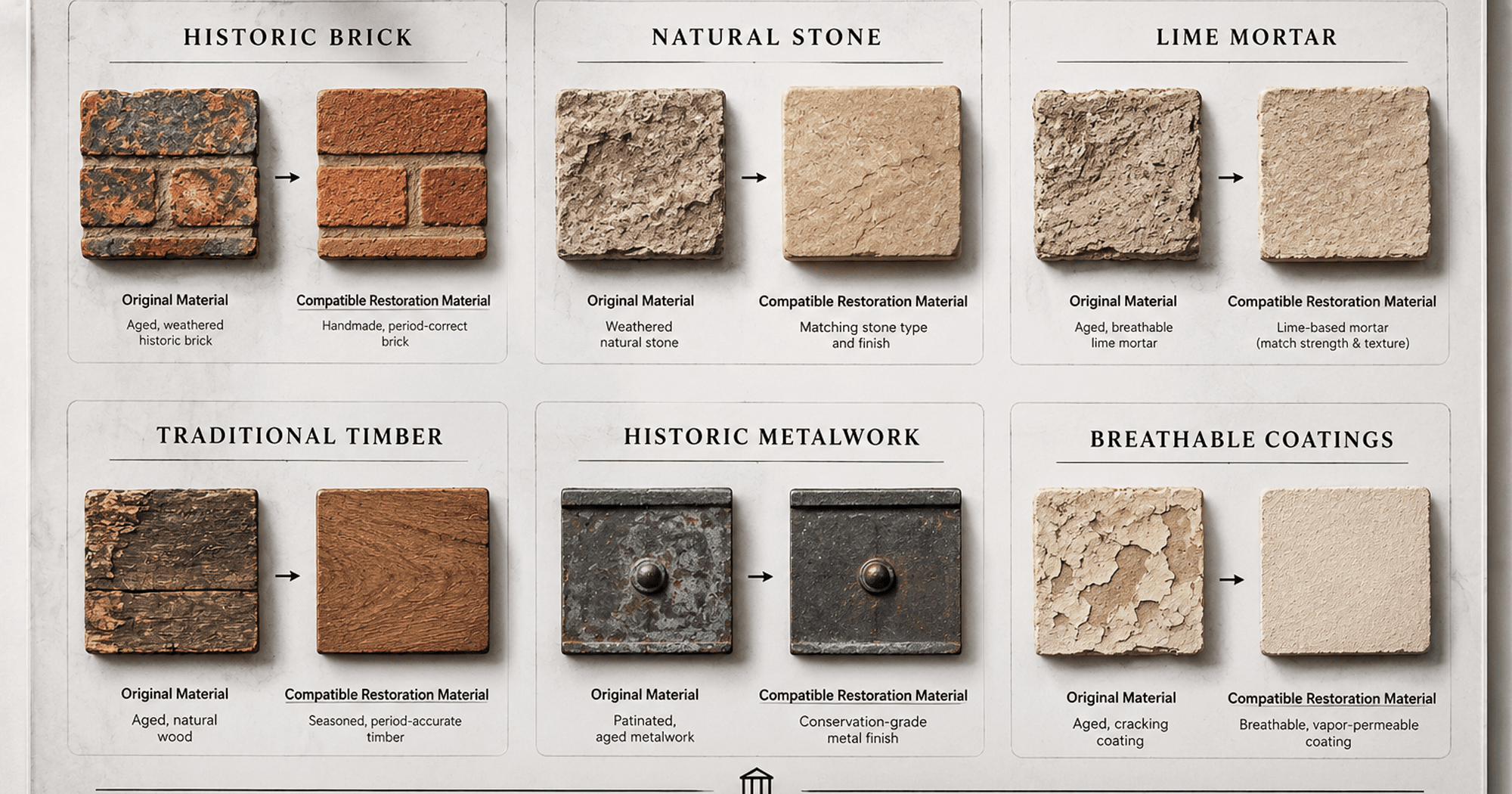
Material selection can make or break a restoration. The overriding principle is compatibility: new materials must work with the old, not against them. That starts with matching the original materials in composition, and using compatible mortar in particular — a mortar that is softer and more breathable than the masonry around it, so the historic units are never damaged by a harder modern mix.
Traditional construction techniques often need to be honored alongside traditional materials, because the two were designed together. Breathability is essential: historic walls manage moisture by letting it move through and evaporate, and sealing them with impermeable modern products traps water and accelerates decay. Beyond that, materials should be durable and should match the original in color and texture, so repairs disappear into the historic fabric rather than standing out. Incompatible modern materials — hard cement, plastic sealants, non-breathable coatings — should be avoided precisely because they cause the damage restoration is meant to prevent. And because historic materials vary, any material should be tested on a small area before large-scale application.
Heritage Restoration vs. Commercial Building Restoration
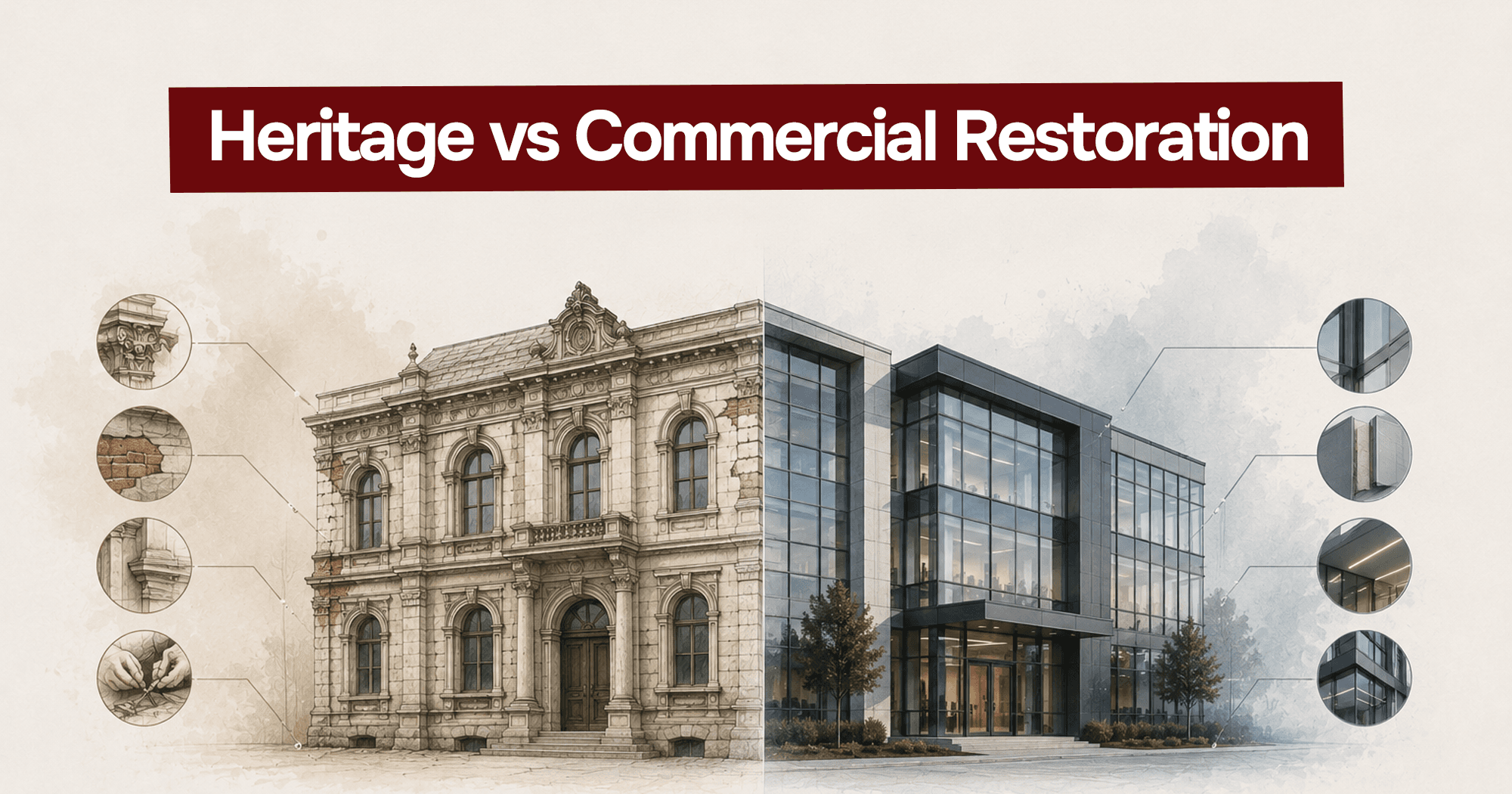
Heritage restoration and commercial building restoration share techniques but pursue different priorities. The comparison below highlights where they diverge.
| Factor | Heritage Restoration | Commercial Building Restoration |
|---|---|---|
| Main objective | Preserve historical character | Restore functionality and performance |
| Materials | Often historically compatible | Modern or specialized materials |
| Design | Preserve original appearance | May allow greater design flexibility |
| Regulations | Heritage requirements may apply | Building codes and regulations |
| Restoration approach | Preservation-focused | Performance-focused |
In practice the line is not always clean. Many heritage buildings are also working commercial properties — historic hotels, offices, and storefronts — which means both preservation and building performance have to be satisfied at once. A restoration of that kind has to keep the building authentic and keep it functioning, and balancing the two is where experienced judgment matters most.
What Does a Building Restoration Service Include?
A professional building restoration service typically covers the full arc of a project rather than a single trade. That usually includes building inspections and condition assessments; masonry restoration; concrete restoration; facade restoration; waterproofing; and structural repairs. It extends to brick and stone restoration, the restoration of historic features and details, and preventive maintenance to protect the finished work.
Bringing these services under one experienced team is what makes complex restoration manageable. Heritage projects rarely involve just one problem — masonry, structure, water, and finishes are interconnected — and a full-service restoration company can sequence and coordinate the work so each stage supports the next.
Challenges of Restoring Heritage Buildings
Restoration is rewarding work, but it is rarely straightforward. Owners and teams commonly face the following.
Finding Matching Materials
Sourcing brick, stone, mortar, and millwork that match century-old originals can be difficult and sometimes requires custom fabrication.
Working With Aging Structures
Old buildings behave in ways modern ones do not, and every intervention has to account for how the existing structure was built and how it has aged.
Preserving Original Features
Keeping and repairing delicate historic features demands more skill, time, and patience than simply replacing them would.
Unexpected Structural Problems
Concealed damage frequently surfaces once work begins, and the plan has to flex to address it.
Heritage Regulations and Approvals
Historic properties may be governed by preservation requirements that add documentation, review, and approval steps to the schedule.
Balancing Modern Building Requirements
Life-safety, accessibility, and performance needs must be met without compromising the building's historic character.
Managing Restoration Costs
Specialized labor and materials, plus the unknowns inherent in old buildings, make budgeting a genuine challenge.
Working Within an Existing Building
Restoration happens inside real constraints — occupied spaces, tight access, and the need to protect what already stands.
How Much Does Heritage Building Restoration Cost?
There is no standard price for restoring a heritage building; cost depends on the specific structure and the scope of work. The factors below drive the estimate.
| Cost Factor | Impact |
|---|---|
| Building size | Larger buildings require more labor and materials |
| Building condition | Extensive deterioration increases costs |
| Structural repairs | Major structural work can significantly increase project costs |
| Materials | Specialized or historically compatible materials may cost more |
| Architectural details | Decorative features require specialized craftsmanship |
| Accessibility | Difficult access can increase labor requirements |
| Heritage requirements | Additional documentation and approvals may be necessary |
| Restoration scope | Partial restoration costs less than comprehensive restoration |
Because these factors interact and old buildings hold surprises, the only reliable way to price a project is a professional building assessment. An experienced restoration company evaluates the structure firsthand, defines the true scope, and provides an estimate grounded in the building's actual condition rather than a generic per-square-foot figure.
How Long Does Heritage Building Restoration Take?
Restoration timelines vary as widely as costs. The schedule depends on the building's size and structural condition, the scope of the restoration, and the availability of appropriate materials — some of which must be sourced or custom-made. Weather affects exterior masonry and coating work, heritage approvals can add review time, and the complexity of the architectural features and the contractor's availability both influence the pace. Rather than promising a fixed duration, a reputable contractor sets a realistic timeline once the assessment is complete and the scope is known.
Common Heritage Building Restoration Mistakes
Many restoration failures trace back to the same avoidable errors.
Replacing Original Features Instead of Restoring Them
Tearing out and replacing what could have been repaired destroys the authenticity that makes a building historic.
Using Incompatible Materials
Hard cement mortars, non-breathable coatings, and modern sealants damage historic fabric rather than protect it.
Ignoring Water Damage
Leaving water intrusion unaddressed guarantees continued deterioration no matter how good the visible repairs look.
Skipping a Detailed Building Assessment
Beginning work without a thorough assessment means working blind and being ambushed by hidden problems.
Choosing Contractors Without Restoration Experience
General construction skills do not translate to heritage work; inexperience shows up as irreversible damage.
Focusing Only on Appearance
Cosmetic fixes that ignore structure and moisture treat symptoms while the real problems keep advancing.
Failing to Plan for Long-Term Maintenance
A restoration with no maintenance plan simply resets the clock on deterioration.
Best Practices for Successful Heritage Building Restoration
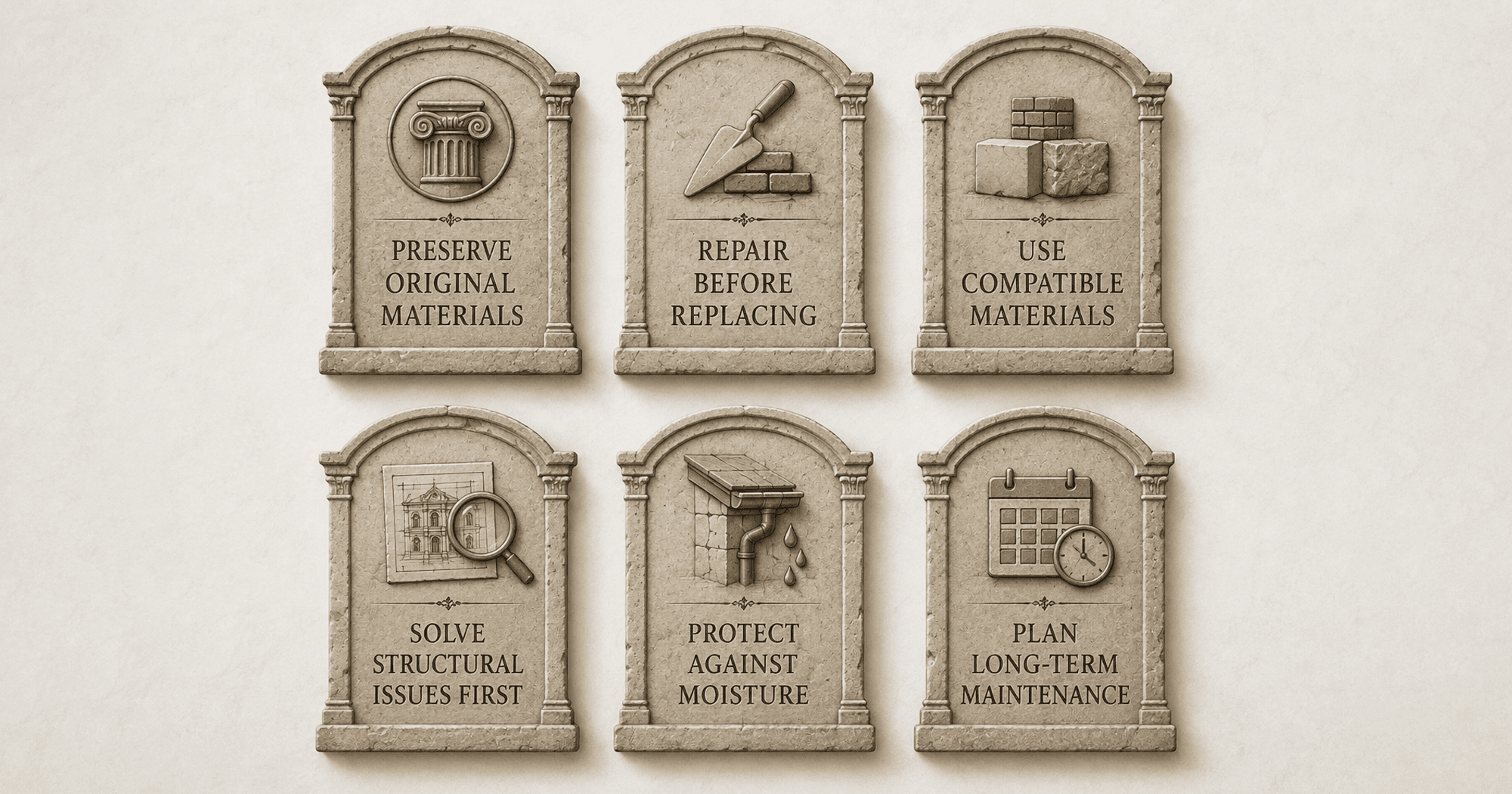
The projects that succeed tend to follow the same disciplines.
Document the Existing Building
Record the building's condition and features thoroughly before and throughout the work.
Preserve Original Materials Where Possible
Repair and retain historic fabric rather than replacing it whenever it can be saved.
Use Compatible Restoration Materials
Choose materials that match and work with the originals, especially breathable, appropriately soft mortars.
Address Structural Problems First
Stabilize the structure before investing in finishes and features.
Protect the Building From Water Intrusion
Control moisture as a first priority, since water underlies most deterioration.
Work With Experienced Restoration Professionals
Engage specialists who understand historic materials and methods.
Create a Long-Term Maintenance Plan
Protect the finished restoration with ongoing, scheduled maintenance.
Why Hire a Professional Building Restoration Service?
Heritage restoration rewards specialized knowledge and punishes guesswork. A professional building restoration service brings experience with historic materials and methods, the ability to perform a proper building assessment, and access to the skilled trades that this work requires. It brings established safety procedures and quality control, genuine structural restoration expertise, an understanding of preservation requirements, and the discipline to plan for long-term maintenance rather than a one-time fix.
Basile Contractors brings 25 years of South Florida restoration experience to exactly this kind of work. As a licensed Florida contractor (license #CCC1511747), fully insured and bonded, and ICRI certified, OSHA compliant, and manufacturer-certified, Basile specializes in the disciplines at the heart of restoring aging and historic structures: concrete restoration, facade restoration, masonry and structural repair, and waterproofing. That combination — restoration craftsmanship plus rigorous moisture and structural expertise — is what protects an older building's fabric while making it sound for the decades ahead.
Not sure which repair your building needs?
Walk the building with a licensed restoration contractor before you write a scope.
Types of Heritage Buildings That Can Be Restored
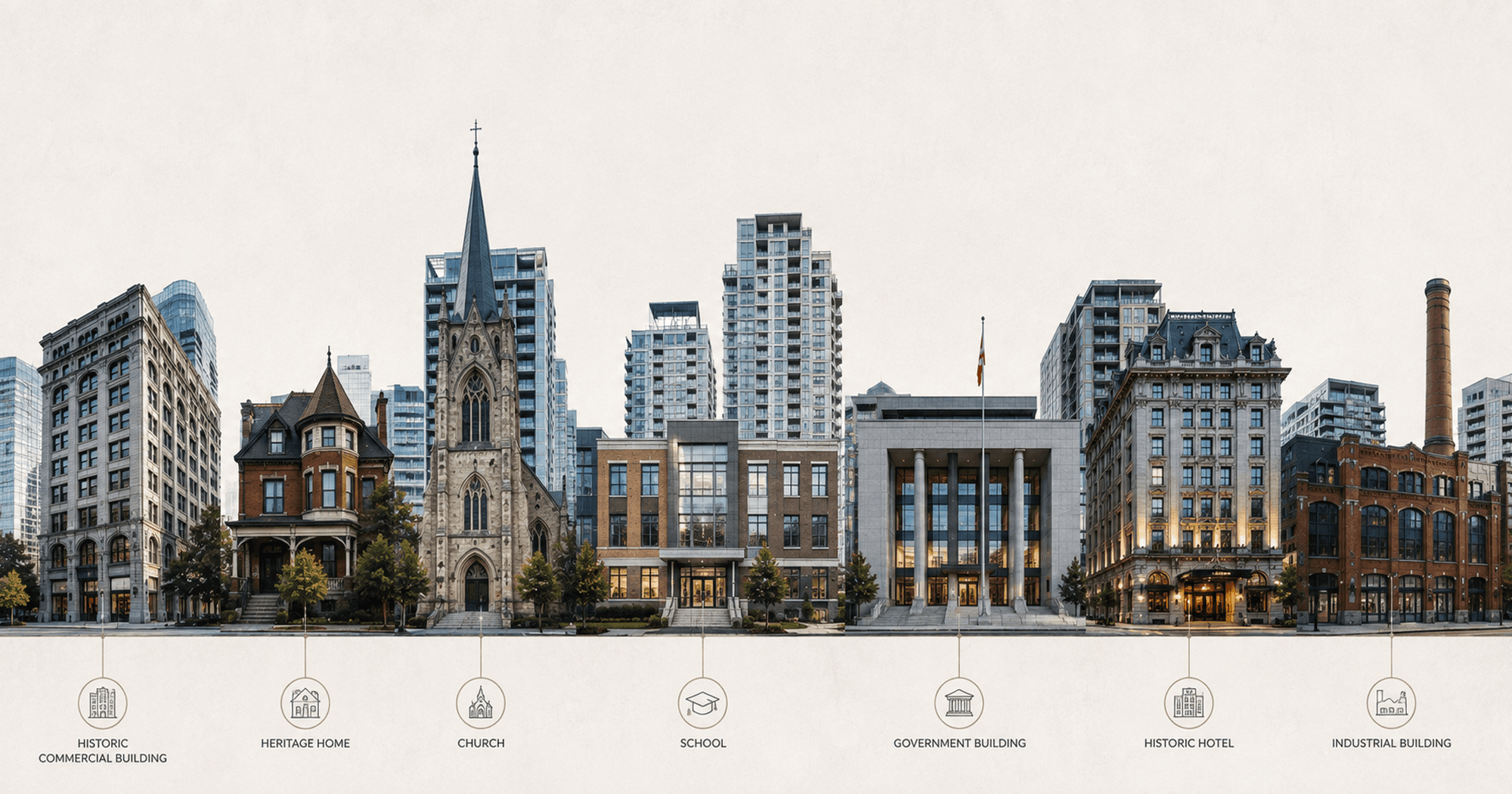
Restoration principles apply across many kinds of historic structures.
Historic Commercial Buildings
Older storefronts, offices, and mixed-use buildings that anchor historic downtowns and districts.
Heritage Homes
Historic residences whose architectural details and craftsmanship warrant careful preservation.
Historic Churches and Religious Buildings
Landmark religious structures, often rich in masonry, stained glass, and ornamentation.
Heritage Schools
Older educational buildings that remain in use and carry deep community significance.
Government and Civic Buildings
Courthouses, libraries, and civic landmarks built to last and worth preserving.
Historic Hotels
Heritage hospitality properties that combine architectural significance with active commercial use.
Industrial Heritage Buildings
Former factories, warehouses, and mills increasingly restored and adapted for new life.
When Should a Heritage Building Be Restored?
A heritage building signals its need for restoration well before failure. Watch for visible structural deterioration, cracked masonry, and water infiltration; a deteriorating facade and failing mortar; damaged historic windows; roof deterioration and concrete deterioration; and any architectural elements that have become unsafe. The most important principle is early intervention: acting on minor deterioration promptly prevents it from compounding into extensive, far more expensive structural restoration. Small problems in a historic building rarely stay small.
Preserve Your Building's History With Professional Restoration
If you own, develop, or manage a historic property — or your organization is responsible for one — the surest way to protect it is to act before deterioration accelerates. A professional assessment identifies exactly what your building needs and turns it into a clear restoration plan and a solution tailored to the structure.
Contact Basile Contractors to schedule a professional building assessment and preserve your building's history for the generations that follow. Call (352) 657-8653 to speak with our restoration team about your property.
Conclusion
Restoring a heritage building is demanding work that rewards careful planning and specialized expertise. The goal is always the same: repair the deterioration while preserving the historic character that makes the building worth saving. Success depends on understanding the structure before touching it, choosing compatible materials and proven techniques, and putting structure and moisture control ahead of appearance. Above all, it depends on early intervention — catching problems while they are small enough to solve affordably.
Historic buildings are irreplaceable, and once their original fabric is lost it is gone for good. Professional building restoration services give property owners the expertise to preserve these structures faithfully, protecting both the building and the history it carries for future generations.
Standards and further reading
Official standards and public sources on this topic:
- National Park Service Preservation Briefs, the federal technical guidance series on repairing historic buildings.
- Preservation Brief 1, on assessing cleaning and water-repellent treatments for historic masonry buildings.
- Preservation Brief 15, on the preservation of historic concrete.
- Preservation Brief 22, on the preservation and repair of historic stucco.
Frequently asked questions
Updated: October 8, 2026